How These Tornado Models Were Evaluated
Tornado foosball table models share several family traits. They use hollow rods, roll-pin player attachment, and Tornado’s familiar player shape. The meaningful differences appear in construction, movement, control, and ownership.
Cabinet construction and stability
- A heavier cabinet absorbs more vibration during hard shots.
- It also resists shifting when players lean, pull, or strike aggressively.
- Cabinet thickness matters, but weight and leg design matter too.
Rods, bearings, and handles
- Thicker-walled rods generally feel more controlled and resist flexing.
- Split bearings simplify removal, cleaning, and replacement.
- Snap-in bearings are less sophisticated but still suitable for regular home play.
- Wooden handles feel firmer and more traditional.
- Rubberized handles offer accessible grip for newer players.
Player and ball control
- Counterbalanced players remain horizontal when released.
- That keeps unused players from dropping into passing lanes.
- Sharper foot corners also improve pinning, possession, and controlled passing.
Practical ownership
- We considered assembly, relocation, returns, maintenance, and replacement parts.
- A great table becomes a poor purchase when it cannot fit through the basement door.
- The manufacturer’s current comparison guide lists the T-3000 as its pro model.
- It classifies the Elite II and Classic II as advanced models.
The Sport II is listed as entry-level.
Individual Tornado Model Reviews
Every recommendation below begins with the buyer’s situation.
That matters because the most expensive model is not automatically the best Tornado foosball table for your home.
1. Tornado Tournament 3000 Review: Best for Competitive Play
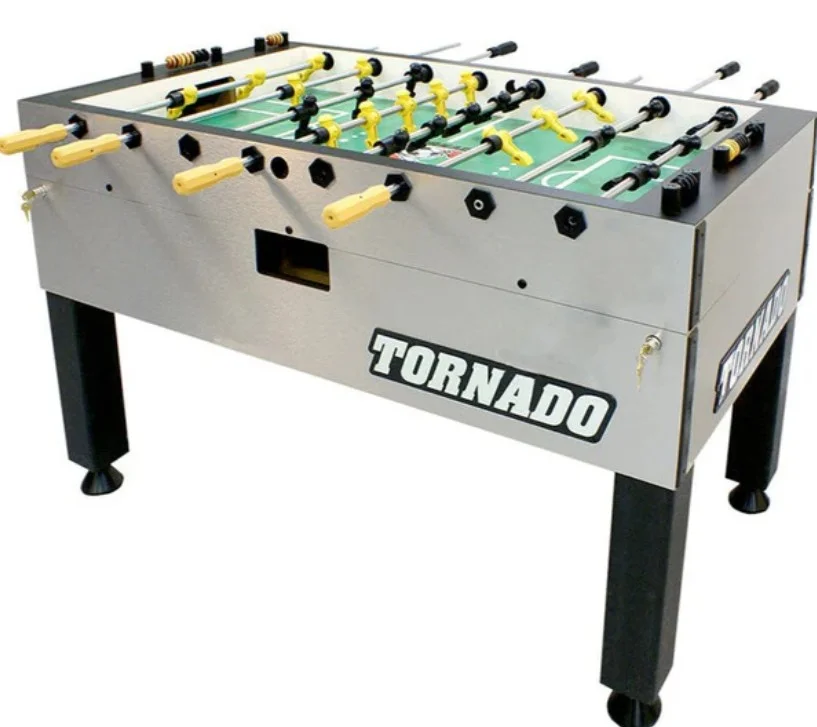
A competitive player may notice weaknesses that a casual household never encounters.
- Cabinet movement disrupts passing.
- Rod flex changes timing.
- Vibration affects possession after powerful shots.
The T-3000 is built for buyers who care about those small differences. It is the non-coin counterpart to Tornado’s Platinum Tour Edition.
Both use a split cabinet, 1.5-inch MDF walls, .156-inch hollow steel rods, and patented split bearings.
The T-3000 omits the coin mechanism but retains the major playing components.
Real-world playing experience
The 355-pound cabinet feels planted during aggressive play. Hard pull shots create less noticeable movement than on lighter home tables. That stability also helps during controlled five-bar passing.
The ball is less likely to react to cabinet vibration after contact. Its thicker rods feel deliberate without becoming sluggish. Split bearings support smooth lateral movement and easier servicing.
Counterbalanced players stay raised when positioned horizontally. That makes passing lanes easier to manage during structured play. Skilled players will appreciate those differences most.
The table will not improve technique by itself. It simply removes several equipment-related excuses.
Build quality and ownership
This is a permanent game-room table. The cabinet measures roughly 56 by 30 inches before allowing for extended rods. The supplied listing places its playing width near 70 inches with rods extended. You still need standing space beyond that.
Tornado says the table arrives nearly assembled. The manufacturer estimates about 30 minutes between opening and playing. That is not the same as zero assembly.
The top remains extremely heavy, and the setup guide strongly recommends help. Owners in the supplied review data frequently praise:
- Excellent construction
- Stable play during forceful shots
- Well-balanced rods
- Minimal assembly
- Strong long-term durability
The biggest drawback is obvious. This table is not something you casually slide aside before vacuuming. It also demands a permanent room, suitable access, and help during delivery.
Best for: Tournament players, clubs, competitive families, and committed enthusiasts.
Not best for: Occasional players, small rooms, renters, or anyone expecting frequent relocation.
Verdict:
Choose the T-3000 when tournament similarity and maximum stability are genuine priorities. Otherwise, the Elite II or Classic II will provide more sensible home value.
2. Tornado Classic II Review: Best Overall Value
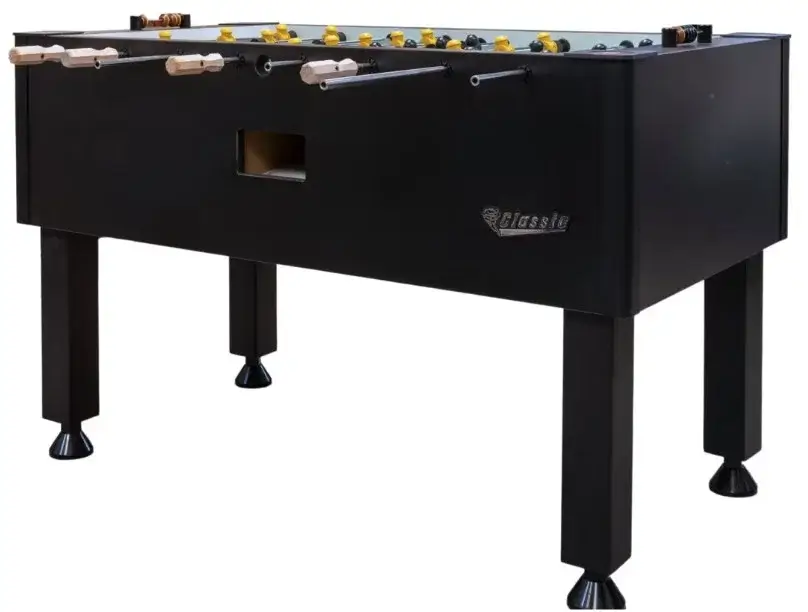
Many buyers want serious table soccer performance without dedicating their room to a 355-pound cabinet.
- They play several times weekly.
- They care about passing, control, and durability.
- They simply do not need the heaviest table Tornado makes.
That situation makes the Classic II the strongest all-around choice. It uses 1.5-inch cabinet walls, a three-quarter-inch laminate playfield, counterbalanced players, and commercial-grade levelers.
Natural wood handles provide the familiar dry, solid grip many experienced players prefer. A single side ball return keeps retrieval convenient during normal matches.
Real-world playing experience
The cabinet feels considerably more stable than a lightweight recreational football table. Fast shots produce less shaking. Passing feels crisp, especially after the table has been carefully leveled.
The player’s feet offer enough edge definition for pins and controlled lateral movement. The Classic II does not use the same rod and bearing package as the T-3000.
Tornado’s current comparison guide lists .125-inch hollow rods and snap-in bearings. The T-3000 and Elite II use .156-inch rods with split bearings.
Some marketplace descriptions incorrectly present the Classic II as having the premium bearing system. Verify the exact generation before purchasing.
Most home players will not consider this a major problem. The lighter rods remain quick and responsive. They may even feel easier for newer players during long sessions.
The difference becomes more noticeable under demanding tournament-style use.
Assembly and owner experience
The manufacturer lists the Classic II at approximately 225 pounds. Legs, rods, players, bumpers, and score markers require assembly. Several owners in the supplied feedback completed setup within 60 to 90 minutes.
Most needed another adult to raise the cabinet safely.
Common praise includes:
- Strong fit and finish
- Fast, controlled gameplay
- Long useful life
- A professional home-table feel
- Better performance than ordinary recreational models
A minority of owners reported loose handles, rod problems, chrome wear, or frustrating dead balls. Those reports should not be treated as universal defects.
However, they reinforce the importance of careful assembly, leveling, and seller support.
Best for: Serious home players, active families, and buyers seeking lasting Tornado performance.
Not best for: Solo players who strongly prefer dual returns or buyers wanting the exact tournament cabinet.
Verdict:
The Classic II is the best Tornado foosball table for most committed home buyers.
It spends money on the parts that influence regular play without carrying the T-3000’s full ownership burden.
3. Tornado Elite Review: Best Premium Home Model
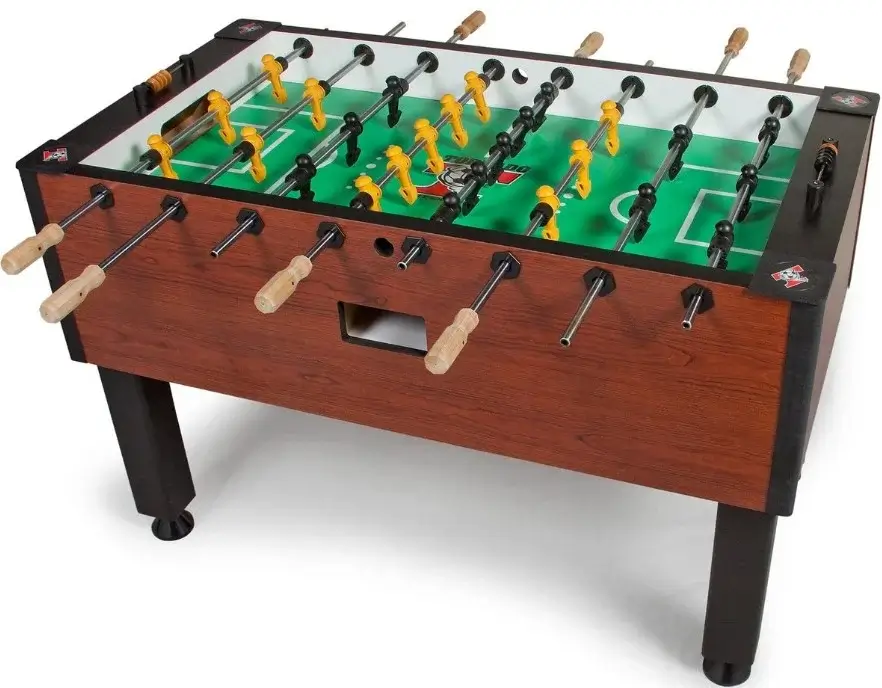
Some players practice alone as often as they play matches. Walking around the cabinet after every successful shot quickly becomes annoying.
A premium finish may also matter when the table shares space with a furnished basement or media room.
The Elite II addresses both concerns. It uses a 1.5-inch cabinet, .156-inch hollow rods, split bearings, natural wood handles, and commercial-grade levelers.
Its current official finish is Argent Frost. Dual side returns support matches and single-player practice.
What you will notice during play
The Elite II and Classic II have similar cabinet weight. Both are listed near 225 pounds. The Elite II’s meaningful performance upgrades sit inside the cabinet walls.
Its thicker rods feel more substantial during fast lateral movement. Split bearings allow easier removal and provide a more serviceable long-term system.
The change is noticeable, but not dramatic for every player. A casual player may perceive both tables as fast and solid.
A technical player may notice better rod confidence during repeated passing drills. The dual return is the clearest everyday advantage.
Tornado designed the return path so a solo player can retrieve scored balls without circling the table. That small convenience becomes valuable during hundreds of repetitions.
Elite II versus Classic II in daily ownership
The Elite II looks more polished in an upscale residential room. Its Argent Frost laminate feels more contemporary than the Classic II’s Black Suede finish.
The rods and bearings also move it closer to T-3000 specifications. However, it does not gain the T-3000’s split cabinet or additional mass.
That creates its central trade-off. You pay for refinement, easier servicing, and practice convenience.
You do not receive a massive increase in cabinet stability. The owner feedback supplied for this review praises its appearance and playing components.
Families with teenagers also report enjoying its sturdy, responsive feel. A smaller group expressed concerns about finishing consistency.
Premium buyers should inspect the cabinet carefully after delivery.
Best for: Serious home players, solo practice, and finished game rooms.
Not best for: Value-focused buyers or tournament players already considering the T-3000.
Verdict:
Choose the Elite II when solo practice and upgraded rods justify the step above the Classic II. Do not buy it expecting the weight or cabinet feel of the T-3000.
4. Tornado Sport II Review: Best for Beginners and Families
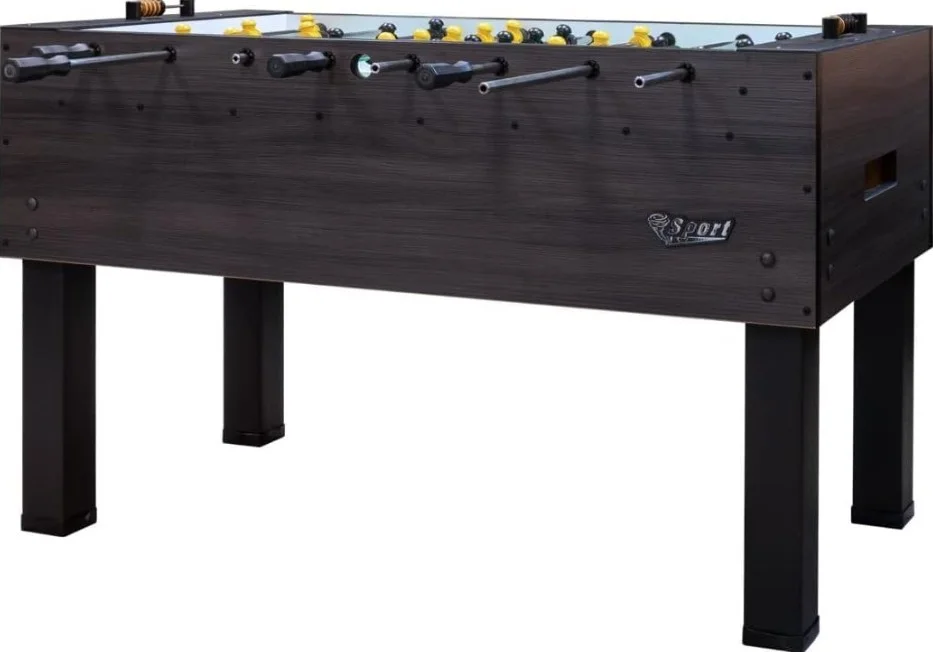
A family table must solve different problems from a tournament table. Children need comfortable access. Adults need enough stability to enjoy real play.
Parents need construction that survives regular use without turning assembly into a weekend crisis. The Sport II is Tornado’s clearest answer.
The manufacturer positions it for starters and experienced recreational players. Its legs can be installed at different heights.
The cabinet uses a Weathered Walnut finish and counterbalanced Tornado players.
How it differs from premium models
The Sport II uses a one-inch cabinet rather than 1.5-inch walls. Its estimated weight is approximately 200 pounds.
That remains substantial for a family table, but it feels less immovable than the others. Tornado’s comparison guide lists .125-inch hollow rods and snap-in bearings.
SureGrip rubberized handles replace the solid wood handles used higher in the range. The ball exits through end returns rather than side returns.
Leg boots and shims handle final leveling. Those choices reduce cost and simplify the table. They also change the playing experience.
The cabinet may transmit more movement during aggressive adult play. Rubber handles feel secure, but experienced players may prefer wood. End returns are easy during normal family matches.
They are less convenient during repetitive solo practice.
Real-world family use
The Sport II preserves the Tornado player shape and counterbalanced design. That gives beginners a better foundation than many decorative game-room tables.
Players can practice controlled passes instead of relying only on spinning and hopeful shots. Height adjustment may matter more than a premium bearing system.
A younger player who can stand comfortably will develop better control. That practical advantage often gets overlooked in specification comparisons.
The supplied owner feedback describes the table as durable and enjoyable across different age groups. Assembly experiences are mixed.
Some buyers found the process straightforward. Others struggled with rods, player orientation, or raising the cabinet. Have two adults available and sort each rod before installing players.
Best for: Beginners, families, teenagers, and mixed-age recreation rooms.
Not best for: Clubs, tournament preparation, or advanced players seeking maximum cabinet rigidity.
Verdict:
Choose the Sport II when accessibility and family use matter most. It offers genuine Tornado characteristics without pretending to be a competition cabinet.
Direct Tornado Model Comparisons
Specifications can blur together on sales pages. These comparisons focus on the differences buyers usually notice after delivery.
Tornado Sport II vs Classic II
The Sport II suits households where accessibility matters more than maximum cabinet strength. Its adjustable leg positions help younger players reach the rods comfortably.
Rubberized handles also provide a secure, forgiving grip. The Classic II feels more substantial. Its cabinet walls measure 1.5 inches rather than one inch.
It also uses commercial-grade levelers instead of boots and shims. Both models use .125-inch hollow rods and snap-in bearings.
The bigger playing difference comes from cabinet construction and handle material. The Classic II’s wooden handles feel firmer during controlled shots.
Its extra cabinet thickness better resists vibration during forceful play. Ball retrieval also differs.
The Sport II returns balls at the ends. The Classic II uses a middle-side return that is easier for either player to reach. Both require leg and rod assembly.
The Classic II is heavier and more awkward to raise.
- Choose the Sport II for families, teenagers, and adjustable-height accessibility.
- Choose the Classic II for frequent adult play and stronger long-term cabinet construction.
Tornado Classic II vs Elite II
These tables share 1.5-inch MDF cabinets, wooden eight-sided handles, counterbalanced players, and commercial-grade levelers.
Both are estimated near 225 pounds. The Elite II earns its premium through rods, bearings, returns, and finish.
It uses .156-inch hollow rods and split bearings. The Classic II uses .125-inch rods and snap-in bearings.
Advanced players may notice the Elite II’s more substantial rod feel during fast passing drills. Split bearings also make removal and servicing easier.
The Classic II’s single side return works well for normal matches. The Elite II adds dual side returns intended for competitive games and solo practice.
Its Argent Frost laminate also looks more contemporary. The Classic II’s Black Suede finish is simpler and less decorative.
The cabinet weight is effectively equal. Do not expect the Elite II to feel dramatically more planted during hard shots.
Its advantages concern refinement and convenience rather than additional mass.
- Choose the Classic II for the strongest price-to-performance balance.
- Choose the Elite II when solo practice, split bearings, and presentation justify the higher tier.
Tornado Elite II vs T-3000
The Elite II is a premium residential model. The T-3000 is a non-coin competition-style table. That distinction affects nearly every ownership decision.
Both use .156-inch hollow rods, split bearings, counterbalanced players, and 1.5-inch MDF walls. The similarities largely stop there.
The Elite II weighs about 225 pounds. The T-3000 weighs about 355 pounds and uses a split cabinet. That extra mass creates greater resistance to movement and vibration.
It also makes stairs, tight turns, and future relocation much harder. The Elite II uses wooden handles and dual side returns. The T-3000 uses anti-slip plastic handles and a middle side return.
The Elite II is better suited to repeated solo drills. The T-3000 is better suited to competitive matches and tournament preparation. A split cabinet also provides better internal access for maintenance.
However, the top section remains extremely heavy.
- Choose the Elite II for premium home play and convenient practice.
- Choose the T-3000 when tournament similarity and maximum stability justify the room commitment.
Complete Tornado Foosball Table Comparison
The specifications below follow Tornado’s official current pages and manufacturer comparison guide.
Marketplace listings can contain older photos or mismatched attributes.
Attribute | Sport II | Classic II | Elite II | T-3000 |
Intended player | Beginner and recreational | Serious home player | Advanced home player | Competitive and tournament-oriented |
Cabinet thickness | 1 inch | 1.5 inches | 1.5 inches | 1.5 inches |
Cabinet style | One-piece home cabinet | One-piece home cabinet | One-piece home cabinet | Commercial split cabinet |
Estimated weight | About 200 pounds | About 225 pounds | About 225 pounds | About 355 pounds |
Rod type | .125-inch hollow steel | .125-inch hollow steel | .156-inch hollow steel | .156-inch hollow steel |
Bearing system | Snap-in | Snap-in | Split | Split |
Handle material | Rubberized | Solid wood | Solid wood | Anti-slip plastic |
Player design | Counterbalanced | Counterbalanced | Counterbalanced | Counterbalanced |
Ball return | Dual end returns | Single middle side return | Dual middle side returns | Middle side return |
Leveling system | Leg boots and shims | Commercial levelers | Commercial levelers | Commercial levelers |
Assembly | Legs and rods | Legs and rods | Legs and rods | Legs only, nearly assembled |
Current finish | Weathered Walnut | Black Suede | Argent Frost | Stainless Steel |
Solo-practice convenience | Limited | Moderate | Excellent | Moderate |
Tournament relevance | Recreational | Serious home play | Advanced practice | Closest home competition model |
Price tier | Entry | Mid-range | Premium | Highest-priced |
Primary advantage | Family accessibility | Overall value | Practice convenience | Maximum stability |
Main drawback | Less cabinet mass | No split bearings | Smaller upgrade than expected | Weight and room commitment |
Are Tornado Tables Worth Their Price?
Tornado tables cost more than ordinary recreational tables. That does not make every model overpriced. Buyers are paying for cabinet mass, replaceable playing components, recognizable control, and long-term serviceability.
Counterbalanced players improve passing lanes. Consistent player feet support repeatable pins and possessions. Hollow rods reduce unnecessary weight while maintaining responsive movement.
Higher models add thicker rod walls and split bearings. Stable levelers also protect the playing experience. A slightly uneven cabinet can turn controlled passing into an argument with gravity.
Replacement support adds meaningful ownership value. The manufacturer lists rods, handles, bearings, balls, bumpers, players, and scoring parts for current cabinet styles.
Its parts catalog separates one-piece consumer tables from commercial split-cabinet models. Tornado also retains active competition relevance. The International Table Soccer Federation’s current calendar includes Tornado World Series competition.
That connection helps explain why the brand’s playing characteristics remain familiar to North American tournament players. There is still a sensible counterpoint. The T-3000’s extra stability may be wasted in an occasional household.
The Elite II’s upgrades may feel minor to a beginner. Assembly, freight delivery, and room preparation create additional ownership costs.
A useful rule applies:
Buy the table your habits justify, not the model name you admire most.
Buying a Tornado Table Online: What to Verify
Online listings often combine current specifications with older photos or retired finishes.
Check the exact product before arranging freight delivery.
Exact model and generation
Confirm whether the listing says:
- Elite II rather than an older Elite
- Tournament 3000 or T-3000
- Current cabinet finish
- Current rod and bearing configuration
- Three-goalie or single-goalie setup
The manufacturer confirms that T-3000 means the current non-coin split-cabinet model. The coin-operated model is the Platinum Tour Edition. There is no current “coin T-3000.”
Seller and delivery terms
Before you buy a Tornado foosball table, verify:
- Dealer status
- Curbside or threshold delivery
- Total package weight
- Damage inspection requirements
- Return freight responsibility
- Warranty process
- Replacement-part support
Tornado’s manufacturer FAQ states that new-table sales run through dealers. That makes seller support especially important when ordering through a marketplace. An Amazon Tornado foosball listing can still be useful.
However, Amazon does not automatically guarantee accurate model data. The supplied T-3000 listing, for example, identified silicone as the table material. Silicone is a lubricant, not cabinet construction.
Always compare the details with the official model page. A Tornado foosball table price may also change without warning. Evaluate the seller, generation, delivery terms, and warranty before comparing live totals.
Assembly, Maintenance, and Replacement Parts
Tornado ownership is straightforward when the initial setup is handled carefully. Rushing rod installation creates avoidable problems. Plan for two adults when raising the Sport II, Classic II, or Elite II.
The T-3000 also requires help when positioning its heavy cabinet sections. Sort the rods before adding players. Goalie rods are shorter than standard three-player rods.
Check player direction before driving in roll pins. Correcting a reversed row wastes time and tests friendships. After placement, level the playfield from side to side and end to end.
A slow ball should not consistently wander toward one corner. For rod care, wipe away dust before adding lubricant. The manufacturer recommends a small amount of silicone, generally one drop near the cabinet.
Spin and slide the rod to distribute it. Remove excess lubricant with a clean cloth. More silicone does not create more speed. It creates drips, dirt buildup, and regret.
Inspect these wear points periodically:
- Bearings and bearing nuts
- Rubber bumpers
- Roll pins
- Handles
- Player movement
- Leveler locknuts
- Ball condition
Use parts intended for the correct Tornado cabinet generation. Current parts include rods, bearing components, handles, players, balls, bumpers, and scoring hardware.
Final Recommendation: Which Tornado Model Should You Choose?
The best Tornado foosball table isn’t the most expensive one. It’s the one that matches how you play. The Classic II offers the strongest balance for most home players, while the Elite II and T-3000 are worthwhile only if you’ll benefit from their competitive upgrades.
Before buying, verify the model, finish, warranty, and seller to ensure you’re getting exactly what you expect.
Frequently Asked Questions
What is the best Tornado foosball table?
The T-3000 is the best choice for tournament-focused players. The Classic II offers the best overall balance for most serious home buyers. The Elite II suits solo practice and premium rooms. The Sport II is the clearest fit for families and beginners.
Is the Tornado T-3000 the same as the coin-operated tournament table?
No. The T-3000 brings many Platinum Tour Edition features into a non-coin format. It uses similar rods, split bearings, cabinet thickness, and player components. The Platinum Tour Edition adds the coin mechanism and commercial payment hardware.
What is the difference between the Tornado Sport II and Classic II?
The Classic II has thicker cabinet walls, wooden handles, commercial levelers, and a middle side return. The Sport II uses rubberized handles, end returns, and adjustable leg positions. The Sport II better suits mixed-age households. The Classic II better suits frequent adult play.
Is the Tornado Elite II worth more than the Classic II?
It can be. The Elite II adds .156-inch rods, split bearings, dual side returns, and a more premium finish. Those upgrades benefit advanced practice and maintenance. The Classic II remains the stronger value when solo drills and split bearings are not priorities.
Which Tornado table is best for beginners?
The Sport II is the clearest beginner choice. Tornado positions it for starters and experienced recreational players. Its height-adjustable leg positions help younger players.
Counterbalanced players also introduce useful control skills without requiring a tournament-grade cabinet.
Which Tornado model is best for solo practice?
The Elite II offers the most convenient solo-practice setup. Its dual side returns reduce unnecessary walking after successful shots. The manufacturer specifically describes this return arrangement as suitable for single-player practice.
How much space does a Tornado table need?
The current models use cabinets measuring approximately 56 by 30 inches. You must also allow for extended rods, body movement, and walking clearance. A practical room should provide several extra feet around the playing area. Measure doors and stair turns before delivery.
Are replacement parts available for Tornado tables?
Yes. The manufacturer maintains separate parts categories for split-cabinet commercial tables and one-piece consumer models. Available components include rods, handles, bearings, players, bumpers, balls, levelers, and scoring parts.
Are Tornado foosball tables made in the USA?
The current manufacturer guide identifies every listed Tornado model as USA-made. A June 2026 manufacturer FAQ states that all tables have been built in Richland Hills, Texas, since 2009. Older used models may have different origins.
Should I buy a Tornado table from Amazon?
Amazon can be convenient, but judge the individual seller and listing. Confirm the exact model, current finish, freight terms, damage policy, warranty, and return costs. Compare marketplace specifications with Tornado’s official page before ordering.