A foosball table rarely fails all at once.
It usually starts with one annoying little problem. A loose player. A missing nut. A ball that keeps dying in the corner like it forgot the game was still happening.
The tricky part is not always the repair. It is finding foosball table replacement parts that actually fit your table. This guide will help you choose the right foosball replacement parts, replacement hardware, corner ramps, screws, nuts, bolts, and table soccer parts without guessing your way through checkout.
Larger parts like rods, players, bearings, grips, score counters, and leg levelers are mentioned briefly here, with links to dedicated guides where they deserve more detail.
Start Here: Identify What Type of Foosball Replacement Part You Need
Before buying replacement parts for foosball tables, slow down and inspect the table.
A part can look “broken” when it is really loose. A loose player can feel like a rod issue. A dead corner can look like bad ball control when the table simply needs corner ramps.
“Measure twice, order once” is not just shop wisdom. It is how you avoid owning a drawer full of wrong soccer table parts.
Is the part broken, missing, loose, or just worn out?
Most foosball replacement situations fall into four simple groups.
Broken part:
This includes cracked plastic corner ramps, broken corner inserts, stripped player screws, damaged cabinet hardware, or cracked mounting pieces.
Missing hardware:
Used tables often arrive with missing screws, nuts, washers, leg bolts, or small mounting hardware. If the previous owner moved it twice, assume at least one washer escaped.
Loose component:
Common issues include loose players, rattling cabinet hardware, unstable legs, loose foosball table leg bolts, or hardware that backs out after a few games.
Worn part:
Over time, hardware wear shows up as stripped threads, tired fasteners, wobbly mounting points, or parts that no longer tighten securely.
The repair approach changes depending on the issue. A missing washer may need a simple replacement fastener. A stripped threaded insert may need a more careful repair.
Check your table brand, model, and measurements first
Foosball parts are not always one size fits all. That is the big mistake buyers make.
A product title may say “universal replacement parts,” but universal still has limits. Rod diameter, cabinet thickness, mounting holes, and screw length can all change from one table brand to another.
Before you buy, check:
- Table brand
- Table model
- Model number
- Cabinet thickness
- Rod diameter
- Player hole size
- Screw length
- Bolt diameter
- Thread size
- Mounting holes
- Mounting points
- Fastener size
- Hardware compatibility
Before You Buy Checklist
| Check This | Why It Matters |
| Brand and model number | Helps find OEM replacement parts or compatible replacement parts |
| Rod diameter | Affects players, bearings, bushings, rods, and handles |
| Screw length | Prevents loose players or damage from screws that are too long |
| Bolt diameter and thread size | Critical for leg bolts and mounting bolts |
| Mounting hole spacing | Helps corner ramps, score counters, and hardware fit properly |
| Existing part shape | Useful when replacing molded plastic parts or corner inserts |
| Cabinet thickness | Affects rods, bearings, mounting hardware, and leg hardware |
The product name gets you in the ballpark. Measurements get you the goal.
OEM vs Aftermarket vs Universal Foosball Replacement Parts
Replacement foosball parts usually fall into three buckets: OEM, aftermarket, and universal.
Each option has a place. The right choice depends on your table, your budget, and how exact the fit needs to be.
OEM replacement parts
OEM replacement parts are original equipment parts made by or for the table manufacturer.
They are usually the safest choice when fit matters.
OEM parts are best for:
- Premium tables
- Brand-specific parts
- Tornado, Garlando, Brunswick, and other higher-end tables
- Exact fit repairs
- Factory replacement pieces
- Original equipment assemblies
The upside is simple. OEM parts are usually direct replacement parts, so the fit is more predictable.
The downside is availability. Genuine parts can be harder to find, especially for older tables or discontinued models. They may also cost more than aftermarket replacement parts.
If your table is expensive or tournament-style, start with OEM whenever possible.
Aftermarket replacement parts
Aftermarket replacement parts come from third-party suppliers.
They can be useful, affordable, and easy to find. They can also be a headache if you buy by product title alone.
Aftermarket parts work well for:
- Common repair components
- Replacement accessories
- Basic hardware
- Generic foosball screws and nuts
- Some table soccer spare parts
- Simple upgrade parts
The key is measurement. If an aftermarket supplier lists screw length, bolt diameter, rod size, or hole spacing, compare that information against your existing part.
Aftermarket can be a smart buy when the part does not need a factory-specific shape.
Universal replacement parts
Universal replacement parts are designed to work across multiple table brands.
That sounds easy, but do not treat “universal” as a magic word.
Universal parts are often useful for:
- Basic replacement hardware
- Washers and lock nuts
- Some grips
- Some score counters
- Some foosball corner ramps
- Generic table soccer game parts
They are less reliable for:
- Brand-specific players
- Rods
- Bearings
- Molded cabinet pieces
- Parts with unusual mounting holes
- Anything that depends on the exact cabinet thickness
Universal means “may fit many tables,” not “guaranteed to fit your table.”
Common Foosball Table Replacement Parts You May Need
Most repairs start small.
You usually do not need to rebuild the whole table. You need the right screw, the right nut, a missing washer, or a corner insert that keeps the ball from hiding.
The sections below cover the most common foosball table replacement parts buyers search for.
Foosball table screws, nuts, bolts, and washers
Small hardware does a big job.
Foosball table screws, foosball men screws, foosball player screws, foosball screws nuts, foosball table nuts, and foosball table leg bolts keep the table playable. When they loosen or strip, the whole table feels cheap even if the cabinet is solid.
Common hardware includes:
- Machine screw
- Carriage bolt
- Mounting bolt
- Lock nut
- Nylon lock nut
- Flat washer
- Lock washer
- Threaded fastener
- Threaded insert
- Zinc-plated hardware
- Stainless steel hardware
- Corrosion-resistant replacement fasteners
Use the old hardware as your guide whenever possible. Remove one screw, nut, or bolt and match it carefully.
Check:
- Screw length
- Bolt diameter
- Thread size
- Head type
- Washer size
- Whether it connects plastic, wood, metal, or a player
A player screw has a different job than a leg bolt. A screw for foosball men must hold the player firmly without cracking the plastic. A foosball table leg bolt needs to support weight and resist wobble.
Avoid over-tightening, especially around plastic players, molded corner inserts, and thin cabinet panels. Snug is good. Crushing the part is not. Foosball is a game of control, not a strongman contest.
Product to consider:
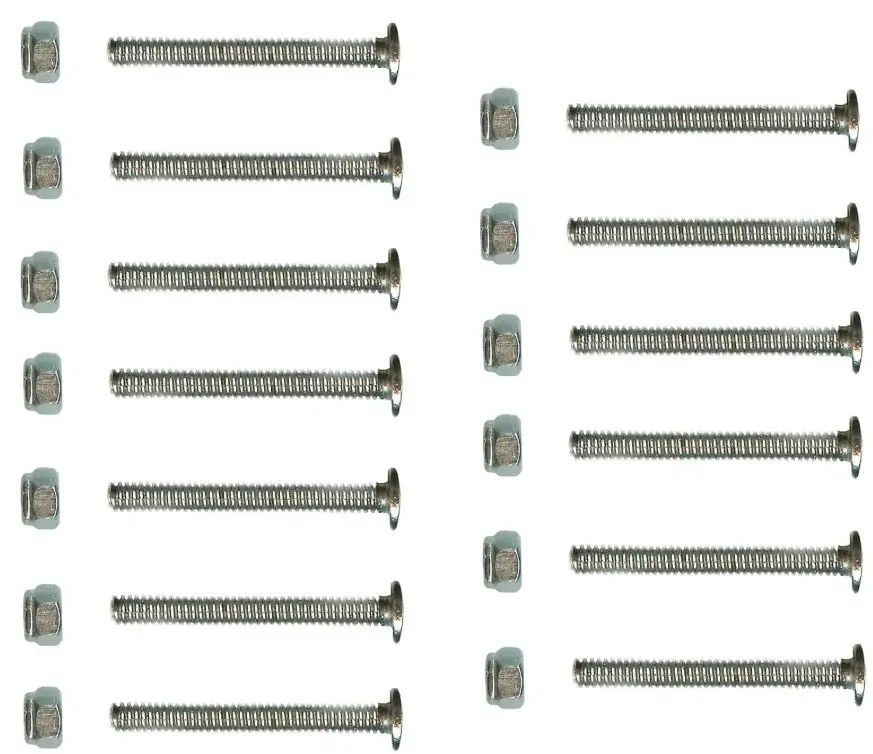
The Bank Shot Billiards foosball screw men player bolts and lock-nuts set is best for buyers replacing small player hardware. The listing describes a set of foosball player bolts and lock nuts, so it is most relevant when your loose players need matching small fasteners. Always compare screw length and thread style before ordering.
Foosball corner ramps and corner inserts
Foosball corner ramps solve one of the most annoying table problems: dead corners.
A dead corner happens when the ball rolls into a corner and stays there, outside the reach of the goalie or defender. Nothing kills a match faster than stopping every minute to poke the ball back into play.
Foosball table corner ramps help by creating a sloped corner. The ball rolls back toward the active playfield instead of sitting flat against the wall.
You may also see these called:
- Foosball corner ramps
- Foosball table corner ramps
- Corner ramps for foosball table
- Corner ramp foosball table
- Sloped corner inserts
- Angled corner inserts
- Molded plastic ramps
- Corner wedges
- Corner deflectors
- Corner inserts
A good corner ramp supports:
- Better ball return
- Fewer dead corners
- Continuous ball movement
- Smoother ball flow
- Easier ball recovery
- More consistent ball rollout
Before buying, check your table’s corner shape. Some ramps are adhesive-backed. Some are screw-mounted. Others are drop-in style inserts.
Also check the ramp height. A ramp that is too tall may interfere with the goalie rod or change how the ball moves near the wall.
Buying tip:
Smooth molded plastic is usually easier for the ball to roll across than rough or uneven material.
Product to consider:
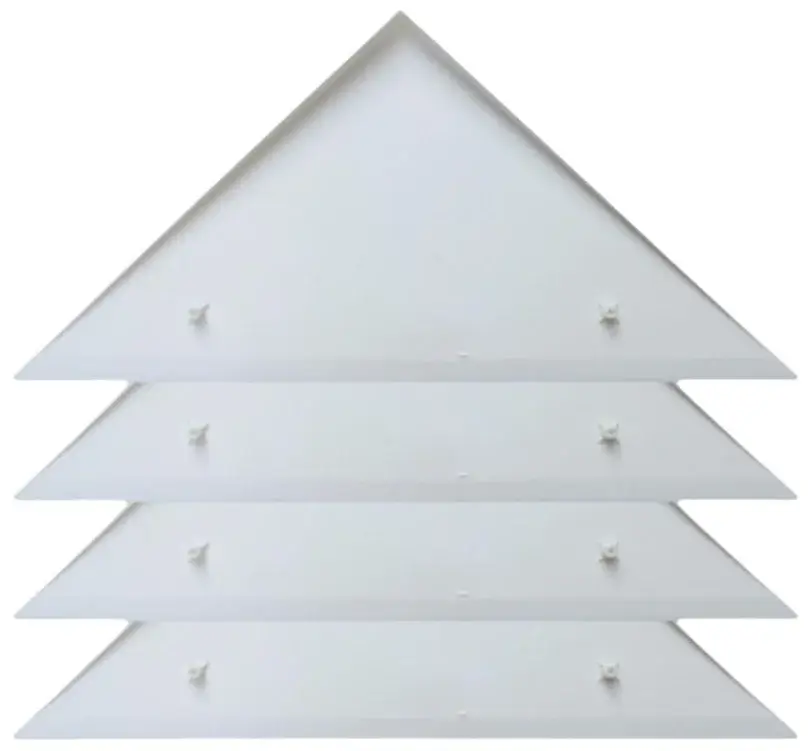
The foosball table corner ramp accessory listing is relevant for buyers trying to reduce dead corners or protect table edges. Similar corner ramp listings describe triangular protectors around 32.5 x 23 x 2 cm and emphasize smoother ball movement, but you should confirm the exact measurements on the live product page before ordering.
Replacement hardware kits
Sometimes buying one screw at a time is not worth the hassle.
A replacement hardware kit can make more sense if you bought a used table, moved a table, or inherited a table with mystery hardware from three different decades.
Look for:
- Replacement hardware
- Replacement kit
- Spare components
- Replacement bundle
- Bulk hardware
- Mounting hardware
- Replacement assembly pieces
Hardware kits are especially helpful for:
- Used foosball tables
- Restoring old tables
- Missing screws and nuts
- Loose players
- Reassembly after moving a table
- Tables with mixed or mismatched hardware
The risk is compatibility. A kit may include useful pieces, but not every screw or bolt will match your table.
If your table has uncommon fasteners, measure first.
Brand-specific replacement parts
Brand matters, but model number matters more.
Two tables from the same brand may use different rods, players, cabinet thickness, or mounting hardware. Start with the model number before buying any manufacturer-specific parts.
| Brand Search | Practical Compatibility Note |
| Harvard foosball replacement parts | Many older Harvard tables may need generic 5/8 inch style parts. Confirm rod size and player hole style. |
| Harvard soccer table parts | Check the model number first, then compare measurements against generic table soccer parts. |
| Halex foosball replacement parts | Halex parts can be harder to source, so measure old parts carefully before using aftermarket replacements. |
| Garlando foosball replacement parts | Prefer OEM or dealer-supported parts when available. Garlando directs buyers toward distributors for spare parts. |
| Brunswick foosball table replacement parts | Start with the exact table model and cabinet measurements. Use aftermarket only after checking fit. |
| Sportcraft foosball replacement parts | Many Sportcraft buyers rely on generic or aftermarket parts because original parts can be limited. |
| Sportcraft table soccer parts | Check rod diameter, player style, and mounting hardware before buying universal parts. |
| Tornado foosball replacement parts | Use OEM when possible. Tornado parts are often more specific than generic football table hardware. |
| Tornado table soccer parts | Match player, rod, and hardware dimensions carefully. Do not assume all 5/8 inch style parts fit the same. |
For off-brand tables, suppliers often recommend generic parts that work for many Sportcraft, Harvard, and Halex-style tables, but compatibility still depends on measurements.
How to Check If a Foosball Part Will Fit Your Table
Compatibility is the part of the buying process that saves you from returns.
A foosball table is a simple machine, but it is still a machine. Rods, players, screws, ramps, and cabinet hardware all work together.
If one part is slightly off, the table may rattle, bind, wobble, or feel wrong.
Measure before ordering
Do not guess.
Grab a tape measure, ruler, or caliper if you have one. A caliper is especially useful for rod diameter, screw diameter, and bolt diameter.
Measure:
- Rod diameter
- Screw length
- Bolt diameter
- Thread size
- Cabinet thickness
- Player hole size
- Mounting hole spacing
- Ramp width and height
- Existing part shape
For screws and bolts, take the old piece to a hardware store if you are unsure. Matching thread size by eye is possible, but it is also how people accidentally mix metric and imperial fasteners.
Foosball has enough trash talk already. Do not let the table join in.
Match the part to its function
Different replacement pieces solve different problems.
| Part | What It Does |
| Player screws | Secure foosball men to rods |
| Leg bolts | Stabilize the table legs |
| Corner ramps | Improve ball return and reduce dead corners |
| Washers | Distribute pressure and protect surfaces |
| Lock nuts | Help prevent loosening during play |
| Mounting bolts | Secure cabinet parts, legs, or accessories |
| Threaded inserts | Provide a stronger fastening point inside wood or composite material |
A lock nut is not just a nut with attitude. It helps resist loosening from vibration and repeated play.
That matters because foosball tables shake. Even calm players hit hard when the ball is sitting in front of the goal.
Watch out for “universal” parts
Universal replacement parts can be useful, but they need inspection.
Always compare:
- Dimensions
- Material
- Mounting style
- Hole spacing
- Thread size
- Rod compatibility
- Table brand notes
- Customer reviews mentioning your table model
Avoid buying only by table name unless the part is OEM.
A product might say it fits “standard foosball tables,” but standard is not always standard. That is especially true for older tables, imported tables, and combination game tables.
How to Replace Foosball Table Screws, Nuts, and Small Hardware
Small hardware replacement is usually a DIY repair.
You do not need to be a technician. You just need patience, the right tool, and enough self-control not to over-tighten every screw like you are sealing a submarine.
Tools you may need
Keep these nearby:
- Phillips screwdriver
- Hex key
- Allen wrench
- Socket wrench
- Small wrench
- Thread locker
- Replacement fasteners
- Small bowl or tray for removed hardware
Thread locker can help in some spots, but use it carefully. Do not use permanent thread locker on parts you may need to remove later.
Also, avoid thread locker around plastic unless the product is safe for that material.
Basic replacement procedure
- Remove old hardware carefully.
- Compare the old screw, nut, or bolt with the replacement.
- Check length, diameter, and thread size.
- Align the part before tightening.
- Tighten securely.
- Avoid over-tightening.
- Test movement and stability.
- Recheck after a few games.
After reassembly, play a short test game. Listen for rattles. Watch for loose players. Check if the ball rolls cleanly.
The table will usually tell you if something is wrong.
Common mistakes to avoid
Avoid these common repair headaches:
- Using the wrong thread size
- Over-tightening plastic parts
- Reusing stripped screws
- Mixing metric and imperial hardware
- Replacing one side but ignoring the opposite side
- Forgetting washers
- Not checking alignment after reassembly
- Using long screws can damage the cabinet or player
If a screw spins without tightening, stop. The thread may be stripped, or the insert may be damaged.
Forcing it usually makes the repair worse.
When to Replace Foosball Corner Ramps
Corner ramps are easy to ignore until they ruin the rhythm of a game.
If the ball keeps stopping in the same dead corner, the ramp or playfield shape may be the problem.
Replace foosball corner ramps when:
- The ball keeps stopping in the corner
- A ramp is cracked
- A ramp is missing
- Ball return feels inconsistent
- A dead corner affects gameplay
- The old insert is loose
- The ramp is warped
- The ball bounces strangely near the edge
If your table uses matching corner inserts, replace both sides when possible. This keeps ball flow consistent on both ends of the playfield.
Before installing adhesive-backed ramps, clean the area well. Dust and old residue can weaken the bond.
For screw-mounted ramps, test ball flow before final tightening. A tiny alignment change can affect rollout.
Parts You Should Replace Separately
This guide focuses on replacement parts, corner ramps, and hardware.
Some parts deserve their own deeper guide because fit, feel, and performance vary more. Use the quick notes below to decide when you need a dedicated part guide.
Foosball Players/Men
Replace foosball players if they are cracked, loose, missing, or badly worn.
Player fit depends on rod diameter, player hole size, screw hole style, and brand compatibility. Tournament-style players can feel very different from generic table soccer players.
Product to consider:
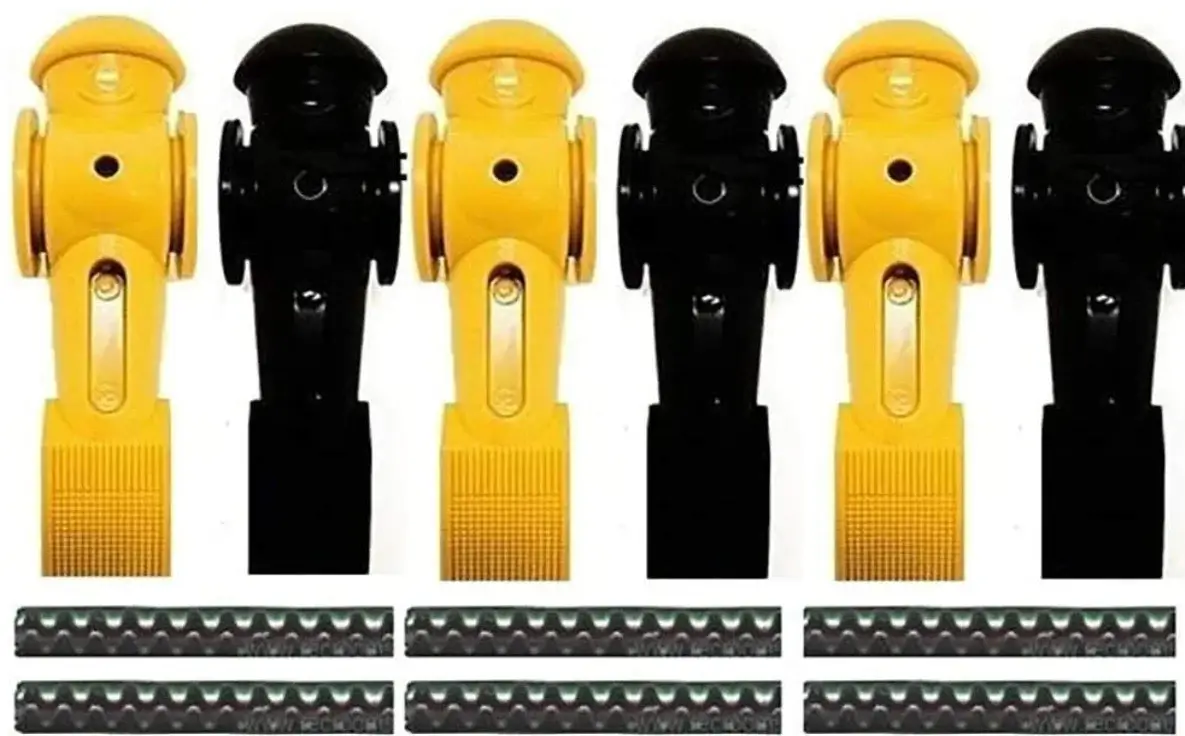
The Tornado counter-balanced foosball men set includes 3 yellow and 3 black counterbalanced players with roll pins, according to the product listing. It is best for Tornado-style replacement needs, but buyers should confirm hole diameter and rod fit before ordering.
Foosball Rods
Replace rods if they are bent, rusted, damaged, or no longer slide smoothly.
Rod diameter and length matter a lot. A rod that is slightly off can affect bearings, handles, players, and cabinet fit.
Product to consider:
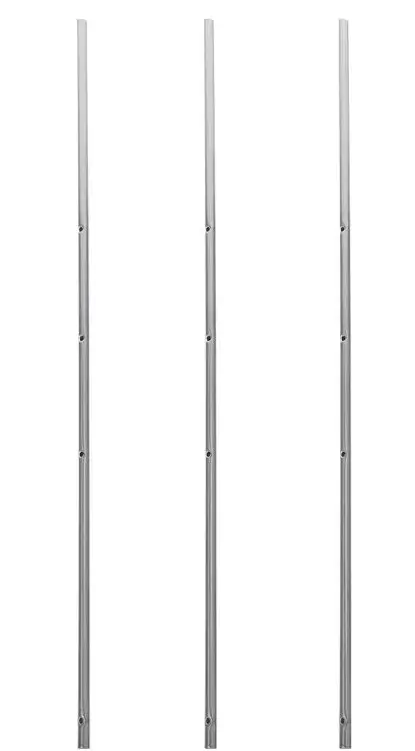
The HANABASS foosball replacement rods are best for buyers repairing smaller table soccer machines or matching similar rod dimensions. Search results describe a 3-pack of metal operation rods around 15.15 inches long, but confirm live listing specs before buying.
Foosball bearings and bushings
Bearings and bushings affect how rods slide and rotate.
If your rods feel rough, shaky, sticky, or noisy, the issue may not be the rod itself. It may be the bearing or bushing around the rod hole.
Product to consider:
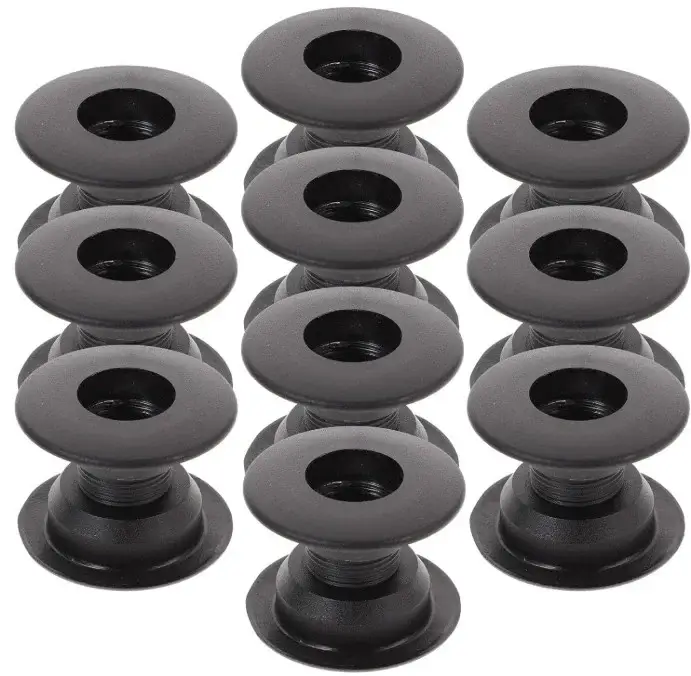
The LIOOBO foosball bushings and bearings set is listed as a 10-set plastic foosball machine accessory. It is best for replacing worn plastic bearing-style parts on compatible tables. Measure cabinet holes and rod diameter first.
Foosball Handles and grips
Replace handles or grips if they feel slippery, cracked, uncomfortable, or loose.
Grip shape affects control. Round handles feel different from octagonal handles. Some players prefer hard edges for grip, while others like smoother handles for comfort.
Product to consider:
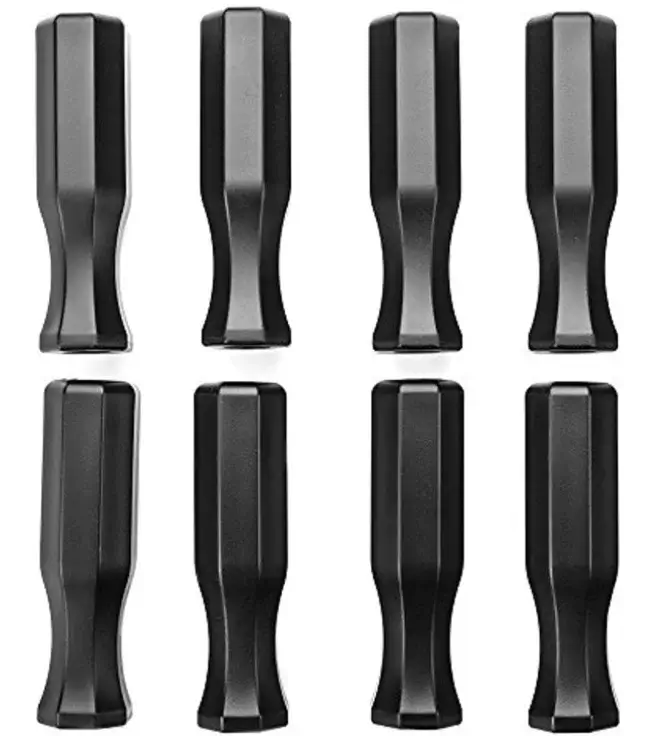
The Brybelly octagonal foosball handles are sold as an 8-pack for standard foosball tables. Third-party listing details describe black plastic octagonal handles designed for 5/8 inch rods, so confirm your rod size before buying.
Foosball legs and leg levelers
Replace foosball table legs and levelers if the table wobbles, leans, or rocks during shots.
Levelers help keep the playfield even. That matters because even a slight lean can turn your ball control into a conspiracy theory.
Product to consider:
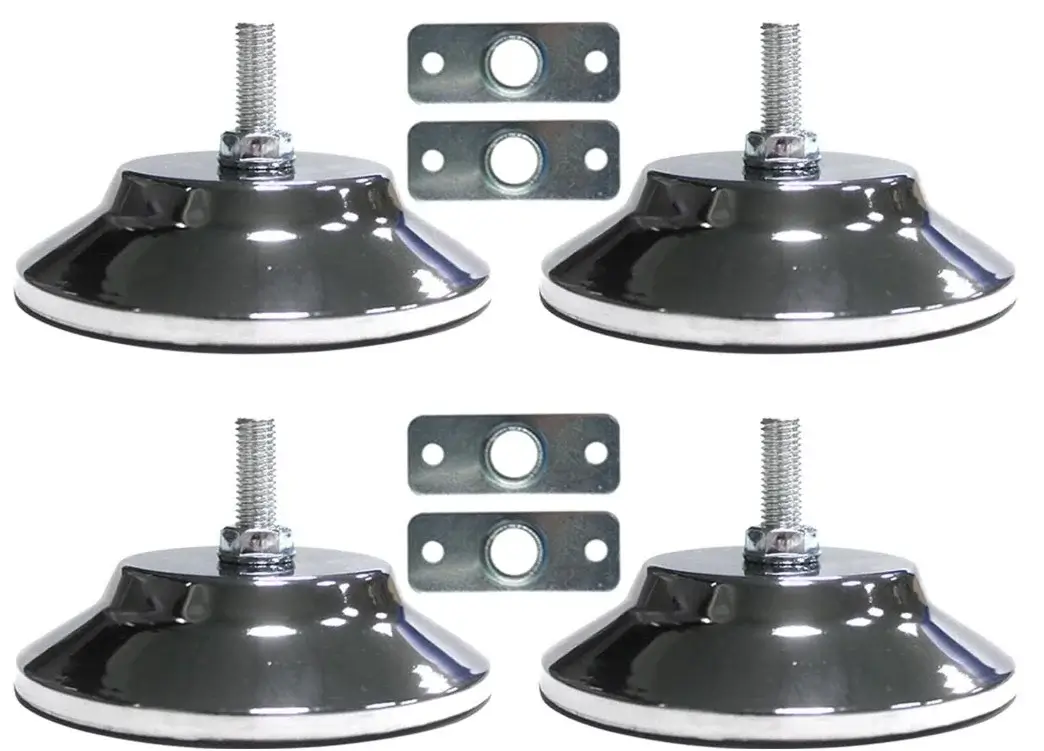
The adjustable billiard and foosball table levelers are listed as a 4-piece metal leveler set with support plates and screws. They are best for heavier game tables that need adjustable leveling, but always check mounting space and leg structure first.
Foosball score counters
Replace score counters if the beads, tracks, mounts, or scoring pieces are broken.
Most replacement foosball score counters are simple add-on parts, but width, mounting holes, and table style still matter.
Product to consider:
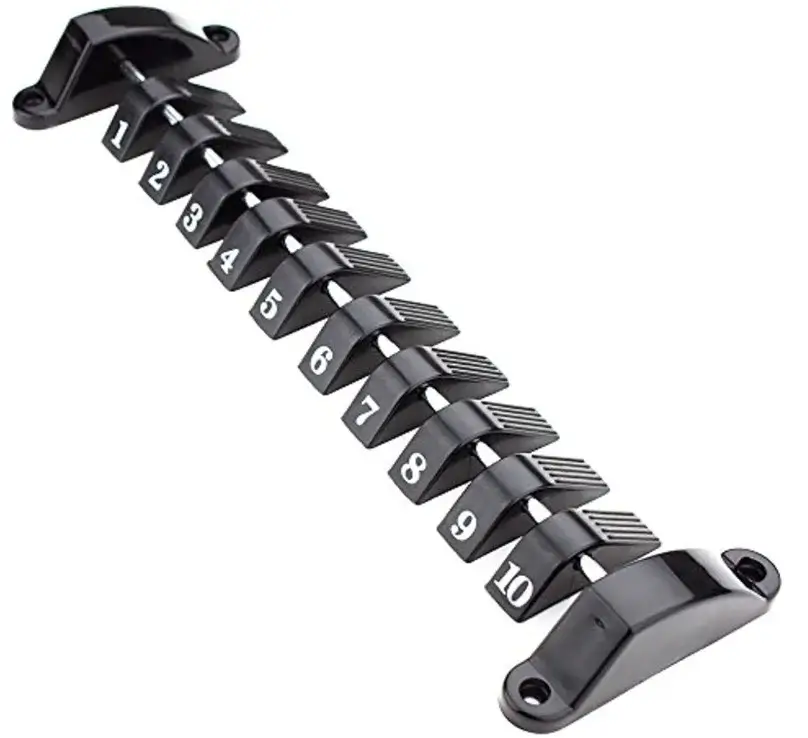
The universal scoreboard accessory is best for buyers replacing a basic scoring unit. Confirm size, mounting style, and whether it suits your foosball table before ordering.
Where to Buy Foosball Replacement Parts
Commercial intent is simple here. You want the right part, not a science project.
The best place to buy depends on your table brand, part type, and how specific the fit needs to be.
Best places to look
Start with:
- Manufacturer websites
- Authorized parts suppliers
- Amazon
- Game room retailers
- Aftermarket supplier stores
- Foosball specialty stores
- Used-table marketplaces for discontinued parts
- Local hardware stores for simple fasteners
For Garlando, the company points buyers toward distributors for spare parts. That is a good reminder that premium brands often have official channels, even when Amazon has generic alternatives.
For older Harvard, Halex, and Sportcraft-style tables, generic 5/8 inch rod table parts may be the more practical route when original inventory is unavailable.
What to check before buying
Before checkout, review:
- Replacement availability
- Stock availability
- Shipping options
- Return policy
- Replacement cost
- Compatibility notes
- Product dimensions
- Product photos
- Reviews mentioning your table brand
- Whether it is OEM, aftermarket, or universal
Do not rely only on the product title.
A listing can say “soccer table parts for sale” and still be wrong for your table.
When used parts make sense
Used parts can work for:
- Discontinued parts
- Older Sportcraft tables
- Older Harvard tables
- Older Halex tables
- Some Brunswick tables
- Cosmetic replacements
- Non-critical hardware
- Hard-to-find original pieces
Avoid used parts when the part is already likely to be worn.
Be careful with:
- Stripped screws
- Bent rods
- Cracked plastic
- Damaged mounting hardware
- Rusted threaded fasteners
- Warped corner inserts
Used parts are fine when condition matters less. They are risky when strength, smooth motion, or safety matters.