What Counts as a Wooden Foosball Table?
This matters more than most product pages admit. A real wooden football table can mean three very different builds, and buyers often pay “wood” prices for materials that are only wood adjacent.
Solid wood vs engineered wood vs laminate finish
Solid wood means major structural parts are made from real wood, such as solid beech wood cabinet panels or legs. This usually brings better craftsmanship, richer natural grain texture, and stronger furniture style appeal. It also costs more.
Engineered wood usually means MDF core or similar manufactured boards. When done well, it can still create a sturdy frame structure, thick side panels, and a durable playing surface. Many good home tables use this route.
Laminate or veneer over a wood-based core is common in foosball. A table may have a wood veneer finish, walnut finish, or oak look, while the underlying cabinet is engineered material. That does not make it bad. It just means you should judge it honestly.
Why this matters for price, durability, and feel
Material choice affects more than looks.
- Price: Solid wood frame construction pushes the price up fast.
- Durability: Good engineered wood can last for years, but cheap boards can swell or loosen.
- Feel: Heavier cabinets improve weight stability and absorb vibration better.
- Aesthetics: Warm wood tones, wood grain pattern, and stained wood finish matter more in living spaces.
- Maintenance: Laminate coatings resist scratches better than some softer real woods.
A glossy finish can look sleek in a modern room. A matte finish or rustic texture often blends better with home decor. A furniture-grade finish is not just visual. It changes whether the table feels like game equipment or a decorative game table.
Which tables in this list are actually closest to “solid wood”
The René Pierre Competition is the clearest solid wood option here, thanks to its solid beech wood cabinet and legs.
The Tornado Classic II and Tornado Sport II use wood cabinets with laminate finishes, so they still belong in the wood category, but they are not presented as true solid wood builds.
The KICK Titan, KICK Legend, and GoSports rely on engineered wood construction. That is normal in this price range. The real question is whether the cabinet construction and gameplay justify it.
The Best Wooden Foosball Tables, Ranked
A pretty cabinet can fool buyers for five minutes. After that, the truth shows up in rod motion, ball roll, cabinet shake, and whether the table survives real use.
These six picks all fit the wood foosball table theme, but they solve different problems.
#1: Tornado Classic II Wood Table
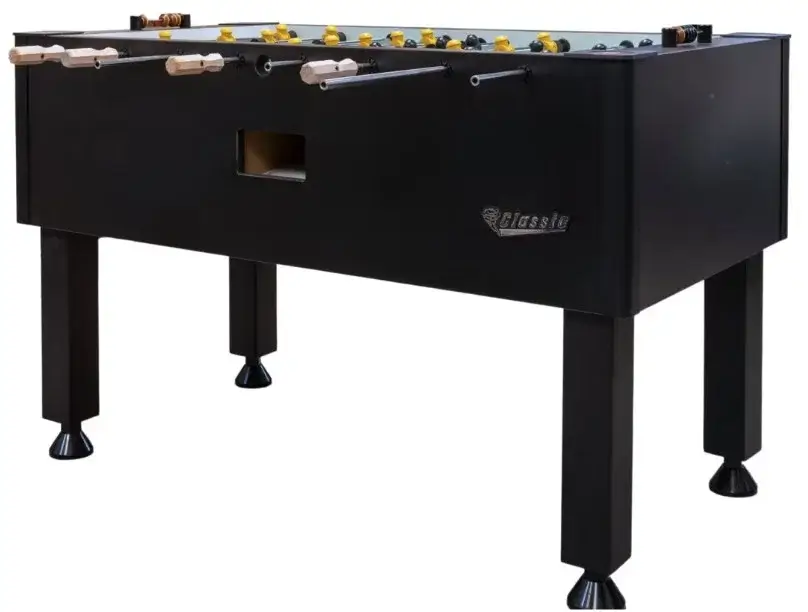
Some buyers have already outgrown casual tables. They want cleaner passing, sharper control, and a cabinet that does not feel like a compromise every time the match speeds up. This is where the Classic II makes sense.
The Tornado Classic II ranks first because it brings tournament-level DNA into a home-friendly package. Its 1.5-inch cabinet, patented split bearings, counterbalanced men, and solid natural wood handles create a playing experience most budget tables simply cannot copy.
Best for: serious home players, competitive families, buyers who value gameplay over bargain pricing.
Not for: casual users who just want occasional weekend play, small apartments, or anyone unwilling to assemble and move a very heavy table.
Why does it rank first?
This is the table in the list that best translates features into actual performance. The heavy-gauge rods and split bearings create ultra-smooth rod motion. The counterbalanced men improve controlled passing and reduce sloppy recovery.
In real use, that means quicker ball handling, faster shot release, and less wobble during hard play. Many buyers notice this immediately when moving up from department store models.
Key strengths
- Thick, heavy-duty cabinet with a strong, long-lasting build
- Excellent rod feel and precision gameplay
- Solid natural wood handles feel better than cheap plastic grips
- Stable base structure with commercial-grade levelers
- Strong reputation among players who care about the real match feel
Drawbacks
- The price is high for a home table
- It is heavy, around the kind of weight that makes staircases feel personal
- A few users report dead spots or long-term rod finish issues
- Assembly is easier with two people
Real-world performance
Most users report that the Classic II feels fast and crisp. That matters because premium play is not only about speed. It is about consistent ball roll, responsive control, and a cabinet that stays calm under pressure.
Compared with typical engineered wood home models, this table feels denser and more locked in. It is still home-friendly visually, thanks to the black suede laminate, but it behaves much closer to a serious performance table than a casual family piece.
Verdict
Buy the Tornado Classic II if play quality is your first priority and you want a wooden foosball game table that can hold up to serious use. It is expensive, but it earns that price better than most wood models.
#2: KICK Titan 55 Wooden Foosball Table
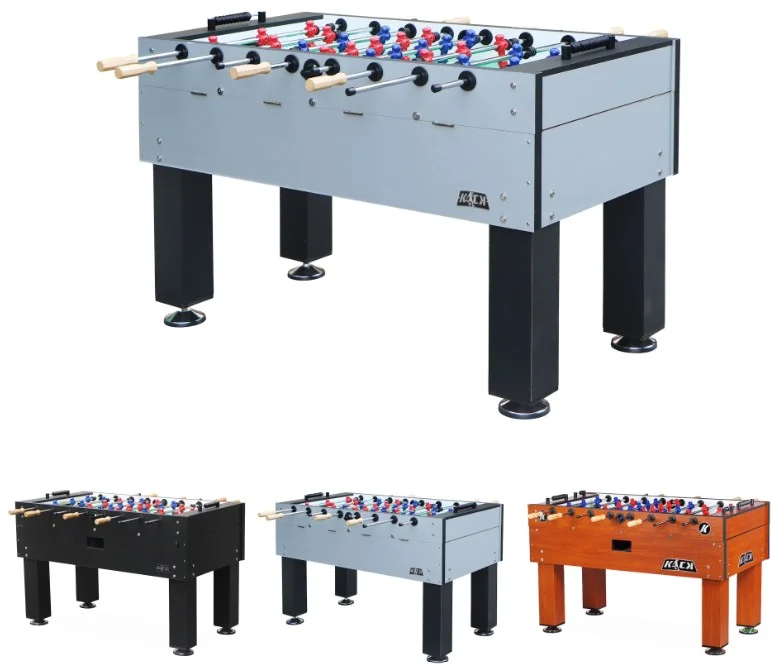
A lot of shoppers want something substantial without crossing into pro table money. They want good weight, decent materials, and a cabinet that looks sharp in a home game room. That is the lane the Titan fills.
The KICK Titan 55 is the best value pick in this guide because it combines strong size, impressive weight, premium bearings, wooden handles, and a lifetime warranty at a much lower price than the top Tornado options.
Best for: value-driven buyers, families who want a sturdier full-size football table, home game rooms, and offices.
Not for: players chasing Tornado level precision or buyers who only want true solid wood construction.
Why does it rank here?
The Titan checks a lot of boxes that matter in daily use. At 286 pounds, it has real weight stability. That helps reduce sliding and cabinet vibration during competitive matches.
It also includes both counterbalanced and uniform men’s sets, which gives more flexibility than most competitors offer at this tier.
Key strengths
- Excellent table weight for the price
- Strong engineered wood cabinet with elegant gray finish
- Premium bearings and sturdy leg levelers
- Wooden handles improve grip and feel
- A lifetime warranty adds buying confidence
Drawbacks
- Material is engineered wood, not solid wood frame construction
- Visual finish is more modern than warm or rustic
- It is still a large, heavy setup for tighter rooms
Real-world performance
Users generally describe it as near professional in feel for home play. That does not mean it matches a true tournament setup. It means it feels planted, fun, and far more substantial than lighter budget tables.
The low-friction action and solid stainless steel rods help keep gameplay smooth. For many households, that matters more than chasing elite-level nuance. If your micro use case is “friends come over Friday night, kids play on Sunday, adults still want a legit match,” the Titan makes a lot of sense.
Compared with cheaper composite models, it feels more serious. Compared with a premium Tornado, it gives up some refinement in control and brand pedigree.
Verdict
The KICK Titan 55 is the sweet spot for buyers who want a wooden table foosball option with serious presence, strong home durability, and better value than the premium tier.
#3: KICK Legend 55 Wood Table
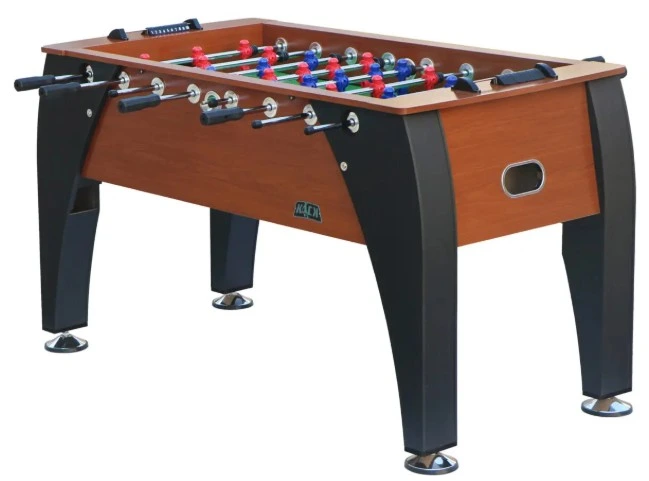
Sometimes the smart buy is not the heaviest or fanciest one. It is the table your family actually uses, enjoys, and keeps for years because it balances fun, price, and everyday practicality.
The KICK Legend 55 ranks as the best family pick because it offers full-size play, adjustable setup options, scratch-resistant surface protection, and an easier price point than the Titan or Tornado tables.
Best for: families, mixed-age households, casual players who still want a proper full-size setup.
Not for: advanced players who are very sensitive to rod feel, cabinet density, or premium material detail.
Why does it rank here?
The Legend works because it avoids the two biggest mistakes in family buying. First, it is not too tiny. Second, it is not so premium that every rough game feels risky.
Its engineered wood cabinet and scratch-resistant surface suit high-traffic use well. The option to switch between 1-man and 3-man goalie setups also adds flexibility for different skill levels.
Key strengths
- Good value for full-size family use
- Counterbalanced and uniformed men included
- No-slip wooden handles
- Solid fun factor for adults and kids
- Sturdy enough for regular home use
Drawbacks
- Assembly experiences are mixed
- Instructions are inconsistent depending on buyer expectations
- The cabinet does not feel as substantial as the Titan or Tornado models
Real-world performance
Most users see the Legend as a near bar quality family table. That sounds about right. It plays well enough to stay interesting, but it does not demand serious player money.
In everyday use, the biggest win is usability. The field is smooth, the play stays lively, and the table feels welcoming rather than intimidating. A common issue is that assembly can test patience, especially if you expect every part to go together perfectly the first time. Foosball has a way of reminding us that “some assembly required” is often a comedy genre.
Compared with basic kids’ tables, the Legend is a huge step up. Compared with the Titan, it gives up cabinet heft and some premium feel.
Verdict
Buy the KICK Legend 55 if your main goal is family fun on a real full-size wooden foosball table without overspending. It is not elite, but it is a smart home buy.
#4: Tornado Sport II Wood Foosball Table
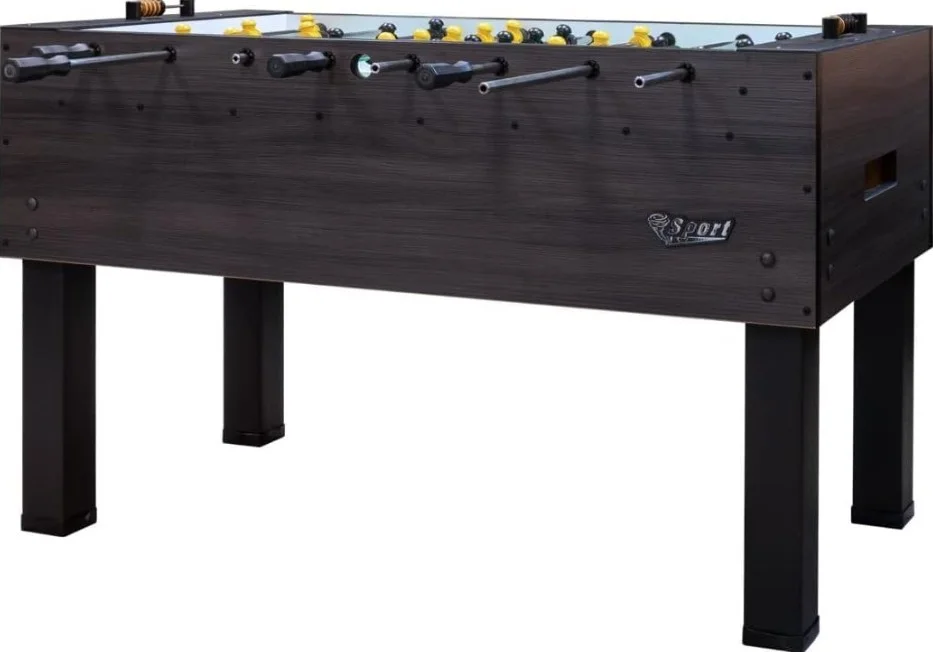
Plenty of buyers want the Tornado name, but not the full Tornado invoice. They want better gameplay than generic home tables and a finish that still looks right in a living space or rec room.
The Tornado Sport II is the best beginner premium pick because it gives buyers access to the Tornado ecosystem, counterbalanced men, adjustable legs, and a weathered walnut laminate at a lower price than the Classic II.
Best for: beginners who want room to grow, buyers loyal to Tornado, rec rooms, and teen and adult play.
Not for: shoppers seeking a true solid wood foosball table or maximum performance for high-level practice.
Why does it rank here?
The Sport II is not just a cheaper Tornado. It is a distinct middle ground. You get recognizable Tornado play traits and a wood look cabinet, but with a lighter cabinet and more beginner-friendly positioning.
That makes it easier to justify if you are serious about buying better, but not ready to go all in.
Key strengths
- Trusted Tornado engineering and patented men
- Weathered walnut laminate has a strong furniture style design appeal
- Adjustable legs improve leveling
- Beginner-friendly without feeling toy-like
- Made in the USA adds appeal for some buyers
Drawbacks
- The cabinet is only 1 inch thick, so it is less robust than the Classic II
- Rubberized handles are functional, but less premium than solid wood handles
- End ball returns are fine, but side returns are more convenient for some players
Real-world performance
This table should feel clearly better than cheap home models in terms of control and consistency. The 3/4 inch melamine playfield helps produce a smooth surface and steady ball movement. Users also describe it as durable and fun across age groups.
The trade-off is simple: it gives you a better brand and stronger play identity than many midrange tables, but it does not deliver the same dense, tournament-leaning feel as the Classic II. Think of it as premium training wheels, except the wheels are off and your wallet is still speaking to you.
Verdict
Choose the Tornado Sport II if you want a wood foosball table with credible play quality, a better-than-average build, and a premium brand without climbing into top-tier pricing.
#5: GoSports 54 Inch Table
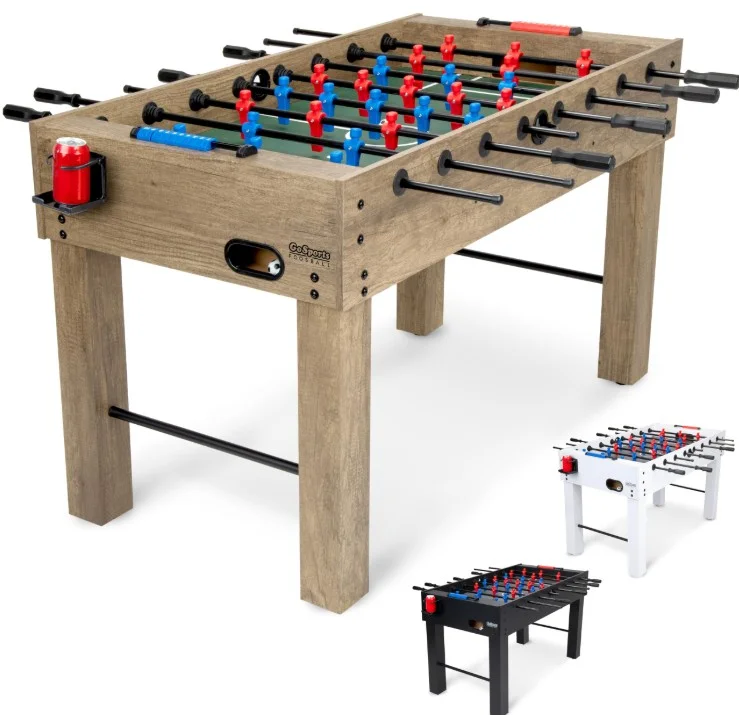
Some buyers are not trying to join a league. They want a clean-looking table for a game room, office, or family area that gets used often and does not cost a small vacation.
The GoSports 54 Inch Full-size table is the best budget full-size pick because it gives you a modern oak look, simplified assembly, decent stability, and broad home appeal at a much lower cost than the premium field.
Best for: casual home buyers, offices, families, first-time foosball buyers on a budget.
Not for: serious players who expect premium rods, ultra-dense cabinet feel, or long-term tournament-style performance.
Why does it rank here?
This table wins on practicality. The engineered wood body is lighter and simpler. That makes it more approachable for buyers who care about cost, assembly, and room placement.
It also has an interior-friendly design that suits modern spaces better than many older styled tables.
Key strengths
- Budget-friendly full-size format
- Modern oak finish blends with home decor
- Easy assembly with good instructions
- Good value for family and office use
- Cup holders are genuinely useful in social spaces
Drawbacks
- Much lighter than premium models
- An engineered wood cabinet is not built for serious abuse
- Ball bounce feedback is mixed among users
Real-world performance
Most users say it is sturdy enough for normal play and enjoyable for all ages. That is the correct frame for judging it. It is a casual performer, not a disguised pro table.
What you will notice day to day is convenience. It looks good, fits well in multipurpose rooms, and delivers enough low-friction play for family matches and office breaks. A common issue is rebound behavior on hard shots, so very competitive players may notice less controlled ball response than on heavier tables.
Compared with cheap mini tables, it is a major improvement. Compared with the KICK Titan or any Tornado, it feels lighter and less planted.
Verdict
The GoSports 54 Inch table is a smart buy for casual players who want a wood-look football table that is affordable, attractive, and full-size. Just do not expect a premium match feel.
#6: René Pierre Wooden Foosball Table
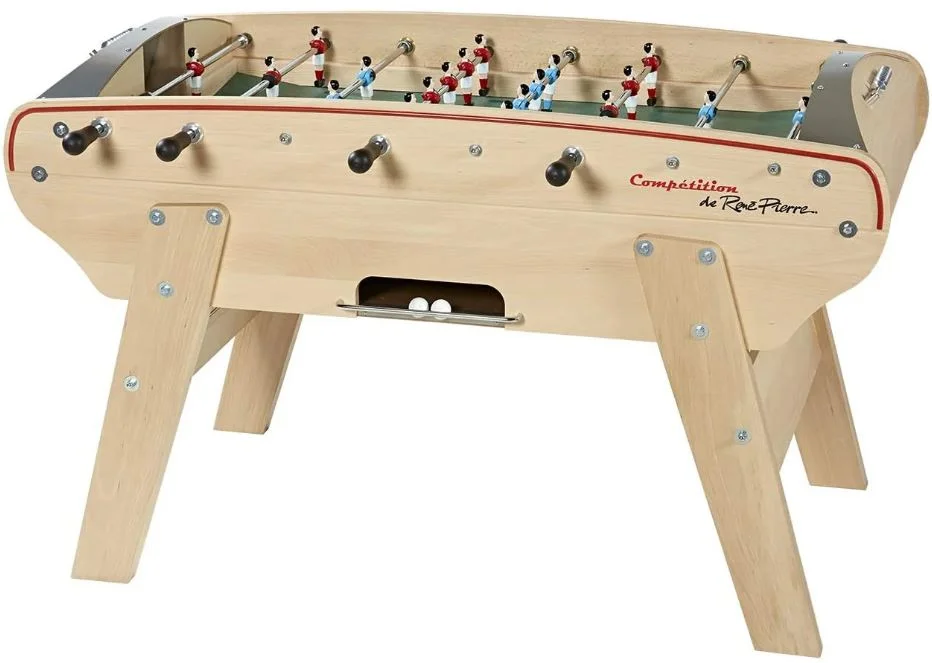
Sometimes the buyer is not asking, “What is cheapest?” They are asking, “What is beautiful, built with real craftsmanship, and worthy of staying in my home for a decade?” That is a different question, and it leads here.
The René Pierre Competition Indoor Foosball Table is the best true solid wood luxury pick in this guide. With a solid beech wood cabinet and legs, hand-painted diecast aluminum players, telescopic rods, and a distinctly French style build, it feels more like artisan game furniture than a standard American table.
Best for: buyers who want authentic solid wood, luxury aesthetics, premium craftsmanship, and French style play.
Not for: players who prefer standard American-style rods and feel, bargain shoppers, or buyers who want the most familiar learning curve.
Why does it rank here?
This table stands apart because the material story is real. Solid beech wood matters.So does the furniture-grade finish, the classic design appeal, and the fact that the table feels like a statement piece before the first match starts.
It also brings sloped corners, telescopic rods, and metal scoring details that make it distinct from the rest of this list.
Key strengths
- Real solid wood cabinet and legs
- Beautiful wood grain appearance and elegant presence
- Fast Gerflex playfield with textured control
- Telescopic rods improve safety in tighter spaces
- Strong craftsmanship and premium materials throughout
Drawbacks
- Expensive
- French-style play is different from mainstream American foosball
- Less ideal if you specifically want Tornado-style training and shot feel
Real-world performance
Users describe it as beautifully made and one of the nicest tables they have seen or played. That tracks with the construction details. The solid wood frame and metal components should age better than many composite alternatives if cared for properly.
In play, the surface texture helps with control, and the sloped corners keep the ball in action. The experience is refined rather than brute force. Compared with a typical home football table, this one feels more like owning a crafted object. Compared with a Tornado, it offers a different style of game entirely.
Verdict
Buy the René Pierre Competition if you want the closest thing in this roundup to a true, solid wood foosball table with a luxury presence. It is not the default pick for everyone, but it is the most special one here.
Which One Should You Buy?
Most buyers do not need six finalists. They need one clear answer based on budget, play style, and where the table will live. Here is the fast decision guide.
If you want the best overall playing experience
Choose the Tornado Classic II.
It gives you the cleanest control, the strongest competitive feel, and the most confidence for long-term serious play. If your goal is performance first, this is the best football table experience in the roundup.
If you want the best value
Choose the KICK Titan 55.
It offers serious weight, solid usability, wooden handles, and a lifetime warranty without entering premium Tornado territory. For many homes, this is the smartest money spent.
If you want a table for family use
Choose the KICK Legend 55.
It balances fun, price, and playability well. It is easier to justify for households where the table needs to work for adults, teens, and younger players.
If you want a premium brand without going all the way up
Choose the Tornado Sport II.
You get Tornado quality cues, a sturdy wood-based cabinet, and better gameplay than entry-level tables at a more reasonable price.
If you want a true, solid wood statement piece
Choose the René Pierre Competition.
This is the pick for buyers who care about furniture style design, craftsmanship, and authentic solid wood more than mainstream American table conventions.
Wood vs Metal Foosball Tables
Material alone does not decide quality, but it does shape the ownership experience. The right choice depends on where you play, how hard you play, and what you expect the table to look like in your space.
Where wood wins
Wood tables usually win on home aesthetics, a warmer feel, and noise control.
- Better fit for living rooms and finished game rooms
- More decorative game table appeal
- Warm wood tones and natural styling look less industrial
- Often better at blending into home decor
- Furniture-style cabinets feel less cold in shared spaces
A wooden football table also tends to feel more inviting for family use. It looks like something meant to stay, not something borrowed from an arcade.
Where metal wins
Metal tables or metal heavy builds usually win on abuse tolerance and commercial use.
- Better for public spaces and rough treatment
- Often more impact-resistant
- Less concern about finish wear in high-traffic areas
- Easier choice for some bars, clubs, or communal spaces
The trade-off is that they can feel more industrial and less interior-friendly.
Best choice for most home buyers
For most home buyers, wood wins. Not because it is always stronger, but because it delivers a better balance of aesthetic appeal, comfort, and everyday livability.
Wood vs Plastic Foosball Tables
This comparison is less close than many first-time buyers think. Plastic has a place, but long-term home buyers usually outgrow it fast.
Where wood wins
- Better cabinet strength
- Better weight stability
- Better long-lasting build
- Better visual quality
- Better full-size home experience
- Better shot feel and less toy-like response
A good wood foosball table usually offers more stable rods, a more durable playing surface, and a stronger sense of ownership. It feels like equipment, not seasonal clutter.
When plastic makes sense
Plastic can still make sense if:
- You are buying for very young kids
- You need something ultra-light and easy to move
- Budget is extremely tight
- The table may live outside the main home area and get limited use
Best choice for long-term use
If you want a table that still feels satisfying after the novelty wears off, choose wood. Plastic is fine for a phase. Wood is better for a habit.
What Matters More Than “Wood.”
A lot of weak tables hide behind good photos. The cabinet color looks great, the wood finish sounds premium, and then the gameplay feels flat. That is why “wood” is not the first thing serious buyers should judge.
Cabinet strength
A heavy-duty cabinet matters more than a pretty veneer. Look for thick side panels, reinforced corners, and solid cabinet construction. The Tornado Classic II and KICK Titan stand out here.
Rod quality
Cheap rods ruin otherwise decent tables. You want smooth travel, minimal flex, and durable bearings. That is a big reason Tornado keeps its reputation.
Counterbalanced men
Counterbalanced men make setup and control easier. They help keep players lifted when needed and improve practical play flow. If a table lacks them, it will feel more limited for serious use.
Playfield consistency
A smooth wooden playfield or laminated surface needs to produce consistent ball roll. Dead areas, bounce issues, or uneven response can ruin a table faster than cosmetic flaws.
Leg levelers and stability
A level table is not optional. Without adjustable leg levelers, even a good cabinet can feel frustrating.
Room size and table weight
Measure first. A full-size table needs more than table dimensions. You need rod clearance, walking room, and enough space to move around comfortably.
This is where many buyers make the classic mistake of buying first and measuring later. Foosball joke of the day: the only thing worse than a weak table is a strong table you cannot fit through the doorway.
Buying Guide for Wooden Foosball Tables
The best buying decision usually comes from matching material, finish, and performance to your real-life setup. Not your dream game room. Your actual one.
Best material type for your budget
Budget range: engineered wood or MDF core with laminate finish. Best for buyers choosing GoSports or KICK Legend style value
Midrange: stronger engineered wood with better cabinet density. Best for buyers considering KICK Titan
Premium: thicker wood cabinet construction, better bearings, stronger overall build. Best for buyers considering the Tornado Sport II and Classic II
Luxury: solid wood frame, furniture-grade finish, premium detailing. Best for buyers considering René Pierre
Best finish for home decor
- Walnut finish: warm, classic, easy to blend
- Oak looks: brighter, more modern, cleaner feel
- Black laminate: sharper, sportier, lower visual warmth
- Matte finish: calmer and more premium looking in many rooms
- Glossy finish: stronger visual pop, but can show wear more easily
If the table will sit in a shared living area, aesthetic appeal matters more than buyers like to admit.
Best build for durability
Look for:
- thick cabinet walls
- sturdy frame structure
- durable playing surface
- anti-warp construction
- quality bearings
- levelers with good footing
Kiln-dried wood, solid wood frame details, and hardwood construction can be excellent signs, but only when the product actually specifies them.
Best setup for serious play
For advanced or aspiring serious players, prioritize:
- counterbalanced men
- smooth rod action
- consistent ball roll
- stable cabinet weight
- full-size dimensions
- reliable levelers
That points most strongly toward Tornado Classic II, then KICK Titan, then Tornado Sport II.
What to avoid when shopping
Avoid these red flags:
- vague “wooden” claims with no material explanation
- very light full-size tables
- cabinets that prioritize styling over structure
- No mention of bearings or levelers,
- tiny tables sold as adult alternatives
- paying luxury prices for basic composite builds
Common Mistakes to Avoid While Buying a Wood Foosball Table
Most regrets in foosball buying are predictable. The good news is they are also avoidable.
Assuming wooden means solid wood
It often does not. Many wooden foosball tables use laminate over engineered wood. That is fine, but only if the price reflects it.
Choosing by looks only
A stained wood finish can be gorgeous. A bad playing surface underneath is still bad.
Ignoring play quality
Good cabinet photos do not show dead spots, rod feel, or shot response. That is why user feedback matters.
Buying too small a table
Mini tables are easy to buy and easy to outgrow. Most adult buyers should start with a full size.
Overpaying for style and underbuying on performance
Some tables look like premium furniture and play like a tired office toy. You want both if possible, but performance should still lead the decision.
Final Recommendation
If you want the best overall wooden foosball table, buy the Tornado Classic II. It gives the most complete mix of cabinet quality, control, and long-term satisfaction.
If you want the best value, buy the KICK Titan 55. It delivers real weight, smart features, and strong home performance for the money.
If you want the best family pick, buy the KICK Legend 55. It is the easiest recommendation for mixed-age households.
If you want the best budget pick, buy the GoSports 54 Inch. It is affordable, attractive, and useful for casual play.
If you want the best luxury solid wood pick, buy the René Pierre Competition. It is the most authentic solid wood foosball table in this guide and the most furniture-worthy.
At Foosball Junkie, the honest answer is this: buy for how you play, not just how the cabinet looks. A shiny finish cannot save weak rods. That is the foosball version of putting racing stripes on a lawn mower.
FAQs
A lot of buyers ask the same few questions before pulling the trigger. These answers should make the decision easier.
Are wooden foosball tables better?
Usually, yes, for home use. A wooden football table often looks better, feels steadier, and blends into the room more naturally than plastic or industrial styles.
Is a solid wood foosball table worth it?
Yes, if you care about craftsmanship, aesthetics, and long-term ownership. But not every buyer needs it. A well-built, engineered wood table can still be the smarter purchase.
What is the difference between solid wood and engineered wood?
Solid wood uses real wood in major structural parts. Engineered wood uses manufactured boards like MDF core. Solid wood usually costs more and looks richer, while engineered wood can still perform well when the cabinet construction is strong.
What size wooden foosball table should I buy?
Most adults should buy a full-size model around 54 to 56 inches long. That gives the most authentic play and better long-term value.
Which wooden football table is best for home use?
For most homes, the KICK Titan 55 is the best balance of value and strength. For buyers who want premium performance, the Tornado Classic II is the better choice.
Resources used in this guide
This article is based on product specifications and buyer feedback provided for Tornado, KICK, GoSports, and René Pierre models.