Which Foosball Handle Matches Your Table?
Each product below follows a different compatibility path.
Some replace all eight handles on a football table. Others solve a specific problem, such as fitting a compact 1/2-inch rod.
The products appear as practical options, not a numbered ranking.
GAMESUN Wooden Foosball Handles: For a Complete 5/8-Inch Wood Conversion
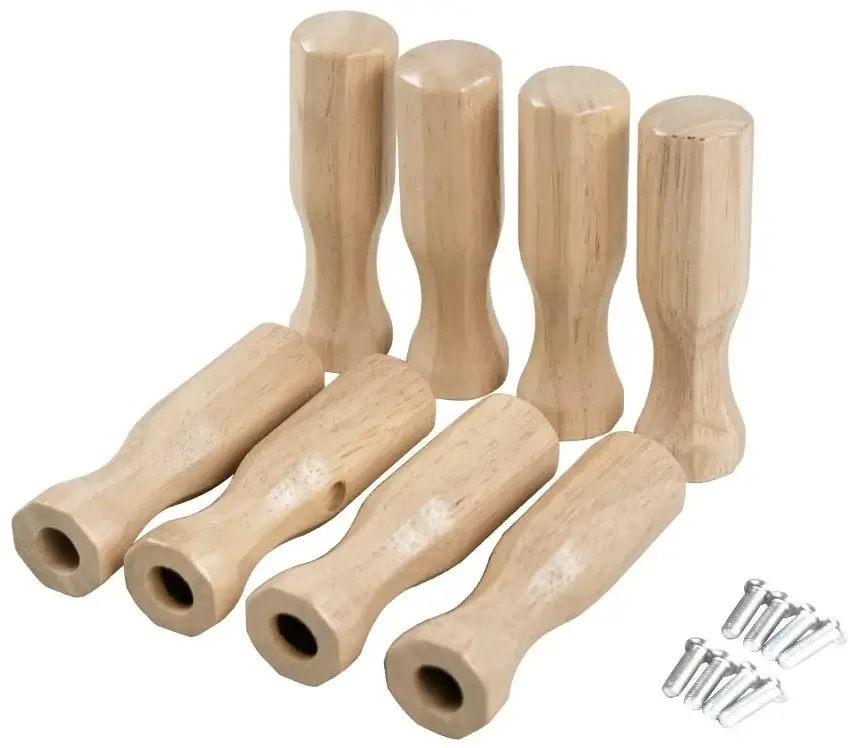
The GAMESUN set is the broadest wooden option in this comparison.
The eight-piece set can replace every handle on a compatible table, creating consistent length, shape, and material across the rod assembly.
Each handle is approximately 4.75 inches long and 1.25 inches wide. The listing describes an oak-colored finish and an octagonal exterior.
Those flat edges provide clear reference points for hand positioning. They may also help players sense rod orientation during quick defensive movements.
The set is designed for tables using nominal 5/8-inch rods. Screws are included for the handle attachment.
These wooden foosball grips also change the table’s appearance. Natural wood can suit a traditional game room better than molded plastic.
What works well
- The octagonal shape provides distinct, repeatable surfaces.
- Wood gives the table a traditional finish.
- Included screws simplify installation on compatible rods.
- Matching dimensions can create a more balanced feel across both sides.
What to check first
A 5/8-inch rod does not automatically guarantee a reliable fit.
The screw hole in the handle must align with the hole in the metal rod. A small difference can prevent the fastener from passing through both components.
The handle may also fit the rod but sit too far inward or outward. That can change cabinet clearance and usable rod travel.
Choose these when you want eight matching wooden foosball handles and have verified both rod diameter and screw placement.
For buyers comparing wooden handles for a full-size table, this is the clearest complete set in the group. It is less suitable when only one or two handles need replacing.
TOSAMZOO Black Plastic Grips: For an Economical Eight-Handle Replacement
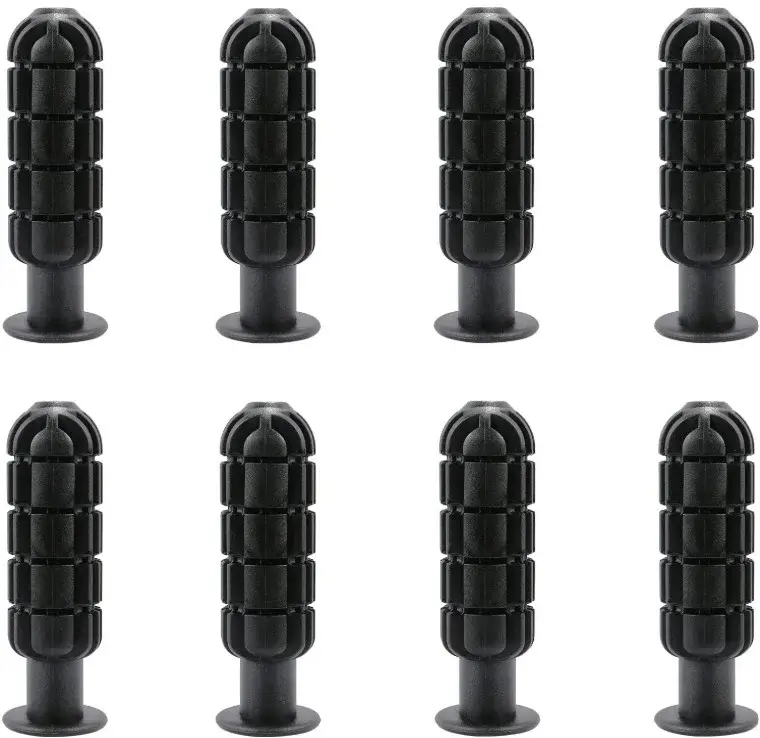
This set takes a simple full-table approach.
You receive eight black plastic handles with a toothed exterior surface. The molded construction keeps them lightweight and visually consistent.
Black works with most cabinet finishes and player colors. That makes this set practical for home tables, schools, offices, and recreation rooms.
The manufacturer describes them as replacements for standard foosball tables. That sounds promising, but “standard” remains too vague for confident ordering.
What works well
- Black is easy to match with existing hardware.
- Plastic is straightforward to clean.
- The toothed shape creates a more textured external surface.
- Matching handles/grips help maintain consistent dimensions across both sides.
What to check first
The listing does not provide a dependable internal-hole measurement.
It also shows product dimensions that do not resemble real handle dimensions. Those figures should not guide a buying decision.
Ask the seller for the bore and mounting measurements, then compare them with a confirmed compatible handle from your table model.
Another option is comparing the set with a confirmed compatible handle from the same table model.
Do not force an undersized handle onto the rod end. You could split the molded material or damage the attachment point.
An oversized handle creates the opposite problem. It may rotate around the rod or loosen during normal play.
Consider this set only after verifying the bore diameter and attachment method.
This black foosball table handle set suits practical replacement projects. It is not the strongest choice for buyers who need fully documented dimensions.
SquEqu 1/2-Inch Foosball Handles: For Tabletop and Smaller-Rod Tables
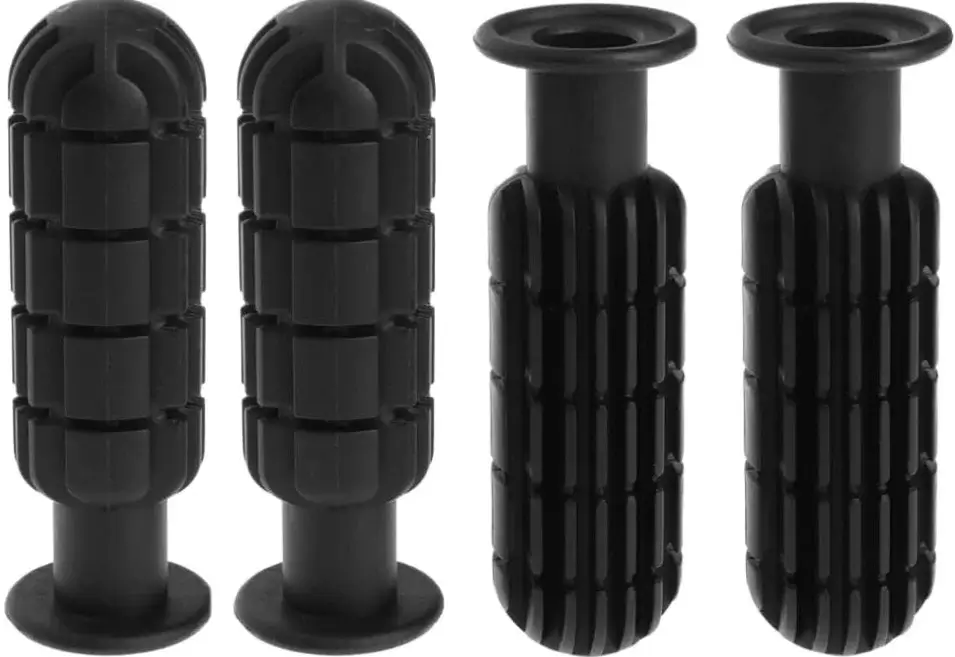
The SquEqu pack serves a clearly different group of buyers.
Its listed 1/2-inch handle hole separates it from the nominal 5/8-inch handles found on many larger tables.
The pack includes four plastic handles. Each one measures approximately 3.7 inches long and 1.14 inches across.
Those compact dimensions make the set more relevant to desktop and smaller table soccer models. The listing confirms a 1/2-inch internal hole and a four-piece package.
It also lists the length as 94 mm and the outside diameter as 29 mm. One published measurement incorrectly says the hole is 12.7 centimeters.
That is an obvious unit error. A 0.5-inch hole equals approximately 12.7 millimeters, not centimeters.
What works well
- The internal-hole size is clearly identified.
- Four handles may cover one side of many tables.
- Compact dimensions suit smaller cabinets and rods.
- Plastic construction keeps the parts lightweight.
- The pack is useful when several handles are damaged.
What to check first
Do not treat this as a standard full-size foosball handle.
A 1/2-inch handle hole will not fit correctly over a 5/8-inch rod. The difference may sound small, but it equals 1/8 inch.
In replacement hardware, 1/8 inch is not a rounding error. It is the difference between installation and frustration.
You should also inspect the rod end for a screw, pin, thread, or pressure fitting. The correct bore diameter alone does not confirm the handle connection.
This is the clearest option for 1/2-inch rods, especially on compact or tabletop tables.
Foosball is forgiving about missed passes. Hardware is less forgiving about missing millimeters.
Tornado Wood Grips: For a Traditional Tornado Handle Shape
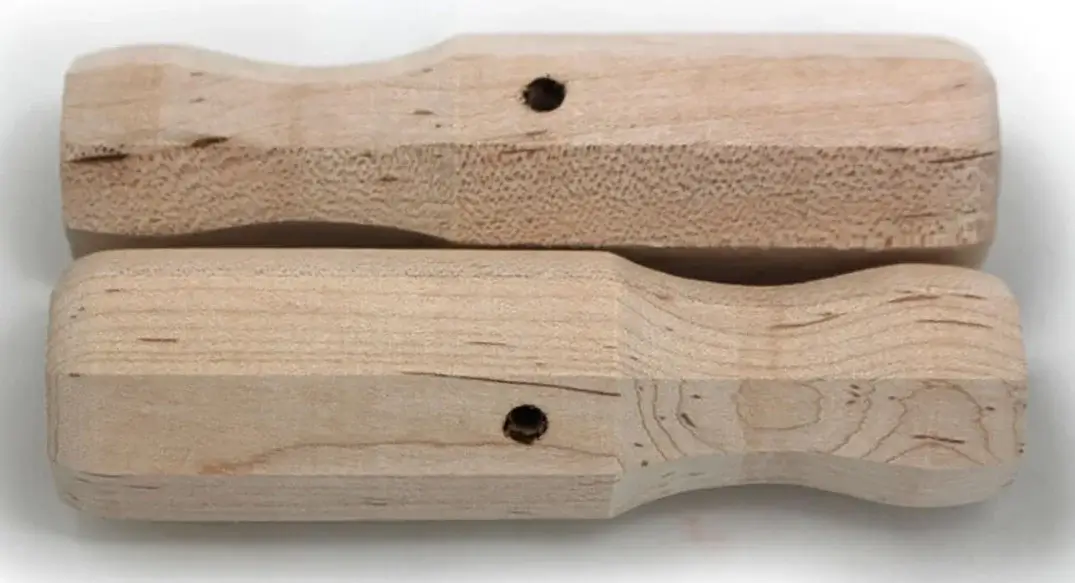
Tornado wood handles appeal to players who prefer a firm wooden surface.
The package includes two approximately five-inch grips made from white maple with a hard-edge octagonal shape.
The edges offer more than a visual detail. They create repeatable surfaces that can help players recognize rod orientation by touch. That is useful when attention stays on the ball and the player figures.
The wooden construction also has a more traditional appearance. It can suit older Tornado tables or intentional material conversions.
What works well
- White maple provides a solid wooden construction.
- The octagonal shape offers distinct orientation points.
- Two handles suit small repairs or gradual conversions.
- The design is intended as a Tornado replacement component.
What to check first
Buyer feedback on fit and pin alignment is mixed.
Buyer feedback on pin alignment is mixed, with some reporting a correct fit and others reporting mismatched positioning.
That matters because rod diameter is only one part of the handle fitting. The transverse pin or fastener must meet the opening in the playing rod.
Do not order several pairs until you confirm one pair on your table. Measure from the handle’s inner end to the mounting-hole center. Then compare that number with your existing component.
The listed information does not justify calling these universal 5/8-inch grips. Treat them as a Tornado-specific aftermarket handle that still requires verification.
Choose Tornado wood handles when you specifically want maple and an octagonal reference shape.
They are less suitable when preserving the original plastic equipment on a current T-3000 matters more.
Tornado Plastic Handles: For Current Tournament-Style Tornado Tables
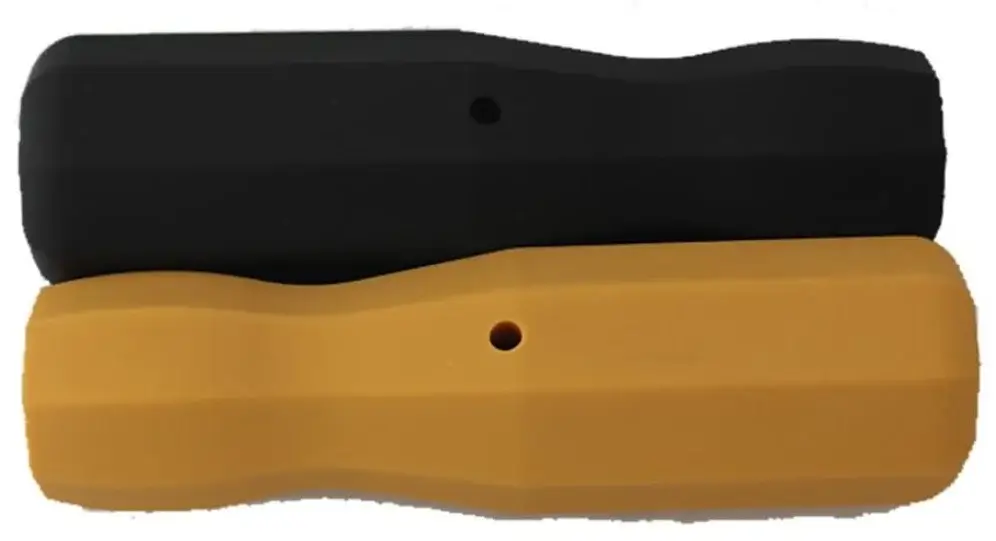
This is the most precisely documented replacement in the comparison.
The package includes two plastic handles in black and yellow. Each handle measures approximately 4 7/8 inches long.
The published handle hole is 5/8 inch. The mounting-hole center sits 2 7/16 inches from the inner end. Those measurements give buyers more useful fitting information than a vague “standard” label.
These handles are associated with the Tornado T-3000 and Platinum Tour Edition.
Tornado currently lists plastic grips as standard equipment on both tables. Both models also use hollow steel rods and split bearings.
The black and yellow colors also separate the two playing sides. That preserves the familiar tournament-style appearance.
What works well
- The handle-hole diameter is published.
- The mounting-hole position is documented.
- The overall length is available for comparison.
- The design matches current T-3000 and Platinum Tour-style equipment.
- Two handles work for replacing a broken pair or keeping spares.
What to check first
Specific measurements reduce uncertainty, but they do not remove it.
Compare the 2 7/16-inch mounting position with your existing handle. Also inspect the rod for wear, deformation, or an enlarged pin hole.
A damaged rod end may make a correct replacement feel loose. The two-piece package is also less convenient for a full-table conversion. A typical complete table uses eight handles.
This is the logical first choice for a compatible T-3000 or Platinum Tour Edition.
It follows the original-style plastic configuration and provides meaningful fitting measurements.
The Three Measurements That Determine Whether a Handle Fits
Material and finish attract attention first.
The three measurements below decide whether the handle becomes a useful replacement part. Record them before comparing colors or craftsmanship.
A digital caliper provides the clearest readings. A ruler can work, but small errors matter around mounting points.
1. Rod or Handle-Hole Diameter
Start by measuring the exposed metal rod.
Place the caliper across the rod’s widest point. Keep it perpendicular so the reading does not become distorted.
You can also measure the internal handle hole after removing the old component. Check several points if the hole appears worn. Years of movement may enlarge one side.
Common listings include 1/2-inch and nominal 5/8-inch sizes. Some European football table parts use dimensions near 15.9 or 16 mm.
Do not assume those measurements are interchangeable without checking the actual part.
A handle hole that is too narrow will not slide onto the rod. Forcing it may crack plastic or split wood.
A hole that is too wide can create movement between the handle and rod. That movement reduces the security of the handle attachment.
It can also make control feel delayed. Your hand turns first. The rod follows a fraction later.
That small amount of play becomes noticeable during passing, pull shots, and quick defensive responses. Also, identify the type of playing rod.
A hollow rod, solid rod, telescopic rod, and rotating rod may use different handle connections. Two rods with similar outside diameters can still require different hardware.
Never round 1/2 inch up to 5/8 inch.
Measure the handle hole and rod end as separate components whenever possible.
2. Mounting-Hole Position
Many foosball table handles use a transverse screw, roll pin, or similar fastener.
The hole passes through the handle and rod. Both openings must align for a secure attachment. Measure from the inner end of the handle to the center of its mounting hole.
Repeat the measurement on the replacement. The Tornado plastic handle provides a useful example. Its mounting-hole center is listed as 2 7/16 inches from the inner end.
That specification tells you much more than the bore diameter alone. Suppose two handles both have a 5/8-inch hole. One may place its fastener two inches from the end. The other may place it farther back.
Both slide onto the rod. Only one allows the mounting holes to meet.
Common handle attachment systems include:
- Transverse screws
- Roll pins
- Threaded connections
- Pressure fittings
- Molded locking mechanisms
Never drill a new hole into the playing rod without understanding its construction.
A poorly positioned hole can weaken a hollow rod. It may also create sharp internal edges or affect balance.
Replacing the handle is usually safer than modifying the rod assembly.
3. Handle Length and Cabinet Clearance
Overall, handle length changes more than appearance. A longer handle moves the player’s hand farther from the cabinet. It can also require additional space around the table.
Measure the existing handle from its inner end to its outer tip. Then inspect the room. Check nearby walls, furniture, shelves, and walking paths. A football table already needs clearance for extending rods and moving players.
An extra-long handle can make a tight room less comfortable. Handle length also affects the usable hand position. Replacing one short handle with a longer one may make one rod feel different.
The mismatch becomes more noticeable when switching quickly between rods. Outside thickness matters too. A thicker handle changes hand position and leverage. A thinner handle may feel less substantial.
These differences do not make one design universally better. They simply affect ergonomics, balance, and familiarity. When possible, use matching dimensions across each side of the table.
A consistent handle shaft length helps maintain predictable spacing. Matching shapes also reduces adjustment between the two-rod, three-rod, and five-rod.
Wooden vs Plastic Foosball Handles
Material changes the handle’s weight, surface, finish, and appearance.
It does not guarantee better control by itself. A reliable fit matters more than the words “wood” or “plastic.”
Use this comparison to choose a direction after confirming compatibility.
Factor | Wooden handles | Plastic handles |
Feel | Usually firmer | Usually lighter |
Shape | Frequently octagonal or hard-edged | Often ribbed or toothed |
Appearance | Traditional game-room style | Functional, modern equipment style |
Consistency | Natural materials can vary slightly | Molded construction is generally uniform |
Maintenance | Finish may show wear over time | Usually easy to wipe clean |
Damage pattern | May dent, split, or develop surface wear | May crack, deform, or loosen |
Best application | Traditional tables and defined edge preferences | Casual replacements and OEM-style tournament tables |
Wooden foosball handles often provide clearer edges.
That can help players recognize orientation without looking down. Their additional weight may also feel more substantial.
However, natural wood can show small variations in texture and finish. It may also react differently to moisture and repeated use.
Plastic grips offer consistent molded dimensions. They are lightweight, easy to clean, and common on modern tables. Tornado currently uses plastic handles on its T-3000 and Platinum Tour Edition.
Plastic is not automatically faster. Wood is not automatically more accurate. Shot accuracy and passing depend on several connected factors:
- Secure attachment
- Correct handle dimensions
- Handle shape
- Rod straightness
- Bearing condition
- Player technique
- Condition of the player figures
- Overall rod assembly
A loose wooden handle will not provide better control than a secure plastic one. Likewise, a well-fitted wooden handle may feel excellent on a table designed for it. Choose material after fit. That order prevents many disappointing purchases.
Round, Toothed, or Octagonal: Why Handle Shape Matters
Shape affects how the handle feels during rotation.
It also influences how easily a player recognizes the rod’s position. Different players prefer different reference points.
There is no shape that suits every hand or playing style.
Octagonal handles
Octagonal handles provide several flat surfaces.
The edges create consistent tactile reference points. Players can often sense whether the figures face forward, backward, or downward.
This can improve orientation awareness. It does not automatically improve shot accuracy. That still depends on technique and the condition of the table.
Both GAMESUN and Tornado wood handles use an octagonal design.
They may appeal to buyers who want a traditional handle shape. They also suit players who dislike a completely round surface.
Toothed grips
Toothed plastic handles use raised sections around the exterior.
These sections create a more textured surface. They also give the fingers multiple contact points. The TOSAMZOO handles follow this general design.
A toothed shape may suit casual tables where players want an obvious surface texture. However, texture cannot compensate for an uncertain bore size.
A secure attachment remains essential.
Rounder handles
Rounder handles offer smoother, continuous rotation. Some players enjoy that movement. Others miss the orientation clues provided by hard edges.
Diameter becomes especially important on round designs. A handle that is too thick may feel cumbersome. One that is too narrow may feel insubstantial.
Hand size, playing style, and familiarity all influence the preferred thickness. The safest approach is matching a shape you already use comfortably.
Buyers making a full conversion should test one pair first. That is especially useful when moving from plastic to wood.
How to Replace Foosball Table Handles
Handle replacement is usually a manageable maintenance job.
The exact process depends on whether the handle uses a pin, screw, thread, or pressure fitting. Inspect the existing connection before reaching for tools.
Support the rod throughout the process. A replacement handle is cheaper than a bent playing rod.
Step 1: Document the Existing Handle
Take clear photographs before removing anything.
Capture the fastener, rod end, and handle position. These images provide a reference during reassembly.
Record the following measurements:
- Rod diameter
- Internal handle-hole diameter
- Overall handle length
- Outside thickness
- Mounting-hole position
- Fastener type
- Distance from the cabinet
Also note the handle orientation.
Some octagonal grips may be installed with a particular flat surface facing upward. Consistency helps the finished table feel deliberate.
Step 2: Remove the Screw or Fastener
Hold the rod steady near the cabinet.
Remove the screw, pin, or fastener using the appropriate tool. Do not let the rod twist against the player figures.
Pull the handle straight from the rod end. Avoid rocking it aggressively from side to side. That movement can enlarge the mounting hole or stress a hollow rod.
If the handle will not move, inspect the connection again. It may use threads or a hidden locking mechanism. Forcing the wrong attachment style can damage both parties.
General replacement guidance also recommends checking rod condition and measuring diameter before fitting a new component.
Step 3: Test One Replacement Handle
Install one handle before opening or mounting the entire set.
Slide it onto the rod without forcing it. Check whether the handle sits straight. Align the mounting holes.
Insert the correct screw or fastener, then tighten it securely. Do not overtighten plastic or wooden components.
Test for movement between the handle and rod. Rotate the rod through a full turn. Slide it through its normal travel.
Check that the handle clears the cabinet and surrounding furniture. A handle should not wobble independently from the rod. It should also avoid rubbing against the cabinet.
Step 4: Install the Remaining Handles Consistently
Once the first test succeeds, install the remaining handles.
Keep their orientation consistent. Use matching hardware where possible. Tighten each fastener firmly without crushing the material.
After installation:
- Rotate every rod.
- Slide every rod through its full range.
- Listen for rubbing or clicking.
- Check the handle mounts for movement.
- Confirm equal clearance on both sides.
- Retighten any loose fasteners carefully.
Inspect the table again after several games. New components may settle slightly during use. A quick check can catch movement before it becomes damage. Check this guide if you want to fix something else as well on your foosball table.
Final Selection Guide
Choosing among these five options becomes easier once the measurements are known.
Start with the rod.
Then compare attachment style, length, shape, material, and pack size.
- For eight wooden 5/8-inch handles: Choose GAMESUN after confirming screw alignment.
- For an eight-piece black plastic set: Consider TOSAMZOO after verifying the bore.
- For explicitly measured 1/2-inch rods: Choose SquEqu.
- For a wooden Tornado conversion: Consider Tornado Wood after checking pin placement.
- For compatible T-3000 and Platinum Tour tables: Start with Tornado Plastic.
At Foosball Junkie, our rule for replacement parts is simple:
Measure the rod and mounting position first. Choose the attractive handle second.
An “almost compatible” handle is still an incompatible handle.
Frequently Asked Questions
Small measurement differences cause most handle-buying problems. These answers cover the questions buyers should settle before ordering replacement parts.
Are foosball handles universal?
No. Rod diameter, internal-hole diameter, mounting method, handle length, and mounting-hole position can differ. Even handles advertised for “standard” tables may not fit every brand or model.
A handle can have the correct bore diameter but the wrong fastener alignment. Always compare the replacement with the existing component.
What size are standard foosball handles?
“Standard” is not a precise measurement. Buyers may encounter 1/2-inch handles, nominal 5/8-inch handles, and model-specific components.
Some table soccer parts are labeled using millimeters instead of inches. For example, 5/8 inch is close to 15.9 mm.
Do not rely on the product title alone. Confirm the actual rod diameter and mounting details.
How do I measure a replacement foosball handle?
Remove one existing handle and record:
- Internal-hole diameter
- Rod diameter
- Overall length
- Outside thickness
- Mounting-hole location
- Attachment type
- Distance from the handle to the cabinet
Use calipers when possible.
Measure from the inner handle end to the center of the mounting hole. That measurement often decides whether a screw or pin will align.
Are wooden foosball handles better than plastic?
Neither material is universally better. Wood offers a firmer surface, traditional finish, and frequently defined edges.
Plastic is lightweight, uniform, easy to clean, and used on current Tornado tournament-style tables. The better option depends on compatibility and personal preference.
A properly fitted wooden handle may feel excellent on a compatible table.
Will 1/2-inch handles fit 5/8-inch rods?
No.
A 1/2-inch hole is smaller than a 5/8-inch rod. Do not force the handle onto the rod. That can crack the handle or damage the rod end.
Choose a replacement with the correct internal diameter.
Can I replace only one foosball handle?
Yes, provided the replacement matches the required dimensions. The bore, fastener, mounting position, and usable length must align.
However, one different handle may change the feel of that rod. Matching handles across one side creates more consistent dimensions. A full-table set provides the most uniform appearance and handling.
Which handles fit a Tornado T-3000?
The Tornado plastic option is the most direct starting point.
Its published specifications include:
- Approximately 4 7/8-inch overall length
- A listed 5/8-inch handle hole
- A mounting-hole center 2 7/16 inches from the inner end
Tornado also lists plastic handles as standard equipment on the current T-3000. Compare those measurements with your existing handle before ordering.
Can I put full-size handles on a tabletop foosball table?
Usually not without confirming every measurement. Tabletop tables often use smaller rods, shorter handles, and compact cabinets.
A full-size handle may have the wrong bore diameter. It may also create clearance problems around the smaller cabinet. For a compact football table, start by measuring the existing handle and rod.
The SquEqu option is specifically differentiated by its 1/2-inch internal hole. That makes it more relevant to many smaller models.
Should I replace all eight grips together?
Not always.
Replacing one or two handles makes sense when the remaining parts are in good condition.
A full set becomes more useful when:
- Several handles are cracked or loose.
- The existing handles have uneven wear.
- You are changing from plastic to wood.
- Different replacement parts were installed previously.
- You want matching length and shape across the table.
Test one replacement before converting the full table. That simple step can prevent eight identical fitting problems.