Manual Foosball Scorekeeping Systems Reviewed
The most useful foosball counter is not necessarily the most elaborate one.
Your real decision depends on what is missing, how your table is built, and how many units need replacing. Each recommendation below addresses a different repair or upgrade situation.
When Both Score Bars Need Replacing: Action FBSCOR
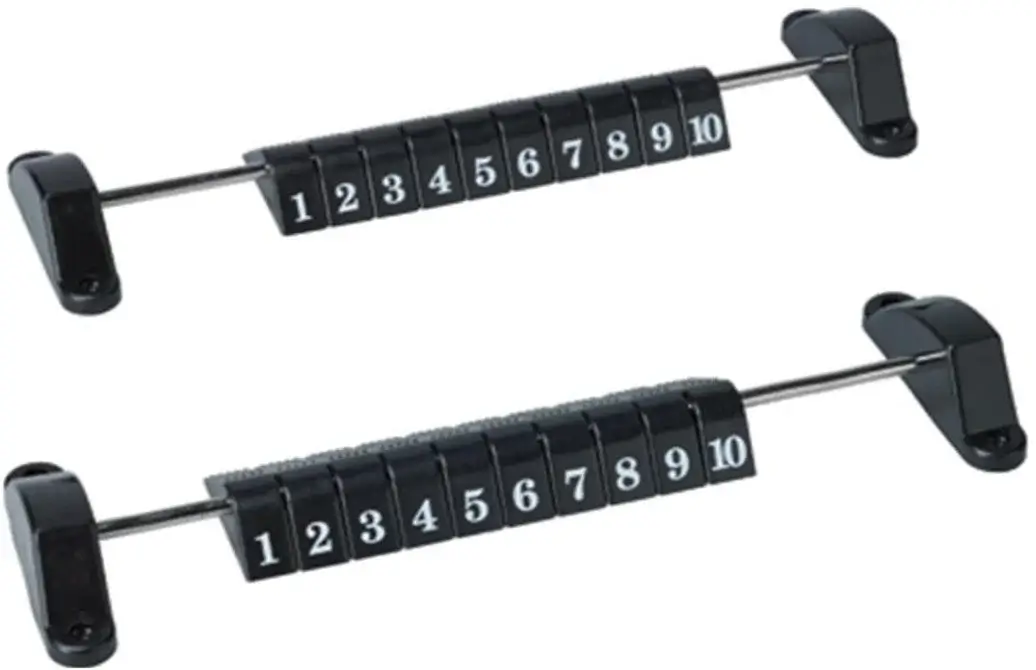
Two damaged score bars often create a surprisingly awkward repair.
Replacing only one may leave your table with mismatched rails, different marker resistance, or uneven mounting hardware. The Action FBSCOR avoids that issue by supplying two complete scorers.
Each black plastic scoring rod measures approximately 11.25 inches. The package also includes four plastic mounting stoppers.
Its manual point-counting mechanism records scores up to 10. Players slide a marker after each confirmed goal.
That simple action provides clear score progression without batteries, sensors, or calibration. It also keeps score updates quick during casual games.
Users commonly report that the scorers work well and install without much difficulty. The plain black finish suits many home and recreational tables.
The two-piece package is the main advantage. Both ends can receive the same foosball scoring unit during one repair.
Best for: Owners replacing both missing, broken, or visually mismatched score bars.
Not ideal for: Tables with unusually narrow cabinets or nonstandard mounting spans.
A common issue involves installation hardware. The included stoppers are useful, but buyers should not assume every required screw is supplied.
Fit also varies between tables. One buyer may describe the size as exact, while another may find the rod too long.
Compared with a numbered foosball table scoreboard, the Action system has a simpler appearance. Its markers show score progression, but printed digits may be easier to read from farther away.
Pros
- Two matching scorers are included.
- The mechanism counts up to 10 points.
- Black plastic blends with many cabinet styles.
- The score counting device has a few parts to fail.
Trade-off
The mounting layout may require adjustment or separate screws.
Verdict: Choose the Action FBSCOR when both generic score bars need a straightforward, matching replacement. Measure the mounting distance before treating it as a guaranteed fit.
When a Custom Table Needs One Complete Rail: Brybelly GFOO-405
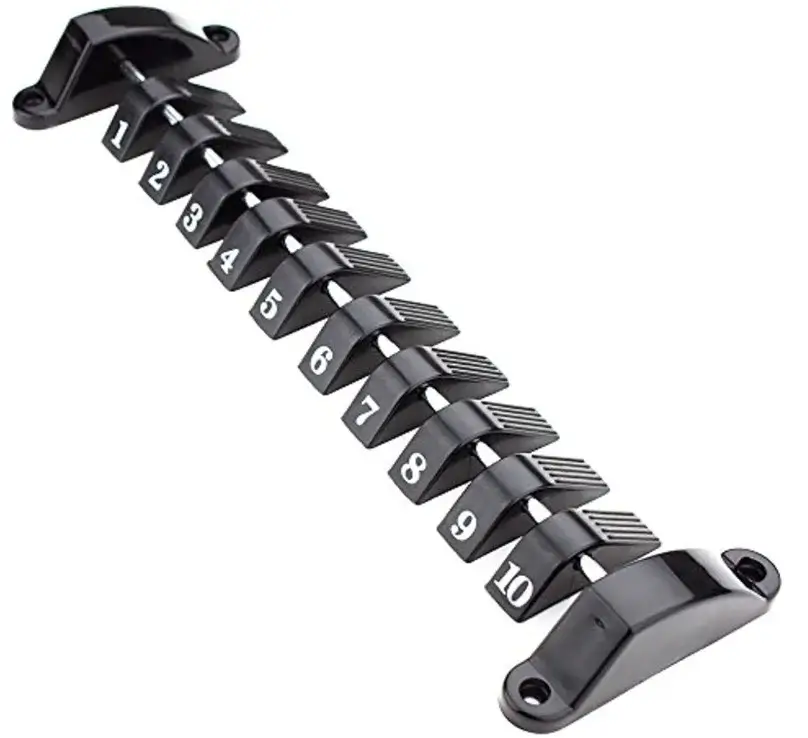
A custom or restored table presents a different problem.
You may need one visible scoring rail rather than two minimal marker rods. The Brybelly GFOO-405 addresses that use case with a single numbered display.
The plastic rack is approximately 11.9 inches long and 3.2 inches wide. Its numerical display tracks points from 1 to 10.
Players can identify the current score without counting bead positions. That matters in busy game rooms where spectators also follow the match.
Four small mounting holes support screw-on installation. When positioned correctly, the rail should remain clear of handles, rods, bearings, and endcaps.
Its size and visible numbers make it useful for a homemade table soccer cabinet. It also suits restoration projects where the original scoring unit has disappeared.
Consider a basement table with one cracked counter and one usable original rail. Buying a matched pair may create unnecessary work.
The Brybelly gives the owner a practical single-unit option.
Best for: DIY builders, table restorers, and buyers replacing one damaged scoring rail.
Not ideal for: Anyone who needs two matching counters in one package.
The scoring mechanism is intentionally basic. There is no automatic score tracking or electronic display board.
That simplicity reduces maintenance. However, every point still depends on a player moving the marker.
The word “universal” deserves caution here. It describes broad application, not guaranteed mounting-hole alignment.
Compared with a compact rod-style foosball scorer, this rail occupies more cabinet space. In return, it provides a larger and more obvious numerical readout.
Pros
- Printed numbers improve score visibility.
- One complete scoring unit suits targeted repairs.
- The design supports custom installations.
- The rail counts from 1 to 10.
Trade-off
Ordering one unit will not complete a two-sided replacement.
Verdict: The Brybelly works best when you need one readable counter for a custom or refurbished table. Confirm the quantity before ordering, since many tables require two units.
When Players Keep Confusing the Sides: Alomejor Red and Blue Counters

Dark rooms and fast matches expose a weakness in plain scoring hardware.
Small black markers can disappear visually, especially when both scoring units look identical. The red and blue Alomejor set prioritizes quick team identification.
The package includes two numbered counters. One uses a red background, while the other uses blue.
Contrasting white numbers display score positions from 1 to 10. Players can check the score indicator without studying bead spacing.
This color separation is useful in family rooms, schools, offices, and group settings. New players can quickly learn which counter belongs to each side.
The scoring pieces are designed for easy manual updates. After a goal, the player advances the relevant indicator to the next number.
Users report that the counters are generally easy to operate and install. The plastic construction also keeps the units lightweight.
Best for: Buyers who value visibility and clear team separation over a traditional appearance.
Not ideal for: Restorations where every accessory should match a subdued wood or black cabinet.
The bright colors are both the strength and the limitation.
They are difficult to overlook during play. However, they may look out of place on furniture-style tables.
The units also require assembly. Buyers should confirm the mounting measurements instead of relying on “standard table” wording.
Compared with plain scoring beads, these counters provide a more explicit score display. Beads may look cleaner, but numbers reduce interpretation.
Pros
- Two counters cover both teams.
- Red and blue backgrounds improve side recognition.
- White numbers create a readable score display.
- The system records up to 10 points.
Trade-off
The bold colors may clash with traditional table finishes.
Verdict: Choose this set when fast score recognition matters more than subtle styling. It is especially useful when guests regularly lose track of which marker belongs to them.
When Bright Hardware Would Spoil the Table: Alomejor Black Counter Set
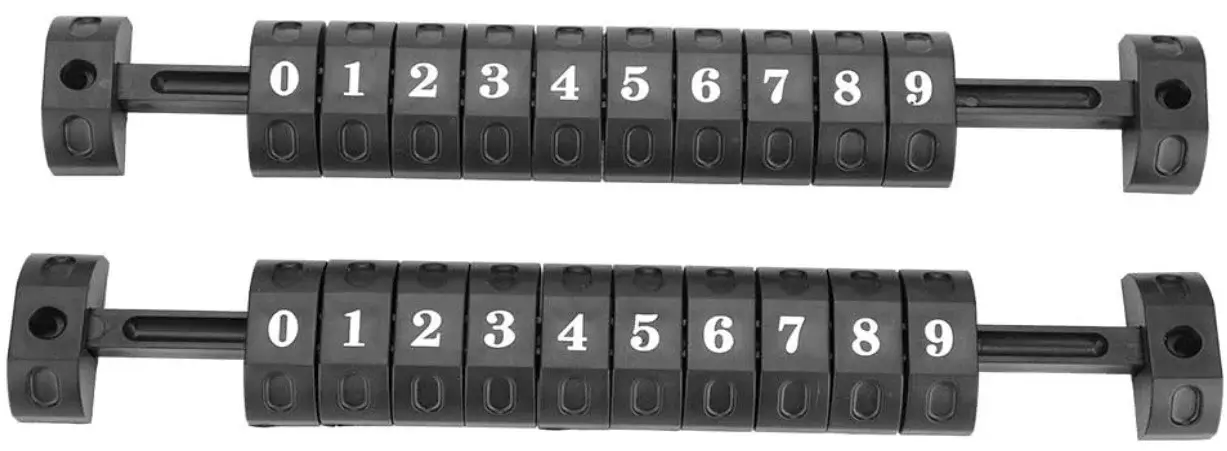
Some buyers want visible numbers without turning the cabinet into a traffic signal.
The black Alomejor counters serve that middle ground. They provide numerical score tracking while keeping the hardware visually restrained.
The package contains two black scoring units. Each counter has 10 numerical positions.
Ridged scoring pieces provide extra grip during manual score updates. That detail helps when smooth markers become difficult to move with sweaty or dusty fingers.
The counters measure approximately 11.02 x 1.57 x 0.79 inches. Their narrow profile is useful where a wider scoreboard attachment might crowd the handles.
Black hardware can blend naturally with dark cabinets, black trim, or modern game-room furniture. It looks less playful than the red and blue version.
Best for: Buyers seeking a compact numerical foosball scorekeeper with a neutral appearance.
Not ideal for: Dim rooms where black components and low contrast make small numbers harder to see.
This model performs the same basic scorekeeper function as the colored Alomejor set. Its primary distinction is appearance, followed by its listed dimensions.
Visibility depends heavily on lighting. A black-on-black installation may look clean while becoming harder to read during evening play.
Compared with the Brybelly rail, this package provides two scoring units. The Brybelly offers a wider scoreboard-style display, but only one counter is supplied.
Pros
- Two scoring counters are included.
- Numerical positions remove guesswork.
- Ridged pieces are easier to manipulate.
- The compact design suits limited cabinet space.
Trade-off
The neutral finish can reduce visibility under weak lighting.
Verdict: The black Alomejor set suits buyers who want numbers without bright team colors. Check contrast and lighting before choosing appearance over readability.
When a Tornado Table Deserves Original-Style Parts: Tornado GRG17203
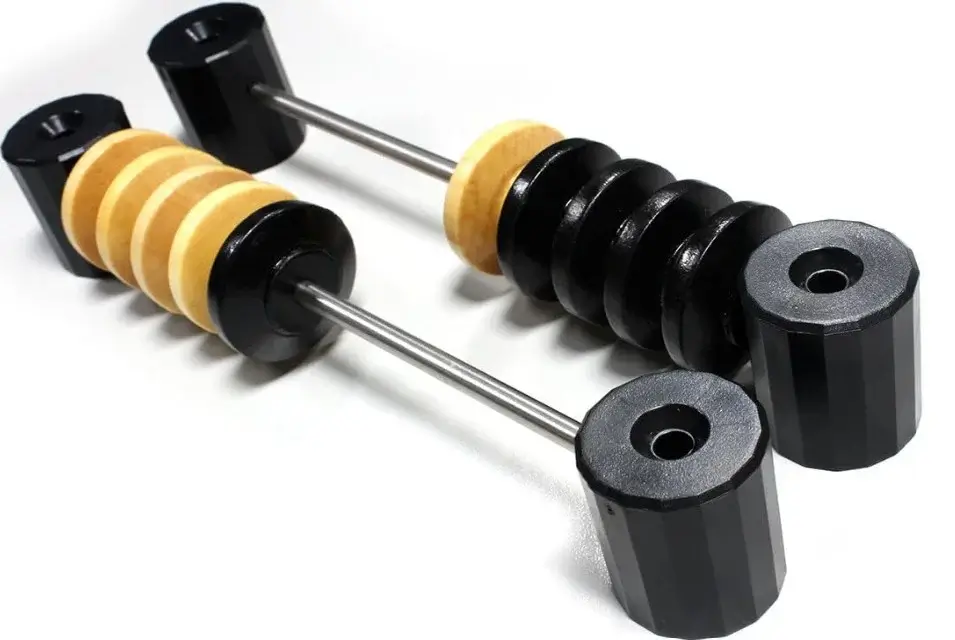
Generic parts solve many repairs, but they do not always look correct.
A Tornado owner restoring an original cabinet may prefer the familiar bead-based scoring mechanism. That is the reason to consider the Tornado GRG17203 assembly.
The set includes four posts and two rods. It also contains five black and five blonde scoring beads.
Instead of printed digits, players move one bead after each goal. The result feels visually integrated with traditional Tornado table hardware.
The simple rods and beads have no screen, wiring, or internal electronics. They provide immediate manual score tracking with minimal maintenance.
The assembly is most valuable when authenticity matters. Generic numbered counters may function correctly while looking added afterward.
Best for: Restoring a compatible Tornado table with an original-style scoring assembly.
Not ideal for: Unconfirmed table models or buyers wanting large printed numbers.
Brand-specific construction is the key advantage. It is also the main limitation.
Post spacing and mounting points must match the cabinet. Do not assume the assembly fits another brand because the overall shape looks similar.
Compared with generic plastic counters, the Tornado assembly is more specialized. Its scoring beads provide traditional character but not a numerical display.
Five beads also suit common games played to five. Different formats may require another method for tracking games won or extended scores.
Pros
- Original Tornado-style scoring components are included.
- Two rods support both sides of the table.
- Contrasting bead colors make point tracking simple.
- The mechanism suits traditional Tornado aesthetics.
Trade-off
Compatibility is narrower than with generic replacement counters.
Verdict: This is the logical choice for a confirmed Tornado restoration. For an unknown cabinet, measure first and avoid buying solely because the parts look familiar.
Which Foosball Scoring Mechanism Does Your Table Need?
A scoring mechanism affects more than appearance.
It determines how quickly players read, update, and reset the score. The best format depends on your table, lighting, match style, and willingness to install electronics.
Numbered Scoring Rails
Numbered rails display the current score as printed digits.
They are usually easier to read from across the room. Most generic replacement models provide positions from 1 to 10.
A 10-position foosball point counter can still support games played to five. Players simply stop when the agreed winning score is reached.
This system works well for:
- Family game rooms
- Schools and recreation areas
- New players
- Tables used by rotating groups
- Buyers who dislike interpreting bead positions
The limitation is size. A wider score display panel may occupy more cabinet space than a simple rod.
Bead-Style Counters
Bead counters use one moving marker for each recorded point.
Their scoring mechanism is simple and durable. They also match the design language of many traditional tables.
The International Table Soccer Federation uses the term “tally marker” for a table fixture that records points, games, or time-outs. Its rules also distinguish the points target for a game from the game’s target for a match.
Some competitive tables use additional beads or marker groups. Those extra manual scoring markers may track games won or time-outs.
A single row of beads usually records only the current game. It does not create a permanent match record.
Electronic Foosball Scoreboards
An electronic foosball scoreboard replaces sliders with a digital score display.
Basic systems use buttons for manual updates. More advanced builds detect goals and produce real-time score updates.
Automatic systems usually require:
- Sensors near each goal or ball-return channel
- A controller
- A digital or LED score display
- Wiring or wireless communication
- A power source
- Reset controls
- Calibration and testing
A documented Arduino scoreboard project used light-based goal detection and a digital display. Its creator tested several sensor ideas before using a laser and photoresistor arrangement.
This illustrates the central trade-off.
Automated scoring removes manual updates, but installation becomes much more demanding. False triggers, blocked sensors, loose wiring, and power interruptions can affect score recording.
None of the five products reviewed above provides electronic score tracking. They are manual foosball table scorekeeper products.
A foosball table electronic scoreboard belongs to a different accessory category.
Foosball Counter Compatibility and Installation
A replacement counter cannot help if it blocks a handle or misses every existing hole.
Compatibility should guide the purchase before color, display style, or review rating. A ruler can prevent a frustrating return and unnecessary cabinet damage.
Measurements to Check Before Buying
Remove the old counter carefully, then record these measurements:
- Total counter length
- Distance between mounting posts
- Distance between screw holes
- Available cabinet width
- Available cabinet depth
- Clearance from handles and endcaps
- Clearance from rods and bearings
- Rod diameter when replacing loose beads
- Cabinet thickness
- Surface-mounted or recessed placement
Measure from the center of each hole when checking mounting spacing. Outside-to-outside measurements can produce misleading results.
Also, move every nearby rod through its full range. A score counter placement may look safe while the handles remain still.
One Counter or a Pair?
Package quantity causes avoidable ordering mistakes.
The products in this guide are supplied as follows:
- Action FBSCOR includes two scorers.
- Brybelly GFOO-405 includes one rail.
- Alomejor Red and Blue includes two counters.
- Alomejor Black includes two counters.
- Tornado GRG17203 includes two scoring assemblies.
Inspect both sides before buying.
A worn counter at one end often means the opposite side is also becoming brittle. Replacing both can create a cleaner and more consistent result.
However, buying two individual units may be wasteful when only one custom rail is missing.
Confirm the Included Hardware
Product photos can make an assembly appear more complete than it is.
Confirm whether the package contains:
- Screws
- Mounting stoppers
- Brackets
- Posts
- Rods
- Beads
- Sliding markers
- Adhesive pads
- Installation instructions
Do not reuse damaged or rusted hardware simply because the hole spacing matches.
Loose screws allow the scoring unit to move. Overtightened screws can crack plastic mounts or damage a thin cabinet wall.
Installing a Counter on a Wood Foosball Table
Searching for a wood foosball counter often leads to plastic products.
That is not necessarily a problem. Plastic rails and bead assemblies can work well on a wood foosball table.
The mounting method matters more than the counter material.
Use a screw length suitable for the cabinet thickness. A screw that is too long may enter the playing area or contact internal components.
Small pilot holes can reduce surface splitting. They also help keep the scoreboard attachment aligned during installation.
Before drilling:
- Mark every hole.
- Check the underside of the mounting area.
- Move the nearby rods and handles.
- Confirm the counter faces the correct direction.
- Test the marker movement.
- Drill only after checking the layout twice.
“Measure twice, score to five” is not an official rule.
It is still useful workshop advice.
Safety note: Cabinet designs vary. Follow the table manufacturer’s instructions when available, and disconnect powered accessories before drilling.
How the Foosball Points System Works with a Score Counter
A counter records decisions made under the chosen match format.
It does not decide what score wins. Players should agree on the point limit and match structure before the first kick-off.
One valid goal adds one point to the scoring team. Move the relevant marker after everyone confirms the goal.
Do not delay the update until the next serve. That habit creates disputes when another goal follows quickly.
Reset both scoring sides before beginning a new game. A forgotten marker can turn the first goal into a debate about whether the score is 1 to 0 or 2 to 0.
The foosball points system should also separate games from matches.
The ITSF Standard Matchplay Rules define a game as ending when one team reaches the points target. A match ends when one team reaches the game’s target.
The team that conceded the previous point receives the subsequent kick-off.
A basic foosball point system may therefore need two forms of score recording:
- One counter for points within the current game
- Another marker or record for games won
The official ITSF match scoreboard reflects that distinction. It provides separate rows for five games, plus time-out and foul-recording areas.
The first four game rows show score positions through five. The deciding-game row extends through eight.
Home players do not need that full score management system. They do need a clear winning condition.
Agree whether you are playing one game, best of three, or another format. Then use the counter consistently until the final score is confirmed.
Manual Counter, Electronic Scoreboard, or Score Tracker?
A physical counter is not always the only scoring solution.
Some buyers need a simple current score. Others want match statistics, player rankings, or a visible display for spectators.
|
System |
Best For |
Advantages |
Limitations |
|
Manual numbered counter |
Home and recreational tables |
Clear digits, simple installation, no power needed |
Must be updated manually |
|
Bead scoring assembly |
Traditional and brand-specific tables |
Durable, compact, visually integrated |
Numbers may not be displayed |
|
Electronic scoreboard |
Commercial rooms and custom builds |
Large display, sounds, timers, possible automation |
Requires power, sensors, wiring, and calibration |
|
Phone score tracker |
Match history and player records |
Can store results, statistics, and rankings |
Not physically integrated into the table |
Manual Counters Keep the Table Self-Contained
A manual counter works whenever the table works.
There is no battery to charge or sensor to clean. Players can also see the score without opening an app.
The trade-off is human input.
Someone must move the marker after every goal. Finger counting works until both players remember a different finger.
Electronic Systems Improve Visibility
An electronic scorekeeper can provide a larger display.
Some systems add sound effects, timers, remote controls, and automatic score updates. That makes them appealing for clubs, offices, and custom entertainment rooms.
However, a foosball table electronic scorekeeper needs more installation planning.
A sensor-based scoring system can misread a ball if the detection path becomes blocked. Manual correction and reset controls remain valuable.
Trackers Record More Than the Current Game
A foosball score tracker may store results after play ends.
That makes it useful for recurring office leagues, clubs, and competitive groups. A tracker can maintain match statistics and win-loss records.
A foosball ranking system requires more than a physical counter.
It needs:
- Saved player profiles
- Recorded match results
- A rating calculation
- Leaderboard tracking
- Rules for ties and inactive players
A basic table-mounted counter cannot produce player rankings. It only shows the current point tally.
Final Recommendation by Table Type
There is no single winner for every cabinet.
The right choice depends on your mounting layout and the problem you need to solve. Use these recommendations as a starting point, then confirm the measurements.
Replacing Both Generic Score Bars
Choose the Action FBSCOR.
Its two matching rods make it the most straightforward complete replacement. It suits buyers who value simplicity over printed numbers.
Building or Refurbishing a Custom Table
Consider the Brybelly GFOO-405.
It’s visible 1 to 10 display works well as a single replacement rail. Remember that one package will not cover both ends.
Prioritizing Fast Score Recognition
Choose the Alomejor Red and Blue set.
The contrasting colors help players separate the two teams immediately. It is practical for shared tables, although the appearance is not subtle.
Maintaining a Neutral Cabinet Finish
Choose the Alomejor Black set.
It provides two numbered counters without introducing bright colors. Make sure the display remains readable under your room lighting.
Restoring a Compatible Tornado Table
Choose the Tornado GRG17203 assembly.
Its posts, rods, and contrasting beads preserve the original-style scoring design. Confirm your exact table and mounting layout before ordering.
Compatibility matters more than appearance or advertised universality.
Measure the existing mounting points before selecting a replacement foosball table score counter. The best-looking accessory is useless when its screws miss the cabinet.
Frequently Asked Questions
Score counter terminology can become confusing because listings use several names for similar products.
These answers address the practical questions buyers usually face before ordering.
How Many Points Does a Standard Foosball Score Counter Track?
Most generic counters reviewed here track up to 10 points.
Tornado’s bead-style assembly has five beads for each side. A counter with 10 positions can still support games played to five.
The counter capacity and winning score do not need to be identical.
Does Every Foosball Score Counter Fit Every Table?
No.
Counter length, mounting span, hole pattern, cabinet thickness, and handle clearance vary. Even an attachable scoreboard described as universal may require new holes or brackets.
Measure your table before buying.
Are Tornado Score Counters Universal?
Treat Tornado score counters as brand-specific parts.
Compatibility with another cabinet should be confirmed through exact measurements. Similar appearance does not guarantee matching post spacing.
What Is the Difference Between a Foosball Counter and a Scoreboard?
A counter usually records points using beads, sliders, or numbered markers.
A foosball scoreboard may display more information, including:
- Games won
- Time-outs
- Match timers
- Player names
- Team names
- Fouls
- Match history
The words often overlap in product listings, so examine the actual scorekeeper function.
Is an Electronic Foosball Scoreboard Better Than a Manual Counter?
It is better for certain environments, not every table.
An electronic display improves visibility and may support automated scoring. It also introduces sensors, power requirements, wiring, and calibration.
A manual counter remains easier to install and maintain.
Can a Foosball Score Tracker Calculate Player Rankings?
Only when the tracker stores match history and includes rating or leaderboard functions.
A manual scoring rail cannot calculate rankings. It records the score of the current game only.
Should a Score Counter Go to 5 or 10?
It should support your preferred match format.
Five positions may be sufficient for standard race-to-five games. Ten positions provide flexibility for longer casual formats.
A 10-position counter does not require you to play to 10.
Can I Replace Scoring Beads Without Replacing the Whole Counter?
Sometimes.
You must match the bead opening to the rod diameter. The rod ends must also allow removal without damaging the mounting posts.
When rods or posts are cracked, replacing the full scoring unit is usually more practical.
The Scorekeeper Should Be the Easy Part
A damaged foosball table counter is a small component with an outsized effect.
It interrupts match score tracking, creates avoidable disputes, and makes an otherwise usable table feel unfinished. Fortunately, the correct replacement does not need to be complicated.
Choose a two-piece set when both sides need attention. Use a numbered rail when visibility matters.
Select OEM-style Tornado parts when preserving the original table design is the priority. Consider electronic scoring only when its added features justify the installation work.
At Foosball Junkie, our central buying rule is simple:
Choose the counter that fits your cabinet and scoring habits, not the one with the longest feature list.
A reliable scorekeeping device should disappear into the game.
Until someone loses 5-0 and suddenly requests a recount.