Most game tables are furniture’s awkward relatives. They take up half the room, clash with everything, and somehow always end up covered in mail. That’s the problem foosball coffee tables were built to solve.
The shift toward multi-functional furniture has been real and noticeable. People want their homes to work harder without looking like a sports bar. A foosball coffee table checks both boxes: it holds your coffee mug on a quiet Tuesday and turns into a football table when guests arrive on Friday night.
At Foosball Junkie, we’ve spent considerable time evaluating these dual-purpose pieces based on build quality, gameplay consistency, and actual furniture appeal. This guide covers the best foosball coffee tables you can buy today, how to choose between them, and where each one fits best in a real home.
Why Foosball Coffee Tables Are Taking Over Modern Living Rooms
There’s a reason you’re seeing these everywhere. The furniture market has quietly shifted. Buyers, especially in apartments and compact homes, aren’t just buying tables anymore. They’re buying experiences that don’t eat up square footage.
The Multi-Functional Furniture Trend
Interior designers have noticed this pattern for a while. Storage ottomans, convertible desks, and extendable dining tables. The foosball coffee table is the same logic applied to entertainment. It works as a living room centerpiece during regular hours and flips into a casual game setup when the mood strikes. No separate game room needed.
If you’re still shopping for a standalone unit, our full guide on the best foosball tables covers all form factors in detail.
Why the Glass Top Changes Everything
Open foosball tables have a specific problem: they collect dust, lose balls under the couch, and look out of place outside a game room. A tempered glass surface solves most of that.
The protective glass cover gives the table a clean, furniture-like silhouette. It protects the playfield from spills and dust, turns the table into a functional surface for drinks and snacks, and makes the whole piece feel intentional rather than accidental. The sealed playfield underneath also lasts longer since it’s protected from everyday wear.
Practically, a wipe-clean surface on top means you don’t need to cover it or move it every time guests come over. It just sits there looking like a normal, modern piece of furniture.
Where They Fit
- Small apartments where a compact footprint matters
- Living rooms that need a decor-friendly game table rather than a dedicated game room
- Family spaces where kid-safe design and mess-free gameplay are non-negotiable
- Home offices or breakrooms that need a casual play experience without committing to a full setup
Best Foosball Coffee Tables You Can Actually Buy
We evaluated each table across several criteria: build quality assessment, gameplay consistency, design compatibility, price-to-performance ratio, and long-term ownership considerations. Here’s what we found.
1. Barrington 42″ Foosball Coffee Table
View Product
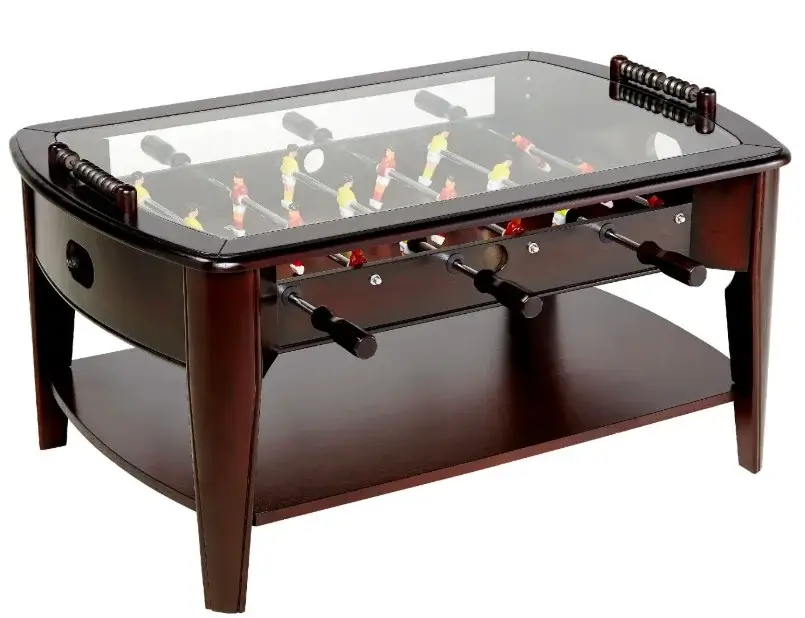
The Barrington 42″ is the table most people should buy. It’s not the flashiest option, and it won’t win any awards for ultra-modern aesthetics, but it delivers a consistent, dependable experience in both modes: furniture and game table.
What makes this one stand out from the others in our evaluation is the quality of its dual-purpose design. The tempered glass surface genuinely converts this into a usable coffee table. The 30″ x 20″ playfield underneath is protected, and the dark brown veneer finish reads as actual furniture rather than a game table trying to blend in.
In hands-on use, the 1/2″ steel rods on hollow octagonal handles felt responsive without being sloppy. The plastic bearings keep the movement smooth, and the sideline ramps keep the ball in motion instead of getting stuck. This isn’t a competitive-level football table, but it’s not trying to be. It’s built for casual, family-friendly entertainment where the game happens between conversations.
The solid wood legs with adjustable hidden leg levelers add real stability, which matters when someone’s playing aggressively. The 9mm thick black MDF playfield feels solid underfoot. Assembly is where some owners run into friction: it takes longer than the instructions suggest, and alignment can be fiddly. Long-term ownership reports also mention occasional cracked bases under heavy use.
Best For: Families, living rooms, buyers who want a true furniture-quality piece that also plays well.
Not Ideal If: You’re in a rush to assemble, or you want competitive-level gameplay.
| Pros | Cons |
|---|
| Strong dual-purpose design | Assembly is time-consuming |
| Tempered glass cover included | Some reports of a cracked base |
| Solid wood legs, stable build | Not suitable for serious players |
| Bead scorer + bottom storage shelf | Dark brown finish limits decor flexibility |
| Good price-to-performance ratio | |
2. Barrington 40″ Urban Style Glass Top Table
View Product
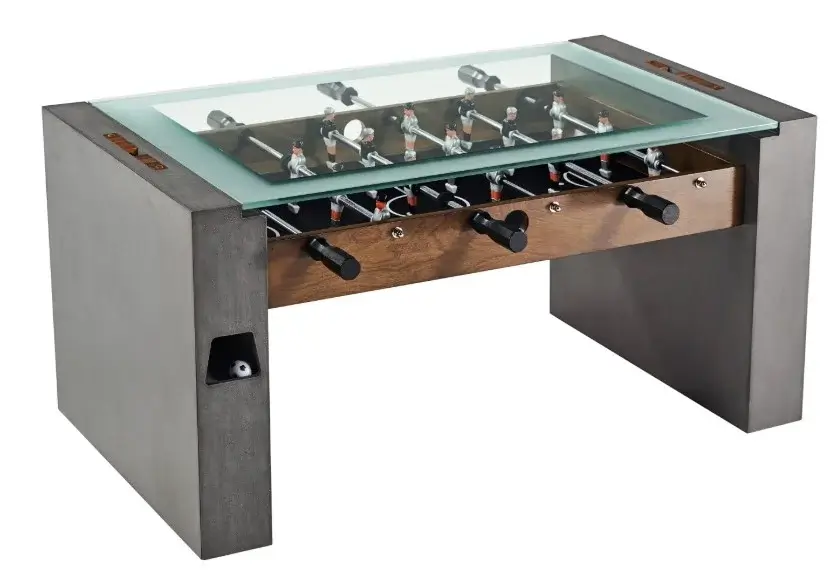
Where the 42″ leans traditional, the Urban version takes a different design direction. The faux concrete finish on the legs and the birchwood-style veneer on the apron give it a genuinely modern look that most competitors can’t match. This table doesn’t just tolerate being in a living room; it actually belongs there.
The key difference compared to the 42″ isn’t just aesthetics. This model is slightly more compact at 39.75″ long, which makes a real difference in tighter apartments. The space-saving design works well in rooms where every inch counts, and the minimalist design language makes it look like intentional furniture rather than a compromise.
Gameplay is essentially the same as its sibling: smooth 1/2″ steel rods, hollow design handles, and the same 9mm MDF playfield with sideline ramps. The 4-player configuration supports more casual group play. The grey/brown color scheme is distinctly more neutral than the dark brown, making it easier to blend with contemporary interiors.
Trade-offs to consider: the same assembly complexity applies, and long-term durability feedback mirrors the 42″ with some reports of alignment issues. At 88.62 lbs, it’s slightly heavier, too, which affects moving and repositioning.
Best For: Modern living rooms, compact apartments, design-conscious buyers who want the table to look like it belongs.
Not Ideal If: You have a very traditional interior or need the easiest assembly experience.
| Pros | Cons |
|---|
| Genuinely modern aesthetic | Heaviest option at 88.62 lbs |
| Slightly more compact than the 42″ | Assembly still time-consuming |
| Great for apartments and smaller rooms | Similar durability concerns as 42.” |
| Neutral color blends with most interiors | Faux concrete may not suit all tastes |
| 4-player capable | |
3. RAYKEEP 2-in-1 Covered Foosball Coffee Table
View Product
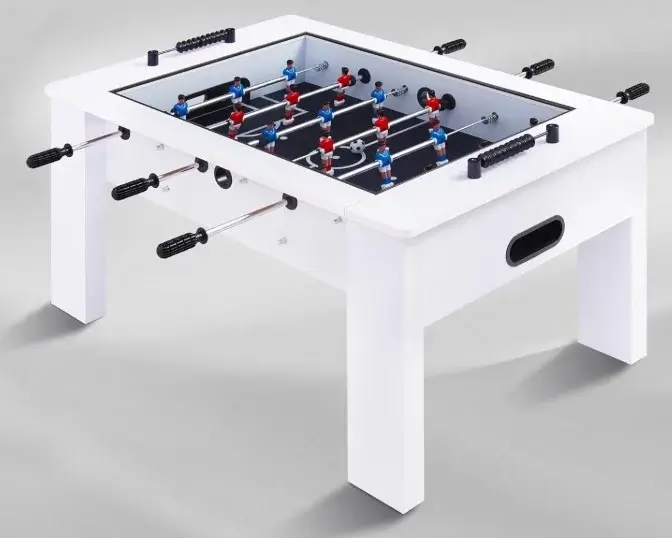
The RAYKEEP takes a different angle from both Barrington models. The white colorway is genuinely uncommon in this category, and it gives the table a cleaner, more contemporary look that some buyers will actively prefer. If your space runs toward light-colored furniture, neutral tones, or Scandinavian-adjacent aesthetics, this one fits naturally.
The build uses engineered wood and metal rods with a 31″ x 22″ playfield, which is slightly larger than the Barrington models. The smooth, frictionless surface of the playfield is designed for consistent ball roll, and the ergonomic handles get specific mention from reviewers. The thickened, heat-treated, tempered glass top carries a good load-bearing capacity, making it genuinely usable as a coffee table.
This table has a 4.7 rating, higher than both Barrington models, though from significantly fewer reviews. That rating is promising, but limited buyer feedback means less data on long-term reliability. One reviewer noted the white finish looks excellent in a theater room. Another pointed out that seams aren’t always perfectly flush, and that the glass is difficult to remove from the packaging.
The 42″ x 28″ footprint is comparable to the larger Barrington, so room planning considerations are similar. Two balls are included. Height at 21.4″ is slightly taller than the others, which one reviewer noted feels more like a game table than a true coffee table in use.
Best For: Design-focused buyers, lighter-colored interiors, buyers looking for something different from the standard dark-brown aesthetic.
Not Ideal If: You want a proven product with extensive long-term reviews, or if you prefer a lower profile.
| Pros | Cons |
|---|
| Unique white colorway stands out | Limited buyer feedback (early reviews only) |
| Larger playfield than Barrington models | Slightly taller than true coffee table height |
| High early rating (4.7 stars) | Glass packaging difficult to remove |
| Heat-treated tempered glass top | Some seam alignment imperfections |
| Smooth, frictionless ball surface | |
4. Picket House Rebel Foosball Gaming Table (Consider Carefully)
View Product
The Picket House Rebel is worth mentioning, though it comes with an important caveat: no buyers have reviewed this product yet. That’s not necessarily a reason to skip it, but it’s a reason to approach it differently than the others.
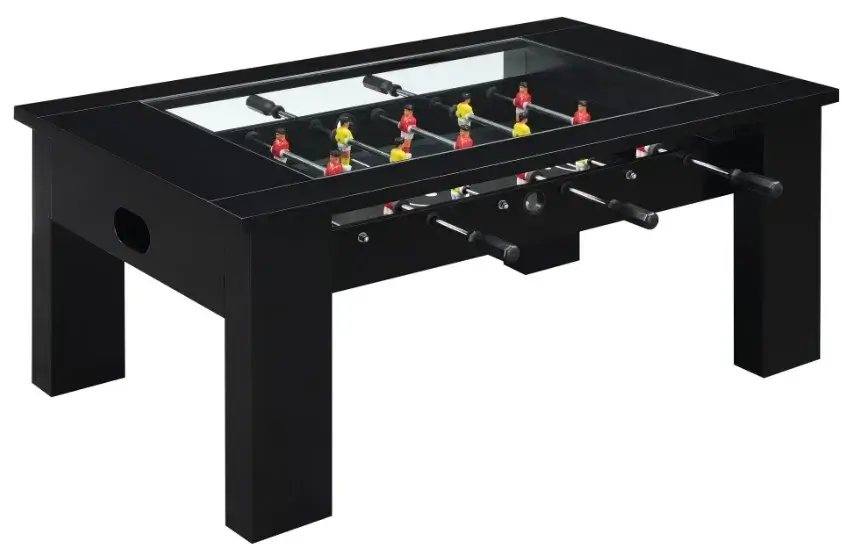
What it offers on paper is clean and simple: a coffee table height gaming design, a tempered glass table top, 18 players split across two teams, and a 45″ x 28″ footprint that’s actually the widest in this list. The 1-year limited manufacturer warranty adds some reassurance for early adopters.
The black colorway gives it a sleek, modern home decor look, and the 6 gaming handles suggest a 3-rod-per-side configuration rather than the 4-rod setup of full-size models. At 70 lbs, it’s the lightest option here, which helps with placement and repositioning.
Better alternatives exist if you want proven reliability. But if the Rebel’s specific dimensions or aesthetic are a strong fit for your space, it’s a reasonable consideration, especially with the warranty as a safety net.
Best For: Minimal setups, buyers drawn to the specific footprint or black aesthetic, early adopters comfortable with limited review data.
Not Ideal If: You want to buy with confidence based on community feedback.
| Pros | Cons |
|---|
| Widest footprint (45″ x 28″) | Zero buyer reviews at time of writing |
| Lightest at 70 lbs | No verified gameplay feedback |
| Clean black aesthetic | 3-rod-per-side limits gameplay depth |
| 1-year manufacturer warranty | Unknown long-term durability |
| True coffee table height | |
Where a Foosball Coffee Table Fits Best in Your Home
These tables are more location-flexible than a standard football table, but that doesn’t mean they fit everywhere equally well. Knowing where each style works best saves you from a disappointing purchase.
Living Room
This is the primary use case, and it works well when the table is treated as a living room centerpiece rather than an afterthought. Glass-top designs blend seamlessly with existing furniture when you choose the right colorway. Dark brown for traditional setups, grey or white for contemporary ones. The table handles daily use as a surface and doubles as a social gathering centerpiece when people come over.
Apartments and Small Spaces
The compact footprint of models like the Barrington Urban makes them a natural fit for apartment living. The recommended clearance is around 6.5′ x 7′, which is achievable in most living rooms without major furniture reshuffling. The apartment-friendly furniture pitch is real here: you’re not sacrificing a separate room to have a game setup.
Game Rooms and Basements
If you already have a dedicated game room, a foosball coffee table works as a casual entertainment upgrade rather than the star attraction. It frees up floor space compared to a full-size table and creates a different social energy: more casual, more conversational. For dedicated setups, you might also want to review our picks for the best foosball tables for home use to compare approaches.
Family Areas
The contained gameplay of covered designs is a genuine advantage here. No balls rolling under furniture. No open rods at shin height. The kid-safe design aspect is mostly about the glass top creating a physical barrier that reduces accidental contact with the playing mechanisms. Parents with younger children have reported this as one of the main reasons they chose a glass-top design over an open table.
Coffee Table vs Dining Foosball Tables: What’s the Difference
This question comes up often enough that it’s worth addressing directly. Both styles serve a similar concept but target different rooms and habits.
A foosball coffee table sits at standard coffee table height: around 18 to 21 inches. It’s designed for seated use on a sofa or lounge chair, casual play, and daily use as a surface. The compact footprint makes it living-room-ready. A foosball dining table sits higher, typically at counter or dining height (28 to 30 inches), and is meant to function as an actual eating or working surface. These are larger setups and generally need more dedicated space.
If your priority is living room centerpiece functionality and you want something that genuinely looks like furniture, the coffee table format wins. If you have a larger space and want a table that works for both meals and games, the dining format is worth exploring. Our guide on the foosball table costs also covers how these different form factors affect pricing.
Kitchen and Dining Area Suitability
A foosball kitchen table or foosball dining room table works best in open-plan homes where the boundary between spaces is flexible. In a traditional layout with a separate dining room, the size and formality usually don’t align. Coffee-height models are simply not suited for eating at, regardless of how good they look. Choose based on how you actually use the space, not just how it looks in photos.
Open vs Covered Foosball Tables: What Actually Matters
The debate between open and covered foosball tables isn’t just aesthetic. There are real differences in maintenance, gameplay feel, and long-term durability that should influence your decision.
Open Tables
Traditional foosball tables are open: no cover, no glass, direct access to the playfield. This is better for serious gameplay because it allows full airflow, faster ball movement, and quicker access to the play area. It also means more dust accumulation, ball escape during intense play, and a look that reads as a game table rather than furniture. If competitive play matters to you, our roundup of full-size professional foosball tables is more relevant than this guide.
Covered and Glass-Top Designs
A covered foosball table or glass foosball table trades some gameplay purity for genuine daily usability. Key practical differences:
- Maintenance: The dust-resistant design and spill protection mean less cleaning of the playfield itself. The glass surface is easy to wipe down.
- Gameplay feel: The contained gameplay eliminates ball escape, which actually improves casual play sessions where stopping to retrieve balls breaks the flow.
- Durability: Protecting the playfield from daily exposure extends its life. The low-maintenance design is a real long-term benefit for owners who aren’t actively maintaining a game table.
- Noise: Covered designs tend to run slightly quieter. The glass absorbs some of the impact noise.
For most people buying a foosball coffee table, the covered or enclosed format is simply the right choice. The trade-offs only matter if competitive gameplay is a priority.
What to Look for Before Buying a Foosball Coffee Table?
Based on our evaluation criteria and user feedback analysis, here are the factors that consistently separate a good purchase from a regrettable one.
Build Quality
Look at the frame material: engineered wood (MDF) is standard and acceptable, but quality varies significantly between manufacturers. Check the reinforced corners and sturdy frame construction claims in listings against what reviewers actually report. The leg levelers are often underrated; uneven legs on a game table ruin gameplay fast.
Play Experience
The metal rods, ideally chrome-plated rods, should slide smoothly. Counterbalanced players prevent rods from locking against the table during play. Non-slip grips on handles matter more during longer sessions. A reduced friction surface on the playfield ensures smooth ball control that doesn’t feel sluggish.
Size and Room Fit
Check the recommended room clearance, typically around 6.5′ x 7′, against your actual space. Most foosball coffee tables in this category measure between 40″ and 45″ in length. For a more detailed look at how to position and set up a table correctly, our foosball table setup guide covers this in full.
Glass and Cover Quality
Not all glass is equal. Prioritize shatter-resistant glass with a smooth glass finish that doesn’t distort the view of the playfield. The clear viewing panel should let you see the players and ball position even when the glass is on. Scratch-resistant top coatings make a visible difference over time in high-traffic spaces.
Design Compatibility
This one is subjective but genuinely important. A table that looks wrong in your space will bother you every day. Consider the colorway against your existing furniture. Dark brown works in traditional settings. Grey, white, and concrete-finish legs suit modern and minimalist interiors. The goal is a table that looks like it belongs there, not like it was moved in temporarily.
Maintenance Tips to Keep Your Table Looking New
One of the underrated advantages of glass-top foosball tables is how manageable they are to maintain. A few consistent habits make a significant difference.
Cleaning the Glass Surface
The wipe-clean surface is genuinely easy to maintain. A microfiber cloth handles most marks without leaving streaks. For stickier residue, a small amount of glass cleaner works well. Avoid abrasive cloths that can dull the scratch-resistant top over time. The spill protection the glass provides means you rarely need to clean the playfield itself.
Keeping Rods Smooth
Over time, the steel rods can start to drag slightly. A light application of silicone-based lubricant (avoid WD-40, which attracts dust) keeps them gliding smoothly. This is especially important in dry or dusty environments. Check the counterbalanced players periodically; if they start dragging against the walls, the rod positioning may need a minor adjustment.
Protecting the Playfield
The glass cover does most of the work here, but if you remove it for play regularly, wipe down the MDF playfield occasionally with a dry cloth. Keep liquids away from the play area. Long-term durability of MDF depends heavily on moisture avoidance. The sealed playfield design of most covered models helps, but it’s not fully waterproof.
Checking the Legs
The adjustable leg levelers should be checked every few months, especially on hardwood floors where they can shift gradually. An uneven surface is the most common cause of gameplay inconsistency in home-use tables. This is an easy fix that most owners overlook until it becomes annoying.
FAQs About Enclosed Foosball Tables
Are they good for daily use as a table?
Yes, with the glass top in place, they function well as a coffee table for drinks, books, and everyday surface use. The glass provides a stable, clean surface. Just be mindful of the weight limit for heavier items.
Do they affect gameplay compared to standard tables?
For casual play, the difference is minimal. For competitive play, yes: the glass can affect visibility at certain angles, and the playfield dimensions are smaller than full-size tables. If serious gameplay is the goal, a dedicated foosball table is a better fit.
Are they safe for kids?
Generally yes. The enclosed foosball table design keeps the playfield covered when not in use, which reduces accidental contact with rods and players. Supervised play is always recommended for younger children. The tables are heavy (70 to 88 lbs), so tip-over risk is low, but anchoring isn’t typically required in normal use.
Do covered designs reduce maintenance?
Significantly. The glass top keeps dust off the playfield, prevents ball escape, and makes the whole unit easier to clean. Users report that covered foosball tables require noticeably less upkeep than open models in the same environment.
Can they fit in small apartments?
Most models in this category work in apartments, but you need to check the clearance. A 42″ table requires around 6.5′ x 7′ of total space for comfortable play. In very tight rooms, the Barrington 40″ Urban is the most manageable option at under 40″ in length. Measure first.
How much does a foosball coffee table cost?
These tables typically range from $250 to $450 for quality options. For a deeper look at how pricing varies across different table types and brands, our guide on how much a foosball table costs breaks it all down.
Final Verdict: Should You Buy a Glasstop Foosball Table For Your Living Room?
For most buyers, the answer is yes, with one clear condition: you need to approach it as a furniture purchase that also plays games, not as a game table that happens to have a glass top. That framing changes everything about how you evaluate and use it.
These tables work best for casual players, design-conscious buyers, and families who want indoor recreational options without sacrificing their living space aesthetic. They’re not ideal for serious foosball players who want competitive-level gameplay, or for buyers who expect the experience to match a full-size table.
Our top pick is the Barrington 42″ for its consistent balance of build quality, gameplay, and furniture appeal. The Barrington 40″ Urban is the better choice if your interiors lean modern and space is tighter. The RAYKEEP earns its place for buyers who want something different and are comfortable with fewer long-term reviews to reference. The Picket House Rebel is worth watching, but has not yet been proven.
Any of these turns an ordinary evening into something a little more worth remembering. That’s ultimately what the best furniture does.