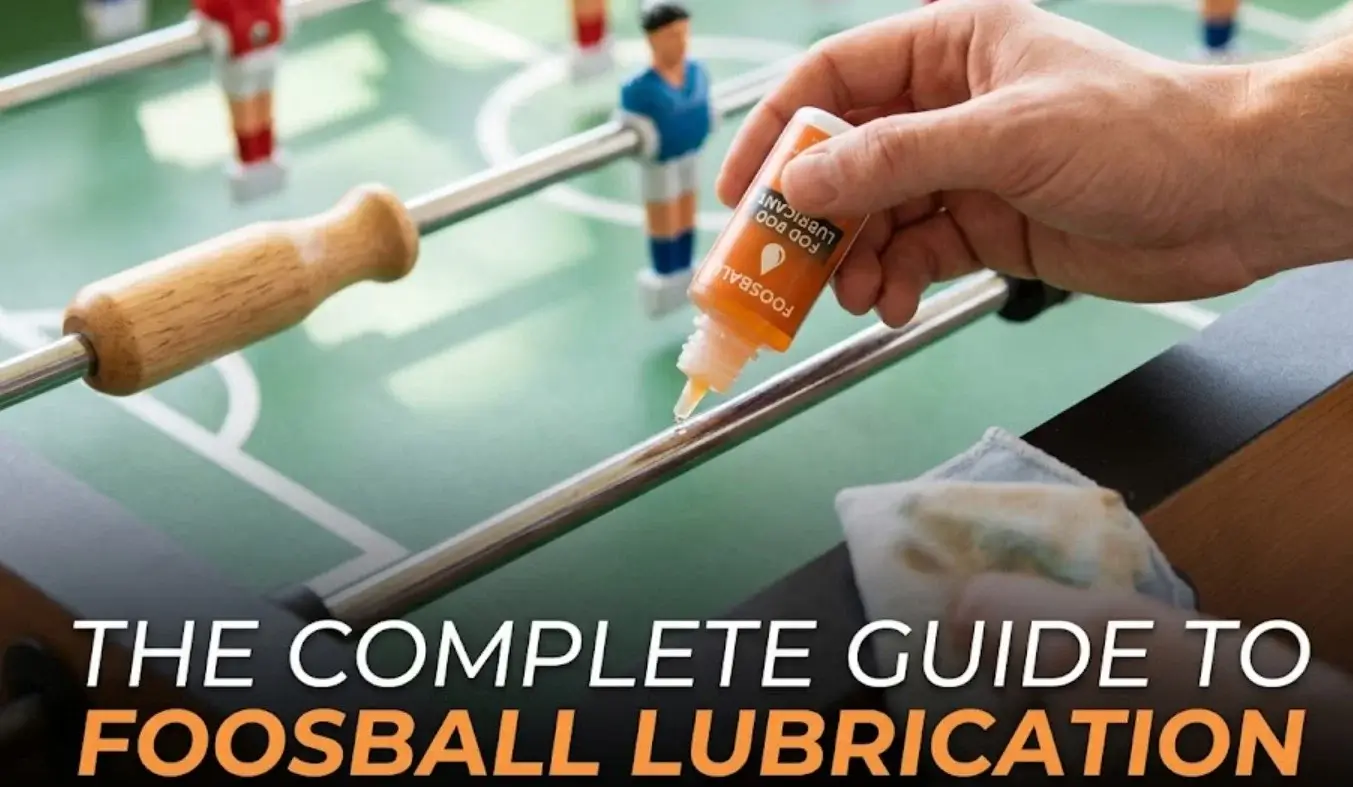
A dry rod can ruin a perfect pass. One second you’re lining up a shot, the next your rod groans like an old door hinge and your striker sails wide. Annoying, right?
The good news is that a sticky or sluggish foosball table is rarely broken. Nine times out of ten, it just needs a little lubricant in the right spots. This guide walks you through exactly how to lubricate a foosball table, where to apply it, and how to avoid the small mistakes that mess up the whole job.
We’re keeping this focused purely on rod lubrication. If you’re looking for cleaning tips or a breakdown of which lubricants work best, check our other guides linked below:
Video Tutorial: How to Apply Lubricant to Foosball Rods
Watch this quick video to see the rod lubrication process in action. After that, follow the written steps below for exact application points, rod movement tips, and mistakes to avoid.
Quick Answer: How Do You Lubricate a Foosball Table?
To lubricate a foosball table, apply a small amount of foosball-safe lubricant near the rod bearings. Then move the rods back and forth while slowly rotating them to distribute the lubricant evenly. After that, wipe away excess lubricant and test each rod for smooth movement.
That’s the short version. Now, let’s break down each part so you don’t end up with a slippery mess or rods that still stick.
When Should You Lubricate Foosball Rods?
Most foosball owners don’t think about lubrication until something feels off. By then, the rods are already dragging, and your shots are losing speed. Catching the early signs saves you a lot of frustration later.
Signs Your Rods Need Lubrication
Pay attention to how your rods feel during a normal game. Common warning signs include:
- Sticking rods that catch mid-slide
- Sluggish rods that feel heavier than usual
- Slow rod movement compared to before
- Squeaking rods, especially during fast plays
- Resistance when moving rods in or out
- Rough rod action that feels gritty
- Reduced responsiveness on quick shots
- Inconsistent movement, smooth one moment and stuck the next
- Difficult rod control during passes and spins
If even one or two of these sound familiar, it’s probably time for a quick lubrication session.
Simple Lubrication Frequency Guide
How often you lubricate depends on how hard your table works. A table in a busy game room needs more attention than one tucked away in a guest room.
| Table Use | Suggested Lubrication Routine |
| Light home use | Every few months, or when the rods feel slow |
| Regular family use | Monthly check |
| Heavy office, bar, or club use | More frequent checks (weekly to bi-weekly) |
| After long storage | Lubricate before serious play |
Think of this as a starting point, not a strict rule. Your table will tell you what it needs; you just have to listen to it.
What Part of the Foosball Table Should You Lubricate?
Lubricant only belongs in a few specific spots on your foosball table. Spraying it everywhere “just to be safe” usually causes more problems than it solves.
Main Lubrication Points
These are the only areas that actually need attention:
- Foosball rods themselves
- Rod bearings on either side of the cabinet
- Rod-to-bearing contact points
- The section of the rod that passes through the bearings during play
These contact points are where metal meets metal repeatedly, which is exactly where friction builds up, and wear happens fastest.
What Not to Lubricate
Some parts of your football table should stay completely lubricant-free:
- Playing surface
- Ball
- Handles
- Player figures
- Score units
- Cabinet parts
Lubricant on the playing surface or ball can cause unpredictable bounces and a slippery feel that throws off every match. Keep it on the rods and bearings only.
Step-by-Step: How to Lubricate Foosball Rods
Now for the main event. This process takes most people under 15 minutes per rod set, and it’s straightforward once you’ve done it once or twice.
Step 1: Pull the Rod Out Enough to Reach the Bearing Area
Slide the rod outward until the section that normally sits inside the bearing is exposed and easy to reach. You don’t need to remove the rod completely for most lubrication jobs.
Step 2: Apply a Small Amount of Lubricant Near the Bearing
Use only a small amount of foosball-safe silicone lubricant directly at the bearing entry point. The goal here is smooth rod movement, not a heavy coating. A few drops or a short spray is usually plenty.
Step 3: Work the Rods Back and Forth
Slide the rod in and out several times. This pumping motion pulls the lubricant into the rod-to-bearing contact point, which is exactly where it needs to be.
Step 4: Slowly Rotate the Rod While Moving It
While sliding the rod, give it a slow rotation at the same time. This helps spread lubricant evenly around the entire circumference of the rod, not just one side.
Step 5: Remove Excess Lubricant
Grab a clean cloth and wipe down the rod where it meets the bearing. Removing excess lubricant reduces residue and stops dust and dirt from sticking to the rod later.
Step 6: Test the Rod Movement
Push, pull, and rotate each rod through its full range. It should feel smooth, fast, and responsive, with no catching or dragging anywhere along the travel.
Repeat these six steps for every rod on the table. Yes, all of them, even the ones that feel “fine.” Consistency across all rows makes a noticeable difference in gameplay.
How Much Lubricant Should You Use?
Here’s a simple rule: start with less than you think you need. You can always add a touch more if a rod still feels dry, but you can’t easily take lubricant back out once it’s worked its way into the bearing.
Too much lubricant tends to attract dust, hair, and general grime. Over time, that buildup turns into a gritty residue around the bearings, which actually makes rod handling worse, not better. A light, even application beats a heavy one every time.
How to Lubricate Different Rod Types
Not every foosball table uses the same rod design, and that affects how you approach lubrication.
Standard Steel Rods
Most standard steel rods are straightforward. They need light lubrication near the rod bearings, followed by even distribution along the contact area using the back-and-forth, rotate method described above.
Telescopic Rods
Telescopic rods have inner and outer sections that slide independently, which means there can be multiple contact areas to consider. Always check the table maker’s instructions first, and apply lubricant only where the rod movement actually needs support. Over-lubricating telescopic sections can sometimes cause the inner rod to feel loose or wobbly during play.
Common Foosball Rod Lubrication Mistakes
Even experienced players slip up here. Watch out for these common mistakes, since each one undoes some of the benefits of lubrication:
- Using too much lubricant “to be thorough.”
- Lubricating only one side of the rod
- Skipping the rotation step during application
- Forgetting the rod bearings entirely
- Leaving excess lubricant sitting on the rod
- Letting the lubricant drip onto the playing surface
- Waiting until the rods are completely stuck before doing anything
- Using the same routine for every table without checking the rod type
A foosball coach once joked that “a squeaky rod is just your table asking for attention.” It’s not far from the truth. A few minutes of lubrication now is a lot easier than dealing with a fully seized rod later.
What Good Rod Lubrication Should Feel Like
After a proper lubrication session, the difference is usually obvious within the first few shots. Your rods should feel:
- Smooth
- Fast
- Controlled
- Free-moving
- More responsive
- Consistent across all rows
Good lubrication helps reduce friction between rods and bearings, improves rod responsiveness, and helps maintain optimal rod performance over time. If your table suddenly feels like a brand new foosball table again, you’ve done it right.
Mini Troubleshooting: Rod Still Feels Slow After Lubrication
Sometimes lubrication alone doesn’t fully fix the issue, and that’s okay. It usually points to something else going on. Common culprits include:
- Old buildup or grime around the bearings
- Worn or damaged bearings
- A bent rod
- Uneven lubricant application
- Too much excess lubricant left behind
- The rod wasn’t rotated enough during application
If you’ve followed every step and a rod still feels off, the bearing or the rod itself may need a closer look. Our cleaning and repair guides cover these issues in more depth.
Final Lubrication Checklist
Keep this list handy the next time you do a maintenance round on your foosball table:
- Apply lubricant near the rod bearings
- Work the rods back and forth
- Rotate rods slowly during application
- Distribute the lubricant evenly around the rod
- Remove excess lubricant with a clean cloth
- Test the rod glide on each rod
- Repeat for every rod on the table
- Add lubrication to your regular maintenance routine
A few minutes here and there keep your football table playing the way it was meant to.
FAQ
How do you lubricate a foosball table?
Apply a small amount of foosball-safe lubricant near the rod bearings, work each rod back and forth while rotating it, then wipe away excess lubricant and test the movement.
How do you lubricate foosball rods?
Pull the rod slightly to expose the bearing area, apply a light amount of lubricant, slide and rotate the rod to spread it evenly, then wipe off any extra.
Where do you apply lubricant on foosball rods?
Apply lubricant to the rod bearings and along the rod-to-bearing contact points. Avoid the playing surface, ball, handles, and player figures.
How often should you lubricate foosball rods?
It depends on how often the table is used. Light home use may only need lubrication every few months, while heavily used tables benefit from more frequent checks.
Can lubrication improve foosball gameplay?
Yes. Proper lubrication reduces friction, helps rods move faster and more smoothly, and improves overall rod control and responsiveness.
Why are my foosball rods still sticking after lubrication?
This can happen due to old buildup, worn bearings, a bent rod, or uneven lubricant distribution. If the issue continues, the bearings or rod may need closer inspection.
Should I remove excess lubricant after applying it?
Yes. Wiping away excess lubricant reduces residue, prevents dust buildup, and keeps the rods feeling clean rather than greasy.
Final Thoughts
Lubricating a foosball table isn’t glamorous, but it’s one of those small habits that keeps your games fun and your equipment in good shape. A few minutes of maintenance now can save you from a frustrating, sticky-rod showdown later.
At Foosball Junkie, we believe small, consistent maintenance habits make the biggest difference in how a table feels over time. Treat your rods right, and they’ll keep your matches fast, smooth, and competitive for years to come.
Disclaimer: Always check your foosball table manufacturer’s recommendations before applying any lubricant, as some materials and finishes may react differently to certain products.