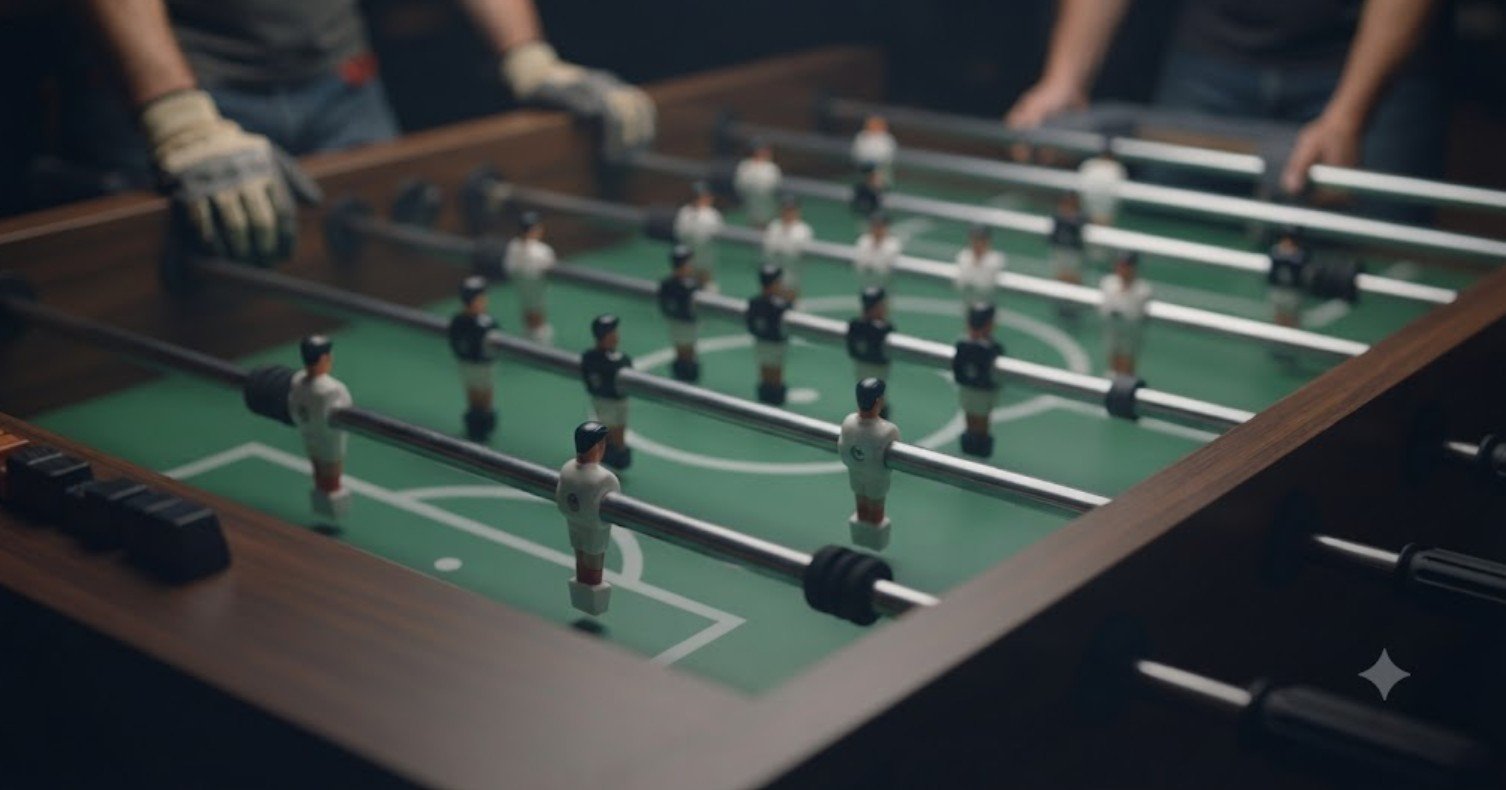
Moving a foosball table sounds simple until the rods catch a doorway, the cabinet twists, or the table arrives with a new wobble it never had before.
The real challenge is not only the weight. It is protecting the cabinet, playfield, rods, bearings, handles, leg levelers, and table alignment while moving an awkward load.
This guide explains how to move a foosball table safely, when to transport it assembled, when to remove parts, and how to check it after the move.
Should You Move a Foosball Table Assembled or Disassembled?
The first decision is not which truck to use. It is whether the table should stay assembled.
A foosball table can be moved and assembled in some cases, but that does not mean it should be. Buyers often underestimate the extra width created by rods and handles. That is usually where the damage starts.
You can move a foosball table assembled if:
- The move is short
- There are no stairs
- Doorways and hallways are wide enough
- The table is light or medium weight
- The rods will not hit walls, doors, or truck sides
- You have at least two people helping
You should partially disassemble a foosball table if:
- The table is heavy
- You need to go through the stairs
- Doorway clearance is tight
- Hallway turns are narrow
- The rods stick out too far
- The table has detachable legs or cross braces
- You are using a pickup truck, cargo van, moving truck, or trailer
Simple rule: If the table cannot pass through the route without hard tilting, twisting, or pressure on the rods, remove the legs first.
That one step can prevent a lot of cabinet stress, rod damage, and “why is this thing stuck halfway through the hallway?” panic.
| Moving Situation | Best Choice |
| Same room | Move assembled |
| Same floor with wide doors | Move assembled with padding |
| Tight hallway | Remove legs |
| Stairs | Remove legs and use moving straps |
| Long-distance move | Partial disassembly |
| Freight shipping | Pallet, crate, or professional packing |
| Heavy Tornado table | Partial disassembly recommended |
For most home buyers, partial disassembly means removing the legs, securing hardware, and protecting the rods. It does not always mean taking apart the entire cabinet.
Measure Before You Touch the Table
Most moving problems begin before anyone lifts the table.
The table looked smaller in the seller’s game room. Then you reach the staircase, and suddenly every rod feels like it grew three inches. Measure first, move second.
Measure the Foosball Table
Check these details before lifting:
- Cabinet length
- Cabinet width
- Total width including rods and handles
- Height with legs attached
- Height after removing the legs
- Approximate weight
- Whether legs, rods, or cross braces are removable
The total width matters most when transporting an assembled foosball table. The cabinet may fit through a door, but the rods may not.
This is especially true with full-size tables, commercial tables, and heavier models from brands like Tornado, Warrior, Garlando, René Pierre, Shelti, KICK, Atomic, Hathaway, and Barrington.
Measure the Moving Route
Now measure the path.
Look at:
- Doorway clearance
- Hallway clearance
- Stair turns
- Basement exits
- Tight corners
- Ceiling height
- Garage openings
- Cargo van, pickup truck, trailer, or moving truck opening
Do not only measure straight lines. Most damage happens during turns.
A table may clear the doorway straight on, but fail when the cabinet has to rotate. That is when rods, handles, sidewalls, and cabinet corners get scraped.
Plan the Path
Before anyone grabs the table, clear the route.
Remove rugs, shoes, boxes, chairs, toys, and anything that could catch a foot. Open all doors. Protect sharp wall corners with cardboard sheets if needed.
Also, choose a safe resting spot. Heavy lifting gets messy when two people are stuck holding an awkward load, and nobody knows where to set it down.
Manual handling includes lifting, carrying, pushing, pulling, holding, and restraining loads, so moving a heavy game table counts as more than “just picking it up.” CCOHS defines manual materials handling this way and recommends using help or mechanical aids for heavy or awkward loads.
Tools and Packing Supplies You Need
You do not need a professional moving warehouse to move a football table safely. You do need the right padding, straps, and helpers.
A few blankets and a furniture dolly can save the rods, cabinet finish, and your lower back.
Moving Supplies
Use these to protect the table:
- Moving blanket
- Furniture blanket
- Bubble wrap
- Stretch wrap
- Foam padding
- Cardboard sheets
- Corner protectors
- Packing tape
- Hardware bag
- Marker or labels
Do not put packing tape directly on laminate, wood veneer, painted surfaces, or cabinet graphics. Tape the blanket or stretch wrap instead.
Moving Equipment
Useful equipment includes:
- Furniture dolly
- Appliance dolly
- Hand truck
- Moving cart
- Lifting straps
- Moving straps
- Ratchet straps
- Tie-down straps
- Cargo straps
- Ramps
OSHA advises using ramps or lift gates when loading heavy objects into trucks instead of manually lifting whenever possible. It also recommends keeping manual lifts in the “power zone,” around mid-thigh to mid-chest height.
That applies perfectly here. A foosball table is bulky and not friendly. It has the shape of furniture and the attitude of a goalie who refuses to move.
Best Vehicle Options
For transporting a foosball table, the safest common options are:
- Cargo van
- Moving truck
- Enclosed trailer
- Pickup truck for short moves only
A cargo van or enclosed moving truck is usually safer than an open pickup truck. It protects the table from rain, road debris, moisture, humidity, and sudden weather changes.
A pickup truck can work, especially with the legs removed, but it requires serious padding and tie-downs. Do not let the cabinet slide around in the cargo area.
How to Prepare a Foosball Table for Moving
Preparation decides whether the table arrives ready to play or ready to annoy you.
The goal is simple: protect every part that affects gameplay. That means rods, bearings, cabinet shape, playfield surface, legs, and levelers.
Remove Loose Items
Start with the easy stuff.
Remove:
- Foosballs
- Scorekeepers if removable
- Cup holders
- Loose accessories
- Extra parts
- Anything stored inside or under the table
Loose parts can scratch the playfield, chip the cabinet, or disappear during transport. A missing screw is small until it turns into a wobbly leg.
Protect the Rods and Handles
Rods are one of the easiest parts to damage during a move.
Center the rods if possible. Wrap the handles with bubble wrap or foam padding. Cover exposed rod ends so they do not hit door frames, walls, or the inside of the truck.
Never lift from the rods.
The rods are for passing, blocking, and scoring. They are not handles for moving furniture. Bent rods can cause rough sliding, poor rotation, and frustrating gameplay.
Protect the rods even if you are only moving the table across the house. One doorway hit can be enough to throw off the feel.
Protect the Cabinet and Playfield
Wrap the cabinet with moving blankets or furniture blankets. Add cardboard sheets over exposed areas if the finish is delicate.
Use corner protectors on cabinet edges. Then use stretch wrap over the blankets to hold everything in place.
Avoid placing pressure directly on the playfield. The playfield should stay protected from scratches, impact, moisture, and weight.
Common damage from poor protection includes:
- Scratched finish
- Chipped laminate
- Cracked cabinet corners
- Loose bearings
- Misaligned rods
- Playfield marks
- Damaged players
If you are moving a furniture-style table, scratch prevention matters even more. A table can still play fine and look terrible after one careless move.
Secure the Hardware
If you remove legs, braces, or small parts, bag the hardware immediately.
Use a hardware bag for:
- Screws
- Washers
- Bolts
- Fasteners
- Leg leveler parts
- Small assembly hardware
Label each bag by location. For example: “left legs,” “cross support,” or “scorekeeper.”
Take photos before removing anything. Your future self will thank you during reassembly.
When to Remove the Legs, Rods, or Other Parts
This is not a full foosball table disassembly guide. The goal here is transport-related disassembly only.
In most moves, you only need to remove enough parts to make the table safer to carry and easier to fit through the route.
Remove the Legs If…
Remove the legs if:
- The table is too tall for the doorways
- You need to use the stairs
- The table feels top-heavy
- You need better load stability
- The legs or cross braces make lifting awkward
- The table will go into a van, truck, or trailer
Removing the legs usually gives you the biggest benefit with the least complexity. It lowers the height, improves clearance, and reduces tipping risk.
Just keep all fasteners labeled.
Remove the Rods If…
Rod removal is not always required, but it can help in tighter moves.
Remove the rods if:
- The rods make the table too wide
- Doorway clearance is poor
- Hallway clearance is tight
- You are transporting long distances
- The table will be freight shipped
- The rods may hit vehicle walls
- The table is expensive or tournament-grade
The downside is reassembly. Rods, players, bumpers, and bearings need to go back correctly.
If you remove rods, take photos before and during the process. Label each rod position. Do not mix parts casually.
A goalie rod does not want to wake up as a midfield rod. That is how arguments start in the game room.
Do Not Remove These Unless Necessary
Avoid removing these parts unless the route or shipping method demands it:
- Foosball men
- Bearings
- Ball return parts
- Goal box components
- Internal cabinet parts
- Corner ramps
Removing too much can create new problems. For many home moves, partial disassembly is enough.
If you are unsure how to disassemble a foosball table, start with the legs and loose accessories first. Only remove rods or bearings if the table truly cannot move safely otherwise.
How to Move an Assembled Foosball Table Safely
Sometimes transporting an assembled foosball table is the best option.
Maybe the move is short. Maybe the table fits. Maybe you do not want to disturb the rods and bearings. That can work, but only if you control the load.
Use the Right Lifting Technique
Use at least two adults for most full-size tables. Use four people for stairs, heavy cabinets, or commercial models.
Lift from the cabinet or frame, not the rods.
Keep the table close to the body. Avoid twisting while carrying. Communicate before lifting, lowering, tilting, or rotating.
The person at the front should call out turns, thresholds, and stops. Nobody should guess.
Good phrases sound boring, but they work:
- “Stop.”
- “Lower.”
- “Tilt left.”
- “Door frame.”
- “Set it down.”
That is better than the classic moving-day phrase: “Wait, wait, wait!”
Use a Furniture Dolly
A furniture dolly can make transporting a foosball table much easier on flat surfaces.
Place padding between the cabinet and the dolly. Balance the cabinet before rolling. Keep one person on each side to prevent tipping.
Move slowly over thresholds. Do not let the table bounce.
A dolly works best for:
- Same-floor moves
- Garage-to-room moves
- Store pickup loading
- Short driveway movement
- Wide hallways
It does not work well on narrow stairs or uneven ground unless you have the right equipment and enough help.
Handle Stairs Carefully
Stairs are where safe handling matters most.
Remove the legs first when possible. Wrap the rods before entering the stairwell. Use moving straps or lifting straps if the table is heavy.
Keep the heavier side controlled. Move one step at a time. Do not rush the turn at the landing.
If the table feels unstable before the first stair, stop and remove more parts.
No foosball table is worth a back injury, damaged wall, or cracked cabinet.
How to Transport a Foosball Table in a Truck, Van, or Trailer
Getting the table into the vehicle is only half the job.
The next risk is load shifting. A table that is not secured can slide, vibrate, tip, or hit the cargo wall during the drive.
Best Transport Position
Flat loading is usually safest if the cabinet is supported evenly.
A flat position spreads weight more naturally and reduces the chance of tipping. It also keeps pressure away from sidewalls and rods.
Vertical transport can save space, but it increases risk:
- Tipping hazard
- Load shifting
- Cabinet stress
- Rod impact
- Sidewall pressure
- Playfield strain
If you must transport it vertically, use heavy padding and secure it to tie-down points. Do not let the table rest on exposed rods, handles, or fragile cabinet edges.
Secure the Table
Use ratchet straps, tie-down straps, or cargo straps.
Strap the table to proper tie-down points inside the vehicle. Add moving blankets under the straps so they do not dig into the cabinet.
Do not overtighten against cabinet edges. Tight is good. Crushing the finish is not.
Before driving, test the load by gently pushing the cabinet. If it shifts by hand, it can shift on the road.
A table can survive the lift but still get damaged in the vehicle if it vibrates, slides, or gets wet.
Protect It From Weather
Moisture is a serious issue for many foosball tables.
Protect the table from:
- Rain
- Humidity
- Moisture exposure
- Temperature fluctuations
- Road vibration
- Dust
- Debris
This matters for MDF cabinets, laminate finishes, wooden parts, bearings, and rods. Long exposure to moisture can lead to swelling, cabinet warping, sticky rods, rust risk, and playfield problems.
If you use a pickup truck, cover the table properly. A thin tarp alone is not enough if the wind can flap it against the finish for an hour.
How to Move a Tornado Foosball Table
Tornado tables deserve special attention because many buyers choose them for serious play.
When someone searches for how to move a Tornado foosball table, they usually want to avoid damaging a table that feels more precise than a basic game room model.
Why Tornado Tables Need Extra Care
The official Tornado T-3000 page lists features such as a laminate playfield, hollow steel rods, patented split bearings, anti-slip handles, and a 1.5-inch-thick MDF cabinet. Those parts are built for strong gameplay, but they still need protection during transport.
That means you should pay close attention to:
- Rod protection
- Bearing protection
- Cabinet support
- Playfield pressure
- Leg levelers
- Load stability
A heavy Tornado table is not something to “just slide into the truck.” Treat it like performance furniture.
Tornado Moving Tips
For transporting a Tornado foosball table:
- Use at least two strong adults
- Use four people for the stairs
- Remove legs for tight routes
- Protect rods and handles carefully
- Avoid direct pressure on the playfield
- Do not drag the cabinet
- Keep all hardware labeled
- Use a cargo van or moving truck when possible
- Recheck leg levelers after transport
- Inspect rods, bearings, and cabinet stability before playing
For many Tornado moves, removing the legs and protecting the rods is enough. Full rod removal or bearing removal should only happen if the route, vehicle, or shipping method requires it.
Brief Note on Tornado Disassembly
Tornado foosball table disassembly should be handled carefully.
Take photos before removing parts. Label hardware. Keep rods organized. Do not remove bearings or players unless you have a clear reason.
If you only need better clearance, start with the legs. That solves many moving problems without creating unnecessary reassembly work.
How to Ship a Foosball Table Long Distance
Shipping is different from moving across town.
With freight shipping, the table may be lifted, shifted, stacked near other items, or handled by people who do not know its weak spots.
When Freight Shipping Makes Sense
Freight shipping may make sense if:
- You are selling a used table
- You are buying from another state
- The table is heavy or high-value
- You cannot transport it safely yourself
- You need residential delivery
- You want liftgate service
- You prefer white-glove delivery
White-glove delivery can be useful for heavy or premium tables because it reduces manual handling by the buyer.
How to Prepare for Freight Shipping
For freight shipping, plan around protection and inspection.
Important terms to know:
- Pallet
- Palletized shipment
- Freight carrier
- Residential delivery
- Liftgate service
- White glove delivery
- Crate
- Shipping insurance
- Bill of lading
- Package inspection
The cabinet should be padded, protected, and secured so it cannot shift. Rods should be removed or heavily protected depending on the shipping method.
A palletized shipment is usually safer than a loose table because the table has a stable base and is easier to handle with equipment.
Inspect for Transit Damage
Before signing the delivery paperwork, inspect the table if possible.
Look for:
- Transit damage
- Cracked cabinet
- Bent rods
- Chipped laminate
- Loose bearings
- Moisture damage
- Damaged players
- Missing hardware
- Playfield damage
Take photos of any damage immediately. Keep the bill of lading and shipping documents.
This is not the fun part of buying a foosball table, but it protects you if something goes wrong.
How to Store a Foosball Table Before or After Moving
Sometimes the table cannot go straight into the game room.
Maybe the flooring is not ready. Maybe the basement is being finished. Maybe your partner said, “We need to talk about where this giant football table is going.”
Storage is fine if the environment is safe.
Best Storage Conditions
Store the table indoors when possible.
Choose:
- Climate-controlled storage
- Dry indoor storage
- A clean room with a stable temperature
- A space away from direct moisture
- A spot where nothing heavy sits on the playfield
Avoid long-term storage in:
- Damp basements
- Humid garages
- Outdoor sheds
- Areas with major temperature fluctuations
- Places with water leaks or condensation
Protect the Table During Storage
Use a breathable cover for dust protection.
Avoid sealing the table tightly in plastic for long periods, especially in humid spaces. Trapped moisture can create problems.
Before long-term storage:
- Clean the rods
- Lightly lubricate rods if recommended for your table
- Keep hardware bags attached or stored safely
- Cover the cabinet
- Keep weight off the playfield
- Check for moisture exposure occasionally
Moisture and humidity can lead to cabinet warping, swelling, sticky rods, rust risk, and playfield issues.
What to Check After Moving the Foosball Table
Do not start the first game immediately.
I know that is painful. The table is finally home. Someone already wants to test the pull shot.
Give it a quick inspection first.
Level the Table Again
After transport, level the table again.
Check:
- Front-to-back level
- Side-to-side level
- Leg levelers
- Ball drift
- Table wobble
If the table sits on carpet, recheck it after a few days. Carpet can compress under the legs and change the level.
A level table makes the ball behave properly. If the ball slowly rolls to one side, the table is not ready yet.
For full leveling and setup help, use this foosball table setup guide.
Inspect the Rods
Move every rod slowly.
Check for:
- Smooth slide
- Smooth rotation
- Rod alignment
- Bent rods
- Handle tightness
- Player spacing
- Rubbing or resistance
If a rod feels rough after the move, inspect the bearings, bumpers, and player positions before forcing it.
Inspect Bearings and Hardware
Check every area that can loosen during transport.
Look at:
- Bearings
- Screws
- Leg bolts
- Cross braces
- Leg braces
- Fasteners
- Cabinet joints
Tighten loose hardware carefully. Do not overtighten into MDF or softer cabinet materials.
Inspect the Cabinet and Playfield
Look over the cabinet and playfield before playing.
Check for:
- Cracked cabinet areas
- Chipped laminate
- Scratched finish
- Playfield damage
- Loose sidewalls
- Goal box issues
- Ball return problems
A small crack or loose part is easier to fix early than after several rough games.
Test Gameplay
Now test the table.
Roll the ball from the center. Shoot from each rod. Listen for rattles. Watch for table wobble.
The ball should move naturally. Rods should slide smoothly. The cabinet should feel stable.
If everything feels right, congratulations. You moved the table without turning it into a repair project. In case something is stuck or not working, you can check this foosball table repair guide.
Common Mistakes to Avoid When Moving a Foosball Table
These mistakes show up often when buyers move a table for the first time.
Avoid them:
- Lifting by the rods
- Dragging the cabinet across the floor
- Forgetting to measure doorway clearance
- Leaving rods unprotected
- Using tape directly on the cabinet finish
- Not labeling screws
- Moving through the stairs with legs attached
- Letting the table shift inside the truck
- Transporting uncovered in bad weather
- Skipping the level check after moving
- Treating a heavy Tornado table like a lightweight home table
- Putting pressure directly on the playfield
- Losing the hardware bag
The biggest mistake is rushing.
Foosball tables reward patience during the move. They punish shortcuts with bent rods, chipped corners, and weird ball drift.
Quick Summary: Best Way to Move a Foosball Table
The best way to move a foosball table is to remove loose items, measure the route, protect the rods and cabinet, remove the legs if clearance is tight, lift from the cabinet instead of the rods, use a furniture dolly when possible, secure the table with tie-down straps during transport, and level the table again after the move.
Follow this quick process:
- Measure the table and the moving route.
- Remove balls and loose accessories.
- Wrap rods, handles, cabinet corners, and exposed edges.
- Remove legs if needed for clearance or stability.
- Use a team lift or furniture dolly.
- Load the table flat when possible.
- Secure it with ratchet straps or tie-down straps.
- Protect it from moisture and load shifting.
- Reinstall removed parts carefully.
- Level the table and inspect gameplay.
Think of the table in performance zones:
- Rods
- Bearings
- Cabinet
- Playfield
- Legs
- Level
Protect those zones, and the table has a much better chance of playing the same after the move.
FAQs About Moving a Foosball Table
Can you move a foosball table without taking it apart?
Yes, you can move a foosball table without taking it apart if the move is short, the route is wide, and there are no stairs. For tight doors, stair navigation, or long-distance transport, removing the legs is usually safer.
Can you transport an assembled foosball table?
Yes, you can transport an assembled foosball table if the rods, handles, cabinet, and legs are protected. You also need enough doorway clearance and a vehicle that can hold the table securely.
Should you remove the rods before moving a foosball table?
Not always. For short moves, wrapping and protecting the rods may be enough. For tight spaces, freight shipping, or long-distance transport, rod removal may reduce the risk of bent rods and impact damage.
How do you move a Tornado foosball table?
To move a Tornado foosball table, use multiple helpers, remove the legs if clearance is tight, protect the rods and bearings, avoid pressure on the playfield, use an enclosed vehicle when possible, and recheck the leg levelers, rods, bearings, and cabinet after transport.
Can a foosball table fit in a pickup truck?
Many foosball tables can fit in a pickup truck, especially with the legs removed. However, a pickup truck exposes the table to rain, humidity, road debris, and load shifting. A cargo van or moving truck is usually safer.
How do you disassemble a foosball table for moving?
For moving, start with partial disassembly. Remove loose items, take photos, remove the legs if needed, bag and label hardware, and only remove rods if clearance or shipping requires it. Avoid removing players, bearings, ball return parts, or goal box components unless necessary.
How do you store a foosball table after moving?
Store it indoors in a dry, stable environment. Climate-controlled storage is best for long-term storage. Use a breathable cover, keep moisture away, avoid stacking items on the playfield, and keep the hardware bag with the table.
Helpful Resources
For safe handling basics, CCOHS explains that manual materials handling includes lifting, carrying, pushing, pulling, holding, and restraining loads. Their guidance also recommends using mechanical aids and getting help with heavy or awkward loads.
For loading heavy items, OSHA recommends using ramps or lift gates when possible and keeping manual lifts around mid-thigh to mid-chest height.
Final Takeaway
Moving a foosball table safely is not about being the strongest person in the room. It is about planning the route, protecting the fragile zones, using the right equipment, and checking the table before the first game.
If you protect the rods, bearings, cabinet, playfield, legs, and level, you protect the way the table actually plays.
That is the real win before anyone scores.