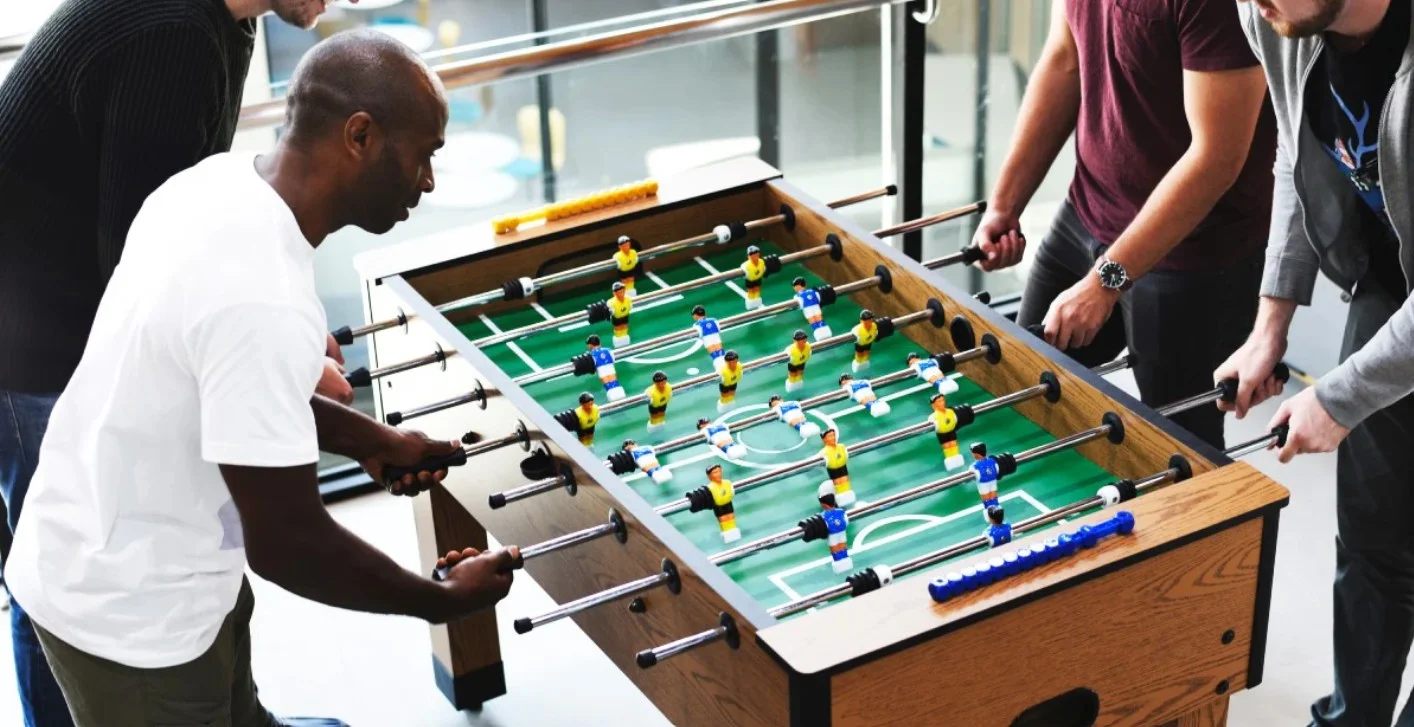
Most people play foosball the same way every time and wonder why they’re not improving. The problem isn’t effort. It’s the lack of structure. Random play builds habits, but not necessarily the right ones. This guide from Foosball Junkie breaks down exactly how to practice foosball, with drills that actually develop your game, not just fill time.
If you’re new to the game, start with what foosball is and then come back here. If you already know the basics, let’s get into it.
Why Practice Actually Matters in Foosball
Most casual players think they just need more games. But there’s a difference between playing and practicing. Playing reinforces what you already know. Practicing challenges what you don’t.
According to experienced competitive players, the gap between a beginner and an advanced player usually comes down to ball control and timing. Not speed. Not strength. Precision and repetition are what separate them.
Foosball practice isn’t about grinding hours at the table. It’s about training with intention. Even 20-30 focused minutes a day will move your game forward faster than 2 hours of casual play.
“The players who dominate didn’t just get lucky. They trained with purpose.”
Build Your Practice Routine
Before you touch the rods, know what you’re working on. A structured practice routine is the single most important thing you can do for your development. Without it, you’ll keep defaulting to what’s comfortable.
Here’s how to build a routine that actually works.
Set Clear Practice Goals
Don’t sit down and just “practice.” Pick one focus per session. For example: ball control today, pull shot tomorrow, 5-bar passing the next day. Focused training blocks work far better than scattered effort.
Good examples of session goals:
- Improve passing accuracy from 5-bar to 3-bar
- Hit the pull shot left corner consistently 8 out of 10 times
- Practice goalie clearing under pressure
Tracking your progress session to session shows you where you’re improving and where you’re still slipping.
Warm-Up and Muscle Memory
Don’t skip the warm-up. Spend the first 3-5 minutes with slow, deliberate rod movements. Work on grip looseness and wrist flexibility. Many players grip the handles too tightly, which kills their hand speed and wrist control.
Light lateral ball rolling on the 5-bar, slow side-to-side passes, and controlled single-man taps help activate muscle memory before you push into drills. Your warm-up routine for foosball should feel easy. That’s the point.
Frequency and Duration
You don’t need hours. You need consistency.
- Beginners: 20-25 minutes daily, 4-5 days a week
- Intermediate players: 30-45 minutes, 4-6 days a week
- Competitive prep: 45-60 minutes with game-simulation blocks
Short daily sessions beat long weekend sessions every time. Muscle memory builds through regular repetition, not occasional marathons. If you’re investing in a quality setup to train on, check out Foosball Junkie’s table recommendations by budget to find what fits your level.
Core Foosball Drills to Practice
Shots are exciting. But they don’t land consistently if your foundational mechanics are shaky. Foosball training starts with the basics, not the tricks.
Here’s what to drill before you focus on specific shots.
Ball Control Drills
Ball control is where most beginners fall apart. If you can’t hold the ball in a controlled position, you can’t set up a shot or a pass.
Front pin drill: Place the ball in front of a man on your 3-bar. Slowly rock it forward and back without losing it. Build up speed as your touch improves. This builds the controlled possession that lets you set up shots under pressure.
Lateral movement drill: Roll the ball slowly from one side of the 5-bar to the other. Keep it smooth. Avoid bouncing it off the walls. This drill sharpens your feel for rod handling and rod control technique across the full width of the table.
Do these for 5 minutes at the start of every foosball training session. Boring? Maybe. Effective? Absolutely.
Rod Handling and Technique
Your grip pressure controls everything. Hold the handle too tightly and your wrist locks up. Hold it too loosely, and you lose power. The goal is a relaxed grip with a mobile wrist. You should be able to rotate the handle 180 degrees cleanly without adjusting your grip.
Smooth rod movement comes from shoulder and wrist coordination together. Players who rely only on wrist end up fatiguing quickly and losing timing in extended sessions. Practice slow, controlled pushes and pulls on each rod before adding speed.
If you’re still building your fundamentals, the full how to play foosball guide on Foosball Junkie covers the mechanical basics in detail.
Passing Accuracy Practice
Most players neglect passing. The 5-bar is where possession is won or lost, and a clean pass from 5 to 3 opens every shot.
Tic-tac drill: Pass the ball back and forth between two men on the 5-bar. Keep it tight and controlled. The rhythm is the point. Try to reach 20 clean passes without losing the ball.
Brush pass drill: Lightly brush the ball at an angle instead of hitting it straight. This changes the ball’s path and makes it harder for opponents to read. Practice this at slow speed first, then build to match pace.
Wall pass drill: Hit the ball off the side wall and receive it on the same or adjacent man. This builds coordination and opens up angled passing lanes in real games.
Mastering these basics creates consistent execution when it counts most.
Shot Training and Repetition
Once your control and passing are steady, shot work becomes productive. Before that, shot drills just built sloppy habits faster. Foosball pull shot practice is where most players spend the majority of their shot training, and for good reason.
For a deeper breakdown of shooting mechanics, this foosball shooting techniques guide is worth reading alongside this section.
Pull Shot Practice
The pull shot is the most used offensive shot in foosball. You slide the ball laterally and fire at the open corner before the defense can react.
Pull shot repetition drill: Set the ball on the 3-bar. Pull it to the left, then shoot right. Reset. Pull right, shoot left. Do 20 reps per side per session. Focus on clean setup, not raw power. A crisp, accurate pull shot at medium speed beats a wild one at full force every time.
Corner targeting drill: Tape a small piece of paper to the left and right goal corners. Practice hitting the target directly. Hitting targets instead of open goals forces you to develop precision shooting practice rather than just blasting in the general direction.
Common issue: players telegraph the pull direction before shooting. Work on starting the shot from a neutral position and moving laterally at the last second.
Rollover and Snake Shot Drills
The snake shot (rollover) is timing-based. You place the man on top of the ball, rock it, and release at the shooting moment. It’s not as fluid as the pull shot. Every stage of the rollover must be clean for it to work.
Stage-by-stage rollover drill: Practice the pitch, then the release, then the full shot separately. Foosball.com recommends learning the rollover from the rebound backward, which forces you to understand every stage before combining them. This approach locks in rollover shot timing faster than just attempting full shots over and over.
A slow, accurate rollover that hits the corner beats a fast, sloppy one every time.
Accuracy and Precision Drills
Place small objects like bottle caps or coins in the goal corners. Shoot at them from different 3-bar positions. This builds shot accuracy training beyond just aiming at an open goal.
You can also draw a line with tape across the bottom third of the goal. Aim below it. Low shots score more often because they’re harder to block. Precision shooting practice with physical targets builds better habits than open-net shooting.
Position-Specific Practice
Foosball has four rods on each side, and each one has a distinct role. Most players only train the 3-bar offense. That leaves major gaps. Position-based repetition is how you build real specialization. If you want to understand how many players each rod covers in a standard game, this breakdown gives useful context.
Midfield (5-Bar) Drills
The 5-bar is your bridge between defense and offense. Winning possession here is often more valuable than having a better shot.
Lane control drill: Practice keeping the ball on the 5-bar under simulated time pressure. Move the ball left and right across all five men without losing it for 60 seconds straight.
Stick pass drill: Push the ball from one end man to the man next to it, alternating direction. Build up to doing this across all five men in sequence. This builds your tic-tac rhythm and lateral ball movement practice.
When your 5-bar game is solid, you create options. When it’s shaky, you give up the ball before your 3-bar ever sees it.
Offense (3-Bar) Shooting Drills
The 3-bar is your finisher. Quick-release practice here is essential.
Shot setup training drill: Start with the ball on the 5-bar, pass it forward to the 3-bar, and shoot within one second of receiving it. This simulates real-game pace and trains your open lane shooting instincts.
Push-pull combination drill: Do five pull shots, then five push shots, alternating without resetting the session. Switch targets each time. This builds shot variety and forces you to stay alert rather than falling into a predictable rhythm.
Defense and Goalie Drills
Defense is the most undertrained area in foosball practice. Most players only practice defending when they’re being attacked in a real game.
Blocking angle drill: Set the ball on the opponent’s 3-bar manually and practice covering different shooting angles with your 2-bar defense. Move your goalie rod to cover straight shots while keeping the 2-bar at an angle. Work on blocking angle practice without crossing your defensive zones.
Clear and reset drill: Block a shot, immediately pass the cleared ball to your 5-bar, and hold possession. Repeat 10 times. This trains the instinct to transition after a block instead of just reacting to the next shot.
Goalie reaction drills: Have a training partner shoot repeatedly while you focus only on the goalie rod. Track how many you block in a set. Increase speed over time. Fast, random shots improve your defensive wall control and reaction speed faster than slow, predictable ones.
For more on defensive strategy and positioning, check out the foosball defense guide on Foosball Junkie.
Solo Practice Drills (No Opponent Needed)
Not having a partner is not an excuse. Some of the best foosball skill development happens in solo training sessions. You control the pace, the focus, and the intensity. There’s no ego involved. Just reps.
Solo Passing Routines
- 5-to-3 pass drill: Pass the ball from 5-bar to 3-bar repeatedly. Your goal is 25 clean receptions without the ball going loose. Start slow and build to game speed.
- Wall pass drill (solo): Hit the ball into the sidewall from the 5-bar and receive it on the same rod. This builds your sense for angled ball movement and is completely doable without anyone across from you.
- Shadow passing practice: Move the ball across the 5-bar in rhythm without actually shooting. Work on the timing and the weight of each movement. This trains your hands to move deliberately rather than reactively.
Solo Shooting Reps
- Independent shot repetition: Set up the ball on your 3-bar and shoot. Reset manually. Shoot again. Do this 30 times with a deliberate focus on one specific target. Repetition without pressure lets you build form before adding match conditions.
- One-shot focus drill: Pick a single shot type for the whole session. Pull shot only. Or push shot only. Pure repetition with one mechanic creates faster muscle memory development than switching between shot types mid-session.
Solo practice has limits. It doesn’t replicate the pressure or unpredictability of a real opponent. But for building control and discipline in your mechanics, nothing beats independent practice. Upgrade your training setup with a reliable football table if you don’t already have one. Foosball Junkie has recommendations for home use and for families, depending on your setup.
Competitive and Advanced Practice Concepts
If you’ve built your basics and want to push toward tournament-level consistency, the approach shifts. It’s no longer about learning skills. It’s about executing them under pressure.
Simulating Game Pressure
The biggest jump from practice to match performance is pressure. You can hit corners all day in solo drills, but when a real opponent is across from you, timing collapses under stress.
Simulate it. Count down from 10 seconds and force yourself to take a shot before zero. Or set a goal to score 3 times before your training partner scores once. High-pressure shooting practice like this mirrors the tension of competitive play and trains your decision-making when it matters.
Timed Challenges and Rep Goals
Set specific, measurable targets for each session. Examples:
- 15 pull shot corners in 5 minutes
- 10 clean 5-to-3 passes in under 60 seconds
- Block 8 out of 10 shots in the goalie reaction drill
Timed challenges add competitive tempo training to solo or partner drills. They push you past the comfort zone of casual repetition and into real performance tracking.
Game-Like Drills and Decision Making
Play practice games where one player has a specific constraint. For example, the offensive player can only score from the pull shot. This forces situational practice scenarios and builds faster decision-making under restrictions.
You can also switch sides mid-game to understand your opponent’s perspective. Seeing your own defense from the shooting side reveals gaps you didn’t know existed. That kind of self-awareness shortens improvement time significantly.
Track and Improve
Improvement without measurement is just guessing. Keep a simple log of each session. Write down what you drilled, how many reps, and whether you hit your target. Even a notes-app entry works.
Over time, you’ll see patterns. Maybe your pull shot right is clean, but left is inconsistent. Maybe your 5-bar passing breaks down under speed. These are your training priorities. Performance tracking turns vague effort into directed improvement.
A few signals that show your game is moving forward:
- You reduce missed shots from the 3-bar over two weeks
- Your passing success rate on the 5-bar improves to above 80%
- Your defensive reaction gets fast enough to block shots you couldn’t before
- You make better shot selection decisions instead of forcing attempts
Don’t measure progress by wins only. Wins are influenced by opponents. Your mechanics are entirely under your control.
Video and External Training Aids
Watching your own shots on video is one of the most underused tools in foosball training. Set your phone up beside the table and record a session. You’ll notice things in your technique that you completely miss in real time.
For structured learning, YouTube has solid foosball training content. Searching for foosball skills training or foosball training drills will surface instructional videos from experienced players. The FoosFocus platform also offers a full course-based training guide with video tutorials taught by top international players.
Resources worth exploring:
- Foosball.com – detailed shot-specific breakdowns, particularly for the rollover
- Foosball Junkie’s resources page – curated tools and learning aids
- YouTube foosball training channels – search “foosball drills” for visual walkthroughs
The Foosball Junkie FAQ page also answers common training questions for players at different levels.
Summary: Best Practice Principles
Foosball practice is not complicated. But it does require consistency and discipline to work.
Here’s what every effective training session has in common:
- Start with a goal. Know what skill you’re developing before you pick up the handles.
- Warm up deliberately. Loose wrists and a relaxed grip from the first minute set up everything else.
- Drill with precision. Rep count means nothing if the reps are sloppy. One clean pass beats five wild ones.
- Train your weak spots. If you always practice what you’re already good at, your weaknesses stay weaknesses.
- Track what you do. Without a record, you’re just guessing at your own progress.
- Add pressure gradually. Control under no pressure is the first step. Control at competitive speed is the goal.
Foosball rewards technique over force, rhythm over randomness, and execution over excitement. The players who improve fastest are not the ones who play the most. They’re the ones who practice with the most intention.
If you’re just getting started, this beginner’s guide is a good place to build your foundation. And when you’re ready to invest in a proper table to train on, the best foosball tables guide covers every price range and use case.
Now go put in the reps.