Some tables look “vintage” the way a cheap movie set looks “historic.” Nice from a distance. Questionable the second you get close.
Foosball lovers know the difference. You are not just buying looks. You are buying shape, materials, feel, presence, and whether the table still feels special after the first week. This guide breaks down what makes a vintage foosball table worth your attention, which style family fits your room, and which current models actually get the mood right.
Why vintage-inspired foosball tables feel different
A true vintage look does more than decorate a room. It changes the whole personality of the table.
Some buyers want collector appeal.
Some want a classic foosball table with modern reliability.
Some just want a football table that does not look like gym equipment.
That is where vintage-inspired design earns its keep. The best ones bring timeless appeal, nostalgic charm, and real room presence without forcing you into a fragile antique. The bad ones just throw fake age on weak materials and hope nobody notices. Most foosball people notice in about three seconds.
They look like furniture, not just gear
That is the first big difference.
A good vintage foosball table usually has stronger cabinet lines, warmer finishes, and better visual balance. It feels like it belongs in the room even when nobody is playing. That is why styles inspired by René Pierre, Garlando, and mid-century furniture keep showing up in modern retail. West Elm and Pottery Barn Teen both sell mid-century styled foosball tables, which tells you this look has real staying power beyond niche game-room circles.
They speak to different kinds of buyers
Not everybody wants the same kind of “old.”
One foosball lover wants an antique foosball table with age-related patina and preserved details. Another wants a retro foosball table that works as a statement piece in a living room. Another wants a classic foosball table that still plays like a serious machine.
That is why this category matters. It is not one lane. It is several.
The design DNA of a vintage-inspired foosball table
Before you compare products, it helps to know what actually creates the vintage feel. This is where cabinet shape, finish, and hardware matter more than marketing language.
A table does not become classic because a product page says so. It becomes classic because the details make sense together.
The cabinet and silhouette
Start with the body.
The tables that feel right usually have thicker cabinets, warmer wood expression, and proportions that look intentional. French and Italian builds often favor slimmer silhouettes and angled legs. American classics usually feel heavier, squarer, and more planted.
That difference changes the vibe immediately. A French build can feel elegant and relaxed. A tournament-style American table feels more stubborn, more serious, maybe even a little loud. Not in a bad way. Just in a “let’s settle this in five games” way.
The finish and materials
Vintage-inspired tables live or die on material honesty.
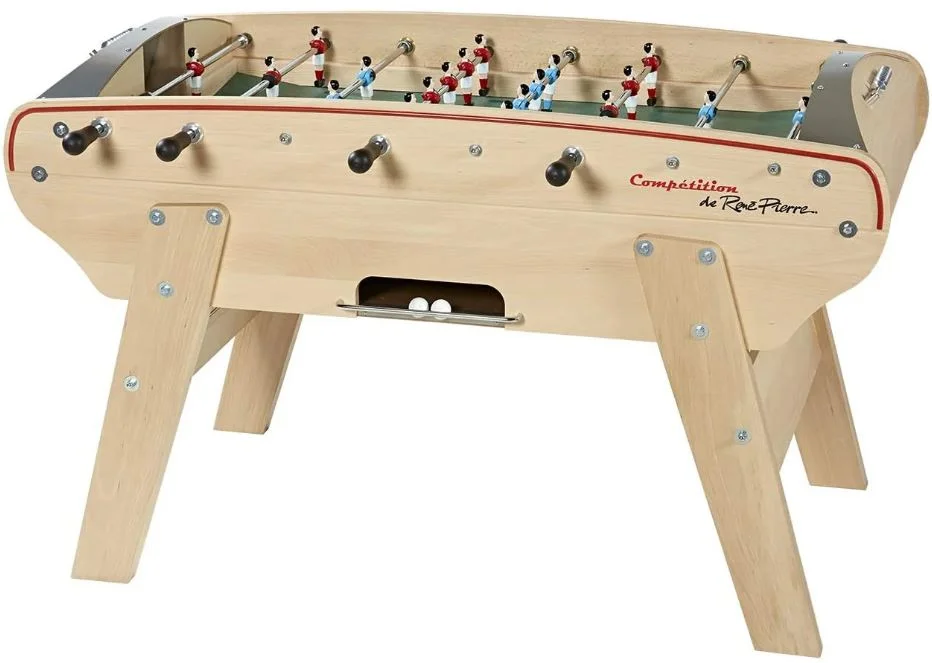
Look for lacquered wood, convincing wood grain, metal details, abacus-style scoring, and finishes that feel preserved rather than printed. The René Pierre Competition, for example, leans hard into solid beech wood, hand-painted aluminum players, metal score pieces, angled legs, and a made-in-France build rooted in the brand’s 1970s designs.
That is why it feels authentic.
The visual story and the material story match.
Patina and fake distressing are not the same thing
This is where buyers get tricked.
Real age has texture.
Real wear tends to settle into edges, handles, finish shifts, and small imperfections.
Cheap distressing usually looks sprayed on, rubbed on, or designed by someone who has never owned an old table.
If you are buying an old-style foosball table, ask yourself one simple question: Does this look preserved, restored original, or artificially aged? That answer tells you a lot before you ever touch a rod.
Real vintage, antique, retro, classic, and mid-century: what these terms should mean
These labels get mashed together all the time. That confuses buyers and makes a lot of weak tables sound more romantic than they are.
So let’s clean it up.
Vintage
Vintage usually means older design language, visible period influence, and a stronger sense of authenticity. A vintage foosball table may be truly old, or it may be a newer build that clearly borrows from earlier French, Italian, or American forms.
This is where you see wood-forward cabinets, abacus scorers, traditional table soccer construction, and finishes that feel grounded in history.
Antique
An antique foosball table is rarer and more collector-oriented.
It is usually less about perfect speed or modern bearings and more about age, scarcity, original finish, original hardware, and overall collectible condition. That can be wonderful, but it also means more caution. Some antique tables are beautiful. Some are beautiful headaches.
Retro
Retro is the fun cousin.
A retro foosball table does not need real age. It just needs to channel another era well. That could mean arcade influence, furniture styling, or a coffee-table format with nostalgic charm. Good retro design feels playful and deliberate. Bad retro design feels like a prop from a diner that also sells novelty signs.
Classic
Classic means the table keeps working visually and practically.
It does not chase trends. It does not beg for attention. It simply looks right year after year. Tornado fits here better than it fits “antique.” So do many oak-finish models that carry familiar proportions and dependable function.
Mid-century
Mid-century foosball is really about furniture language.
Think angled legs, cleaner lines, balanced proportions, and a stronger relationship with living-room design. Current retail examples from West Elm, Pottery Barn Teen, and HB Home all show that the mid-century foosball table category is alive and well, especially for buyers who want a game table that also behaves like furniture.
The five vintage-inspired foosball-style families
Not every vintage-inspired table is chasing the same mood. That is why lumping them together leads to bad picks.
Some are built around elegance.
Some around sports heritage.
Some around décor.
Some around that sweet spot where a football table looks great and still feels serious.
1- The French Salon Look
This is the polished one.
The table that makes people stop, stare, and suddenly want better lighting in the room.
A vintage René Pierre foosball table has always had a certain magic because the French style feels refined without feeling fragile. The current René Pierre Competition carries that spirit well. KETTLER describes it as inspired by the company’s 1970s models, with solid beech wood, angled legs, hand-painted die-cast aluminum players, abacus scoring, cork balls, and French manufacture.
That combination gives it old-world craftsmanship and real personality. It looks like something that belongs in a café, a lounge, or a room where people care about wood tone as much as scorelines.
Why foosball lovers gravitate to it:
- warm wood and elegant proportions
- authentic vintage design instead of fake wear
- strong furniture presence
- French single-goalie heritage and café-sport character
What to keep in mind:
- French play style is not the same as the standard American tournament feel
- Buyers focused on hard daily competition may prefer a more performance-first build
Still, if your goal is “beautiful first, flimsy never,” René Pierre is one of the best vintage foosball tables in the conversation. It feels like an investment piece, but not in the annoying way people use that phrase for everything made of wood.
2- The Italian Clubroom Look
Italian tables have a sharper personality.
They do not whisper.
They do not pose.
They look clean, sporty, and unmistakably European.
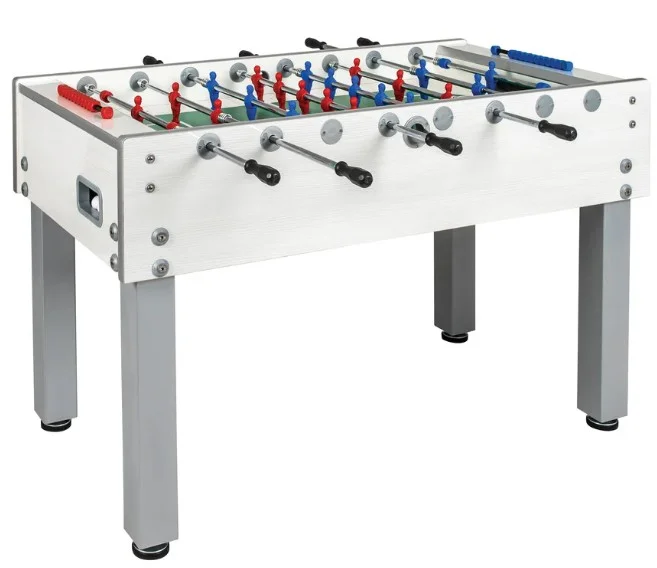
If you have been searching for a vintage Italian foosball table, what you probably love is that club-room energy. Strong lines. Abacus counters. metal legs. Café-game-room DNA. A table that looks athletic without losing style. The Garlando G-500 leans into that identity with made-in-Italy construction, telescopic rods, abacus score keepers, powder-coated steel legs, side and corner ramps, and direct-molded players.
That makes it a great modern stand-in for the vintage Garlando foosball table look, even if you are not buying an actual older piece.
Why this style works:
- Italian craftsmanship still reads clearly
- The table looks lively, not bulky
- It balances sport and décor better than many chunky cabinets
- It gives you that continental game room aesthetic that people keep coming back to
What to watch:
- Some Italian-style tables look sleek rather than warmly aged
- If you want an estate sale piece with heavy patina, a modern Garlando may feel too clean
But if you want vintage European foosball style without taking on restoration drama, this lane makes a lot of sense. It is the kind of football table that can sit in a stylish room and still invite serious games.
3- The American Tournament Classic
Now we get to the bruiser.
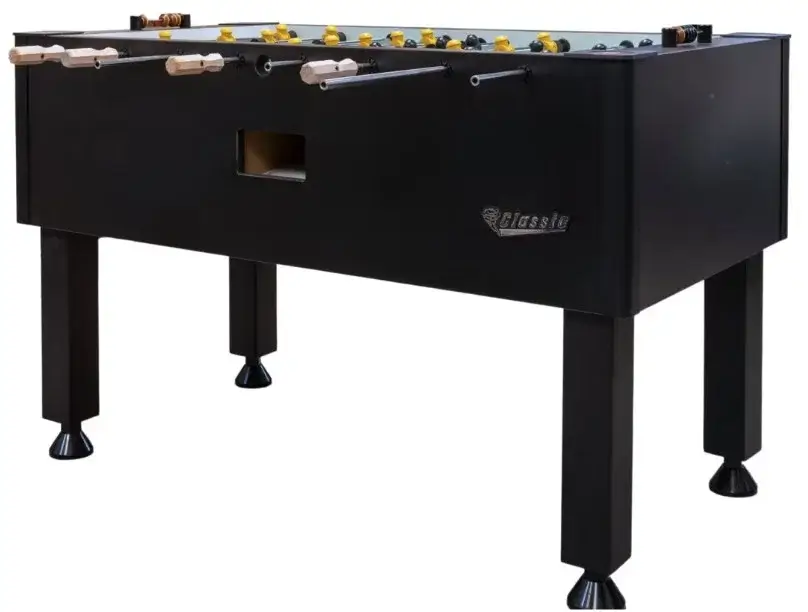
The Tornado Classic II foosball table is not trying to charm you with antique romance. It wins in a different way. It feels like the table people remember from rec rooms, youth centers, basement rivalries, and places where nobody ever said, “Let’s just play casually.”
Tornado’s official product page calls the Classic II a contemporary look with commercial-style construction, black suede laminate, 1.5-inch cabinet walls, a 3/4-inch laminate playfield, counterbalanced men, solid-wood handles, and commercial-grade leg levelers.
That is why “classic tornado foosball table” sounds right.
It is old-school in reputation, not antique in appearance.
Why foosball lovers buy it:
- real play credibility
- balanced players and smooth rod action
- durable construction
- a familiar American competition feel
- strong long-term parts support
That last point matters more than many buyers think. Tornado replacement parts are widely available, including bearings, rods, handles, men, trim, and tune-up kits. That makes ownership less stressful over time, especially compared with random off-brand tables that look okay until something breaks.
If your idea of vintage is “the real table we all wanted,” Tornado belongs in the room. It may not be the softest or most decorative football table here, but serious players know exactly why people respect it.
4- The Furniture-First Retro Piece
Some tables are bought to dominate a game room. Others are bought because they make the whole room look cooler.
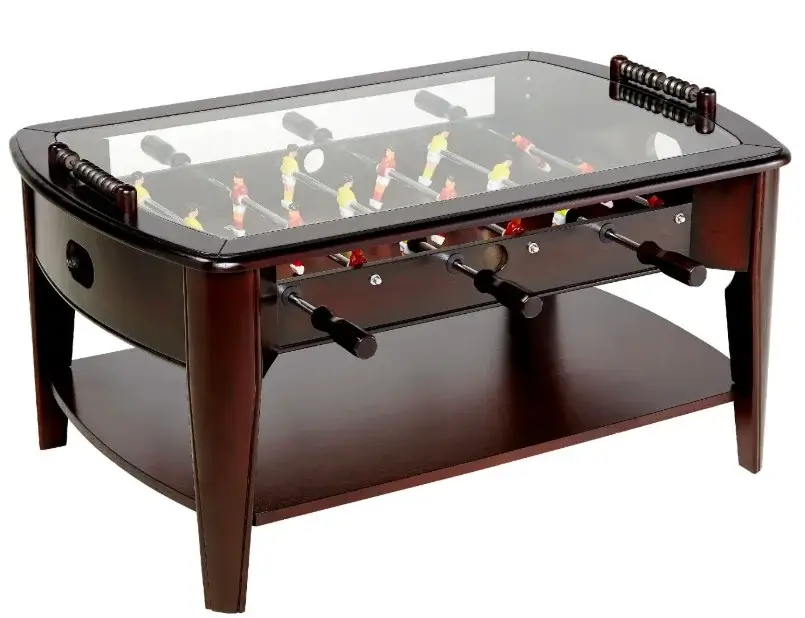
That is where the Barrington coffee-table format lands. The Barrington 42-inch model uses tempered glass, wood veneer rails and aprons, chrome-plated steel rods, hand-painted players, solid wood handle grips, wood scoring beads, and a bottom shelf for storage. MD Sports positions it as a piece for a game room or living room, which tells you exactly what it is trying to be.
This is not pretending to be a tournament beast. It is a retro foosball table with furniture instincts.
Why it connects:
- decorative and functional
- smaller footprint than full-size builds
- strong statement piece energy
- easy fit for shared living spaces
- enough nostalgic charm to feel fun without going cheesy
Who it suits:
- buyers who want a living-room football table
- people who care about appearance first, casual play second
- homes where space matters as much as performance
Who does it not suit:
- players chasing high-level rod feel
- people who want long sessions with competition-style intensity
This is a table you buy because it fills a room and starts conversations. That is not a weakness. It is just a different job.
5- The Rustic and Mid-Century Crossover
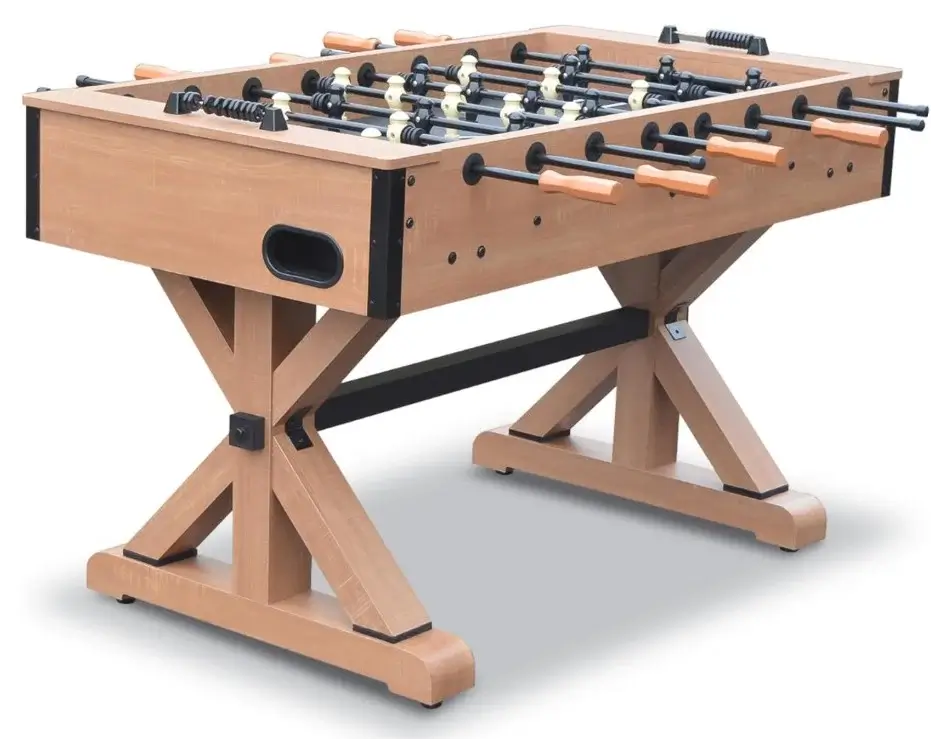
This style sits between game-room warmth and furniture polish.
The Hathaway Daulton is a good example. Wayfair describes it with urban oak melamine, a black playing surface, octagon wood handles, black steel rods, counterbalanced players, and a trestle-style base with a cross beam.
That puts it close to the mid-century foosball mood, even if it leans more rustic than pure minimalist.
Then you have HB Home’s Mid-Century Modern table, sold through West Elm and Wayfair, which uses angled legs, a medium-brown finish, inset manual scoring, adjustable leg levelers, and a parquet-style playfield.
Why this family works:
- Warm wood tones play nicely in family rooms
- Clean silhouettes feel less “arcade” and more “furniture.”
- A classic foosball table look can live here without feeling too formal
- It gives you that restored condition vibe without needing an actual restoration project
What to remember:
- Many of these builds use engineered wood, melamine, MDF, or mixed materials
- The look can be excellent, but the collector value is usually not the point
If you want a football table that feels at home next to a sofa, a media console, and a decent rug, this category is hard to ignore.
Which vintage-inspired foosball table is good for you?
This is the fun part.
Forget the boring pros-and-cons grid for a second.
Most buyers already know what kind of room they want.
They just need help matching that room to the right table personality.
If you want French café elegance
Go, René Pierre.
This is for the person who notices leg angle, finish quality, and whether a table feels like furniture with a game built inside it. It has timeless appeal and real design confidence.
If you want Italian design heritage
Go Garlando or another strong Italian-made look.
This is for the buyer who wants sleek European lines, café-game-room energy, and a table that feels sporty without feeling cold.
If you want American old-school competition
Go Tornado Classic II.
This is for the player who wants serious rod feel, familiar control, and a table with heritage you can actually feel during play.
If you want retro furniture for a smaller space
Go, Barrington, coffee-table style.
This is for the buyer who wants a retro arcade foosball vibe, but still wants the table to behave like a piece of décor.
If you want rustic warmth or mid-century balance
Go Hathaway Daulton or HB Home.
This is for rooms that need wood tone, cleaner silhouettes, and a table that blends into everyday living instead of shouting from across the room.
The vintage-inspired buyer’s checklist: what to inspect before you buy
A pretty cabinet can still hide a bad table. This is where smart buyers save themselves from regret.
If you are shopping vintage foosball table for sale listings, antique foosball table for sale ads, or even new models with vintage styling, run through this checklist first.
1. Finish quality
Ask:
- Does the finish look like the original finish or cheap faux-aging?
- Does the veneer feel convincing?
- Is the cabinet cleanly done around edges and corners?
- Does the wood tone look rich or sprayed-on?
Good vintage materials feel calm and intentional. Bad ones try too hard.
2. Hardware and parts
Original hardware is a plus on true older pieces, but serviceability matters too.
If you are shopping pre-owned condition listings, ask whether parts have been replaced, whether bearings were serviced, and whether rods are straight. On newer premium brands, parts support matters just as much. Tornado’s official parts ecosystem is one reason many experienced buyers trust the brand for long-term ownership.
3. Playfield and rods
This is where décor-only tables get exposed.
Check for:
- level playfield
- smooth rod action
- no dead spots
- stable legs
- scorer quality
- reasonable handle feel
A table can look gorgeous in photos and still feel disappointing the second the ball starts dying in midfield. Nothing kills romantic vintage energy faster than a ball that refuses to move.
4. Restoration versus preservation
A restored original can be wonderful. A badly restored table can lose half its soul.
Ask what “fully restored” actually means. Was the cabinet refinished? Was the playfield restored? Were worn bearings, rods, or fasteners replaced? Were preserved details respected, or sanded away in the name of making it look “new”?
If you love vintage wear, remember that not every mark is a flaw. Sometimes, functional vintage condition is exactly what gives a table character.
5. Long-term ownership
Think beyond the day it arrives.
Ask yourself:
- Is this a collectible, or just collectible-looking?
- Does it have real resale value?
- Is it a hard-to-find model?
- Will I still enjoy it if I actually play it often?
- Does the design age well, or just photograph well?
That is where collector value and daily enjoyment split. Some tables are meant to be admired. Some are meant to be hammered on every weekend. Some do both. Those are the rare finds.
Where to buy a vintage foosball table without getting the wrong kind of “old.”
Shopping in this category can get messy fast. One listing is a beauty. The next is basically a parts pile with flattering lighting.
So it helps to know where to look and what each source is good for.
True vintage marketplaces
These are best for:
- Estate sale pieces
- Local collector finds
- Restored condition listings
- Unusual European imports
- Rare antique wooden foosball table listings
This is where you may find a real old foosball table with age, scars, and a story. It is also where you will find mystery repairs, missing parts, and descriptions that use the word “character” a little too generously.
New tables with vintage styling
These are best for:
- Cleaner ownership
- Better parts support
- Fewer restoration surprises
- Buyers who want the look without the gamble
René Pierre, Tornado, Garlando, Barrington, Hathaway, and HB Home all sit in this broader lane, but they chase very different moods.
What “for sale” should mean for you
Before you click anything, decide which buyer you are:
- The collector chasing authenticity
- The homeowner is chasing a statement piece
- The player is chasing a classic look with reliable play
- The decorator is chasing a retro fit for a smaller room
If you know that answer, the noise drops fast. If you do not, every old foosball table for sale starts looking like “maybe this one,” which is how weird buying decisions happen.
The mistake most buyers make: confusing vintage-looking with worth owning!
This is the trap.
Some tables look old and feel cheap. Some tables look cleaner and age beautifully. Some tables are visually perfect and mechanically forgettable.
The best choice depends on what matters most to you:
- Décor
- Daily play
- Collector appeal
- Room fit
- Serviceability
At Foosball Junkie, that is really the line in the sand. A vintage-inspired table should not just look like history. It should feel like something you still want to own after the novelty wears off.
Or, to put it in foosball language, a pretty cabinet is nice. A pretty cabinet that still makes you want “one more match” is the one that wins.
FAQ
A lot of readers come into this topic with the same few questions. Here are the straight answers.
What is the difference between a vintage foosball table and a retro foosball table?
A vintage foosball table usually points to older design language, real age, or stronger historical influence. A retro foosball table is often newer and designed to evoke the past rather than come from it.
Are antique foosball tables worth buying for regular play?
Sometimes, but not always. An antique foosball table can have real collector charm, but age may also mean weaker parts, support, wear, or restoration needs. Buy one if you love the piece itself, not just the word “antique.”
What is the best vintage-inspired foosball table for a game room?
It depends on your style. René Pierre is the elegant French pick. Tornado Classic II is the performance heritage pick. Garlando fits the Italian club-room look. Barrington works well for retro furniture appeal.
Is René Pierre a good vintage-style foosball table brand?
Yes. The Competition model is explicitly framed around 1970s inspiration and French styling, with solid beech wood, angled legs, cork balls, hand-painted aluminum players, and metal score pieces.
Is Tornado Classic II a vintage or classic foosball table?
Classic is the better word. Tornado presents it as a commercial-style, performance-driven table with modern durability and an old-school reputation.
What makes a vintage Italian foosball table different?
Usually, it is the sharper European silhouette, abacus counters, café-club energy, and that distinct Italian balance between sport and style. Garlando still carries a lot of that identity today.
Are mid-century foosball tables good for family rooms?
Yes, especially if you want the table to blend with furniture. Current mid-century retail models lean into angled legs, warm finishes, and cleaner cabinet lines that suit mixed-use living spaces.
Where can I find a vintage foosball table for sale?
Try estate sales, collector marketplaces, vintage dealers, local resale channels, and specialty game-room sellers. Just read listings carefully and ask about condition, hardware, and restoration work before you commit.
Is a restored foosball table better than an original one?
Not automatically. A restored table may play better. An original may hold more character. The better choice depends on what was restored, what was preserved, and whether you care more about playability or authenticity.
Closing: choose the era, then choose the table
If you want elegance, go French.
If you want a European identity, go Italian.
If you want performance heritage, go Tornado.
If you want décor-first retro charm, go to Barrington.
If you want warm room styling, go rustic or mid-century.
The best vintage-inspired foosball table is not the one that looks oldest. It is the one whose materials, personality, and style still feel right in your room a year from now.
That is the table you keep. That is the table people remember. And honestly, that is the table worth making space for.