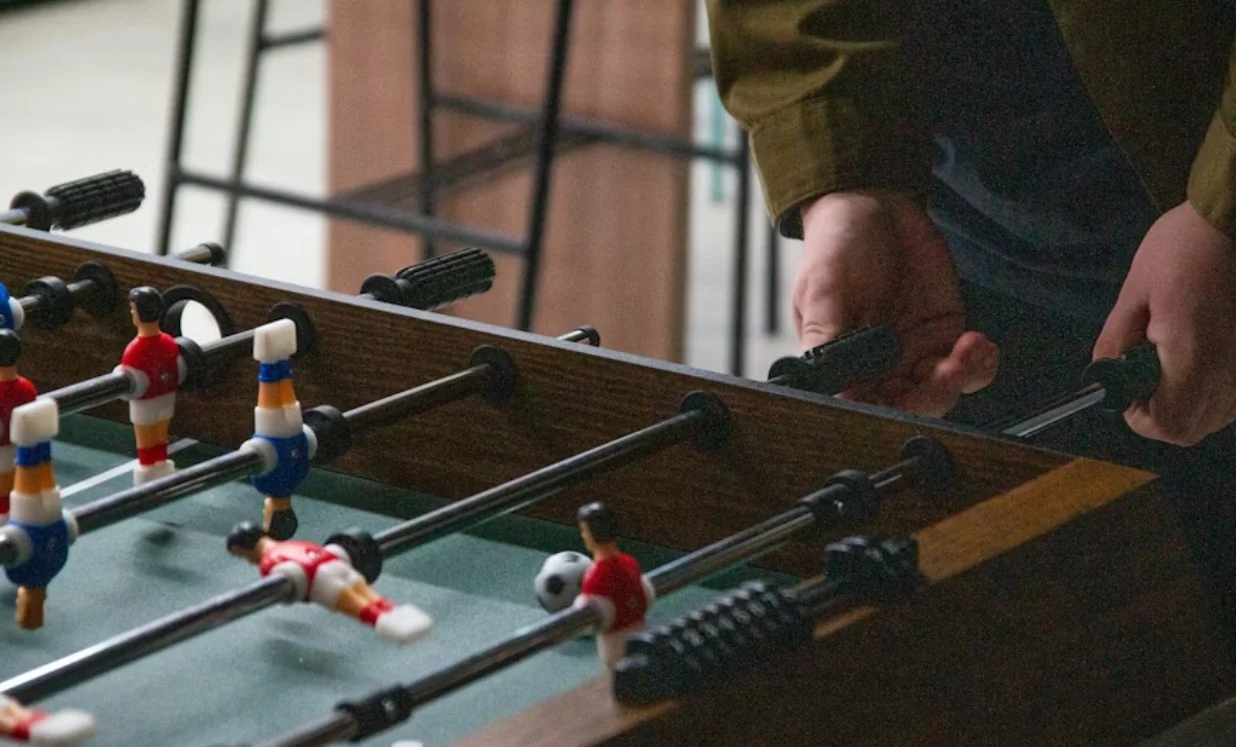
You grab the handles. The ball drops. Your wrists freeze.
Your opponent fires a shot past your goalie before you blink. You panic, spin wildly, and concede another goal. Within minutes, you’re down 5-0 and wondering if this game is pure luck.
It’s not. Most beginners lose because they treat foosball like a reflex contest. They ignore grip mechanics, ball placement, and defensive spacing. Then they face someone who’s practiced structured drills for two weeks and get demolished.
This guide fixes that. You’ll learn gameplay fundamentals that work whether you’re playing casual matches at a bar, practicing alone in your garage, or entering your first tournament.
We’ll cover grip techniques, passing sequences, shooting mechanics, and defensive positioning. No fluff. No vague tips. Just practical methods that produce measurable improvement.
Let’s get started.
Introduction to Playing Foosball
Playing foosball well requires control, not chaos. Beginners often slam shots without understanding how each rod contributes to scoring. That creates defensive gaps and wasted possessions.
The game rewards deliberate movement. You need clean ball handling, smart positioning, and varied shot selection. These skills transfer across all formats, from doubles tournaments to solo practice sessions.
Casual players improve fastest when they focus on fundamentals first. Master trapping before attempting snake shots. Learn basic passes before trying trick angles. Structured practice accelerates your learning curve far beyond random matches.
At Foosball Junkie, we’ve seen players transform their gameplay in weeks by following systematic training methods. The difference isn’t talent. It’s approach.
This guide gives you that approach. You’ll understand basics, develop proper grip mechanics, and build passing accuracy, when to shoot, and when to pass. Moreover, you’ll also recognize common mistakes before they become habits.
Whether you’re learning football table basics or refining competitive techniques, the principles stay consistent. Control the ball. Read your opponent. Execute with precision.
Basics of Playing Foosball
Grip and stance shape everything that follows. Most beginners grip handles too tightly. This limits wrist movement and slows reaction speed.
Use a neutral grip. Wrap your fingers around the handle with a relaxed hand. Tighten only when executing shots or blocks. Loose grips allow faster transitions between movements. Tight grips create muscle fatigue during long matches.
Your feet should be shoulder-width apart. Lean slightly forward to maintain balance during fast exchanges. Keep weight on your toes so you can shift quickly between rods.
Body position affects how fast you transition from defense to offense. Standing too far back delays your reach to the 3-bar and 5-bar. Standing too close reduces your view of the entire playing field.
Good stance isn’t just comfort. It improves control over every rod.
Track the ball constantly with your eyes. Beginners watch their own rods instead of the ball’s path. This creates delayed reactions and missed opportunities.
Practice tracking by moving the ball slowly across the table without shooting. Focus on where the ball is heading, not where it’s been. Anticipating ball paths improves passing accuracy and defensive positioning.
You’ll intercept passes before your opponent completes them. You’ll set up shots faster because you’re already in position when the ball arrives.
Learning how to play foosball for beginners means building these fundamentals first. Don’t rush into advanced shots before mastering basic control. Professionals still practice grip mechanics and tracking drills daily.
Your foundation determines your ceiling. Build it right.
Passing Fundamentals
Passing connects the defense to the offense. Without clean passes, you’ll lose possession constantly.
Basic passing involves moving the ball from one rod to another while maintaining control. Light touches keep the ball under your player’s foot. Press gently and roll it forward or backward. This creates space for the next move.
Trapping stops the ball completely by pinning it against the playing surface. Once trapped, you can reposition your player and choose your next action deliberately. Beginners often hit the ball too hard, losing possession immediately.
The 5-bar to 3-bar pass is foundational. Position your 5-bar player behind the ball. Push or pull the ball toward your 3-bar player’s path. Your 3-bar player traps it or shoots immediately.
Wall passes use the table’s side barriers to redirect the ball. Angle your shot toward the wall so it bounces to your waiting 3-bar. This avoids direct interception by your opponent’s 2-bar.
Lane passes send the ball straight through open gaps between your opponent’s players. These work best when your opponent leaves defensive rods out of position.
Timing matters more than speed. A slow, accurate pass beats a fast, wild one. Your teammate (or your other rod in singles) needs time to receive the ball cleanly.
Mix your passing patterns. Predictable passes get blocked easily. Alternate between wall passes and direct lanes. Vary your speed to disrupt opponent timing.
Foosball skills develop through repetition. Spend five minutes daily on passing accuracy before playing matches. Track your success rate. Beginners might complete 10 out of 20 passes cleanly. Within two weeks of focused practice, that number should double.
Overview of Shooting & Scoring
Shooting wins matches. But only if your shots are accurate and unpredictable.
The push shot moves your player and the ball forward simultaneously. Place the ball slightly behind your player. Push the rod forward while rolling the ball ahead. This creates a fast, direct shot toward the goal.
The pull shot pulls the ball laterally across the table before shooting. Trap the ball with your 3-bar player. Pull the rod quickly to one side, then snap your wrist to strike the ball toward the goal. This shot confuses goalies who expect straight trajectories.
The bank shot bounces the ball off the back wall before entering the goal. It works well against aggressive goalies who overcommit to one side.
Each shot has situational advantages. Push shots work well from the 5-bar. Pull shots are deadly from the 3-bar when executed with speed. Bank shots create angles that straight shots can’t achieve.
Power comes from wrist snap, not arm strength. Beginners often swing their entire arm, losing accuracy. Focus on quick, controlled wrist movements. Your forearm should barely move during the shot.
Accuracy requires target practice. Set up mental targets for each corner of the goal. Aim for specific spots during practice sessions. Track how many attempts it takes to hit each target five times.
Adjust shot speed based on distance. Close-range shots need less power but more precision. Long-range shots need speed to reach the goal before the defense reacts.
Common scoring mistakes include telegraphing your shots. If you always pull left before shooting, defenders will anticipate and block easily. Vary your setup movements. Sometimes fake a pull, then push. Other times, shoot immediately after trapping.
The best foosball strategy combines unpredictability with precision. Your opponent can’t defend what they can’t predict.
Read full shooting guide here: https://foosballjunkie.com/foosball-shooting-techniques/
Overview of Defense & Positioning
Strong defense frustrates opponents and creates counterattack opportunities.
Position your 2-bar players to cover the most likely shot angles. Avoid leaving large gaps between players. Your goalie should stay centered unless reacting to a shot. Overcommitting to one side leaves the opposite side open.
Blocking requires anticipation. Watch your opponent’s 3-bar and 5-bar for movement patterns. If they always pull left before shooting, position your defense accordingly. Read their body language and rod positioning.
Defensive alignment matters. Your 2-bar should form a protective barrier in front of your goalie. Keep players spaced evenly to eliminate clear shooting lanes. Adjust spacing based on where the ball is located.
Quick transitions turn defensive saves into offensive opportunities. After blocking a shot, trap the ball immediately. Don’t rush the counterattack. Set up a clean pass to your 3-bar or 5-bar.
Poor defensive habits include over-spinning rods. This is illegal in competitive play and ruins your positioning in casual games. It leaves your players out of alignment when the ball returns. Spinning wastes energy and creates gaps for opponents to exploit.
Another common mistake is chasing the ball with your defense. This pulls your players out of position and opens up your goal. Stay disciplined. Let the ball come to you rather than reaching for every shot.
Foosball defensive techniques improve through focused practice. Spend time blocking shots at various speeds. Learn to predict shot angles based on your opponent’s rod movements.
Defensive drills work best when combined with offensive practice. Have a partner shoot while you defend. Switch roles every five minutes. This builds both skill sets simultaneously.
Read a thorough guide about foosball defense here: https://foosballjunkie.com/how-to-defend-in-foosball/
Solo Practice & Self-Training Overview
Practicing alone builds individual skills faster than random matches.
Solo drills improve ball control, passing accuracy, and shooting precision. You can focus entirely on technique without match pressure. This accelerates skill development.
Ball control drill: Move the ball back and forth on the 5-bar for three minutes without losing possession. This builds hand-eye coordination and touch sensitivity. Start slowly and increase speed as you improve.
Passing drill: Pass from 5-bar to 3-bar 20 times. Count successful traps. Repeat until you achieve 18 out of 20 clean passes. This builds muscle memory for match situations.
Shooting drill: Take 50 shots from the 3-bar. Alternate between push shots and pull shots. Track your goal percentage. Aim for 60% accuracy before adding advanced techniques.
Daily practice sessions of 15 to 20 minutes build consistency. Short, focused drills work better than long, unfocused sessions. Your brain retains information better through spaced repetition.
Solo foosball practice also includes transition drills. Move the ball from the goalie to the 2-bar to the 3-bar to the 5-bar and back. This builds the coordination needed for live matches. You’ll develop smooth rod transitions instead of jerky movements.
Record your progress weekly. Write down your passing success rate, shooting accuracy, and ball control duration. Measurable data shows improvement and highlights areas needing work.
Playing foosball by yourself might seem boring initially. But structured solo practice produces faster improvement than unstructured matches. You control the pace and focus on specific weaknesses.
Mindset & Game Psychology
Mental state affects performance as much as physical skill.
Fast-paced matches create stress. Your opponent scores twice quickly. Your instinct is to panic and rush your next move. Resist that urge. Take a breath. Reset your focus on the current play, not the scoreboard.
Emotional control prevents compounding mistakes. One bad goal doesn’t define the match. Maintain composure and execute your fundamentals. Good players lose focus occasionally. Great players recover quickly.
Reading opponents gives you tactical advantages. Watch for patterns. Does your opponent always pass to the same rod? Do they favor pull shots over push shots? Adjust your defense based on these observations.
Block their preferred passing lanes. Position your goalie where they usually shoot. Force them to use their weaker techniques. This disrupts their rhythm and creates scoring opportunities for you.
Mixing rhythms keeps opponents guessing. Vary your shot timing. Pause before passing sometimes. Rush other times. Unpredictability disrupts their defensive anticipation.
Practice pressure situations during solo drills. Set a timer and force yourself to score within 30 seconds. This simulates match tension and builds mental toughness.
The best foosball strategy includes psychological elements. Stay calm. Read opponents. Vary your approach. These mental skills separate intermediate players from advanced competitors.
Foosball tips often focus on physical techniques. But mental preparation determines who wins close matches. Your mindset affects decision-making speed and execution quality.
Preparations for Casual or Competitive Play
Preparation differs based on whether you’re practicing alone or facing opponents.
Pre-match warm-ups loosen your hands and sharpen your reflexes. Spend five minutes doing light passing and shooting before your match starts. Cold muscles respond more slowly than warm ones.
Stretch your wrists and fingers. Foosball demands quick, repetitive movements. Preventing strain reduces injury risk and maintains performance throughout long sessions.
Mental focus strategies include visualizing successful plays. Review your opponent’s tendencies if you’ve played them before. Enter matches with a clear game plan. Know which shots you’ll attempt first and which passes you’ll use most.
Physical preparation matters too. Stay hydrated. Dehydration reduces reaction speed and decision-making quality. Avoid playing when fatigued. Tired muscles can’t execute techniques properly.
Casual foosball play allows more experimentation. Try new shots without pressure. Test different grip styles. Use casual matches to develop comfort with advanced techniques.
Competitive foosball play requires focused execution. Stick to techniques you’ve mastered through practice. Don’t experiment with new shots during important matches. Rely on your strengths and exploit opponent weaknesses.
Table maintenance affects gameplay quality. Check that rods slide smoothly before matches. Wipe down the playing surface to remove dust and debris. Clean conditions produce consistent ball movement.
For recommendations on quality equipment, explore our best foosball tables guide.
Foosball gameplay improves when you prepare properly. Warm-ups reduce mistakes. Mental preparation builds confidence. Physical conditioning maintains performance.
Common Beginner Mistakes to Avoid
Recognizing mistakes early prevents bad habits from forming.
Over-spinning rods wastes energy and violates tournament rules. It also leaves your players out of position when the ball bounces back. Train yourself to use controlled, deliberate movements instead.
Spinning might feel powerful initially. But it ruins your defensive alignment and creates easy scoring opportunities for skilled opponents. Practice controlled rod movements even during casual play.
Ignoring defensive positioning leads to easy opponent goals. Beginners often focus entirely on offense, leaving their 2-bar and goalie unprotected. This creates massive gaps that good players exploit instantly.
Balance your attention between offense and defense. Strong defense keeps you in games while you develop shooting skills. A well-positioned defense frustrates opponents and forces mistakes.
Focusing only on offense creates imbalanced gameplay. Defense and passing are equally important. Many beginners lose matches because they can’t stop their opponent’s attacks, not because they can’t score.
Not practicing consistently is the biggest mistake. Sporadic practice doesn’t build muscle memory. Even 10 minutes daily produces better results than one long session per week.
Common foosball mistakes also include poor grip technique. Gripping too tightly reduces wrist mobility. Gripping too loosely sacrifices control during fast exchanges. Find the balance through practice.
Another frequent error is watching your own rods instead of the ball. This delays reactions and creates missed opportunities. Keep your eyes on the ball constantly.
Beginners also tend to rush shots without setting up properly. Take an extra second to trap the ball and aim carefully. A controlled shot beats a rushed one.
Foosball expert tips emphasize patience. Don’t force shots when passing creates better opportunities. Don’t abandon defense to chase offense. Play smart, not desperate.
Foosball Table Etiquette & Maintenance
Respect for opponents and equipment improves the playing experience for everyone.
Wait for your opponent to be ready before starting. Don’t distract them during shots or passes. Competitive tension is natural, but aggression toward other players crosses the line.
Good sportsmanship includes congratulating opponents on good shots and acknowledging your own mistakes. This creates a positive playing environment and builds lasting friendships.
Avoid trash talk that becomes personal. Friendly banter is fine. Insults aren’t. Remember that foosball is a game meant for enjoyment.
Clean the playing surface regularly. Dust and debris affect ball movement and player performance. Wipe down the rods to keep them sliding smoothly. Use silicon spray on rod bearings every few months to maintain optimal performance.
Avoid slamming the rods or jarring the table. Rough play damages bearings and bends rods. Even durable tables suffer from constant abuse. Treat the equipment respectfully.
Foosball table maintenance extends the table’s lifespan and keeps gameplay consistent. Check rod tightness periodically. Loose rods wobble and affect shot accuracy. Tighten them with the appropriate tools.
Inspect the playing surface for warping or damage. Uneven surfaces create unpredictable ball movement. Replace worn players if they become damaged. Broken players affect both aesthetics and gameplay quality.
Store balls properly when not in use. Exposure to sunlight and moisture damages them over time. Keep spare balls available in case one cracks during play.
Foosball table tips often focus on gameplay. But proper maintenance ensures your table performs consistently for years. Respect the equipment, and it will serve you well.
Still Don’t Understand? Learn Foosball by Watching
Conclusion
Playing foosball well comes down to fundamentals executed consistently.
You’ve learned basics, proper grip mechanics, passing strategies, shooting techniques, and defensive positioning. You know how to practice alone and prepare for competitive matches.
Mastery doesn’t require natural talent. It requires structured practice and attention to detail. Control beats power every time. Positioning beats speed. Consistency beats occasional brilliance.
Start with ball control drills. Add passing once you can trap reliably. Introduce shooting and defense after your passes become accurate. Build your skills in layers rather than jumping to advanced techniques.
At Foosball Junkie, we’ve seen beginners transform into confident players within weeks by following systematic training methods. The difference isn’t talent. It’s approach.
The mindset matters as much as the technique. Stay patient with your progress. Focus on incremental improvements rather than overnight transformations. Compare yourself to last week’s performance, not to professional players.
Deliberate practice transforms beginners into confident players faster than random matches ever could. Track your progress weekly. Celebrate small victories. Identify weaknesses and address them specifically.
For players seeking affordable equipment to begin their journey, check out our guide on tables under $200.
Now pick up the handles and practice. The ball won’t control itself.