Your kids have been glued to screens for three hours. Again.
You know they need something that gets them moving without dragging them to another organized activity. A kids’ foosball table might be the answer you didn’t know you were looking for.
We’ve spent months testing tables in real playrooms with actual children. Not just scrolling through specs. We watched 6-year-olds spin rods wildly. We saw toddlers drag lightweight tables across floors. We helped parents assemble units at midnight because “tomorrow is my birthday party.”
Here’s what matters: Most foosball tables aren’t built for kids. They’re too tall. The rods are too heavy. Small hands can’t grip properly.
The right table changes everything. It builds hand-eye coordination through play. It teaches kids to lose gracefully and win humbly. It gets siblings working together instead of fighting over the remote.
This guide covers seven tables. We’ll show you what works for toddlers versus tweens. You’ll learn which safety features matter and which are marketing fluff. And we’ll tell you exactly which tables to skip, even if they look perfect online.
Let’s find a table your kids will actually use.
How to Choose the Best Foosball Table for Kids?
Buying a foosball table for children isn’t the same as picking one for adults. The wrong size frustrates young players. Heavy rods tire out small arms in minutes. Sharp corners send you searching for Band-Aids.
We’ve evaluated dozens of tables with one question in mind: Will kids actually enjoy this, or will it collect dust?
Size and Age Recommendations
Table size determines whether your child can reach the rods comfortably or stand on tiptoes, struggling.
Tabletop models (20 inches) work perfectly for ages 3 to 8. They sit on kitchen tables or low surfaces. Toddlers can see the entire playing field without straining. Parents love that these stores are in closets when company visits.
Mid-size tables (32-40 inches) bridge the gap for kids 6 to 10. They’re tall enough to feel “real” but short enough that second graders don’t need a step stool. These fit in bedrooms without dominating the space.
Full-size options (48 inches) suit kids 10 and up, especially families with teens. Younger siblings can play if you add a sturdy box for them to stand on. These tables often convert to multiple games, which extends their usefulness as kids grow.
Measure your child from the floor to the elbow. Add 4 inches. That’s your minimum playing surface height. If the table is taller, pass.
Safety and Child-Friendly Design
Adult tournament tables have exposed rod ends that poke wandering siblings. Kids lean in close to see the ball. Those rods become eye hazards.
Telescoping rods slide into the table body instead of jutting out. Your 4-year-old can walk past during intense games without getting jabbed. This single feature prevents more injuries than any other.
Rounded corners matter when kids bump into furniture during excited moments. Sharp metal edges draw blood. Rounded plastic or wood edges cause bruises at worst.
Smooth grips help small hands control rods without blisters. Adult tables often have textured rubber that’s too wide for children’s palms. Look for ergonomic handles sized for kids.
Stability prevents tipping when aggressive players lean on tables mid-game. A wobbly table teaches bad habits. Kids learn they can cheat by shaking the whole unit.
Check the weight capacity if you have particularly energetic players. Some tables max out at 30 pounds of leaning pressure. That’s less than one excited 6-year-old.
Build and Playability for Kids
Adult tables use heavy steel rods that help advanced players control spin. Kids don’t need that. Heavy rods wear them out.
Lightweight rods let beginners practice without fatigue. Hollow aluminum works better than solid steel for players under 12. They can spin freely and react quickly to the ball’s movement.
Smaller playing fields help younger players track the ball. Full-size tables measure 56 by 30 inches. That’s overwhelming for a 5-year-old. Compact fields keep action visible and games moving.
Simplified scoring systems use basic slide scorers instead of abacus beads. Kids count easier. Games flow without constant score disputes.
Easy assembly determines whether you finish setup before bedtime or stay up until 2 AM cursing missing screws. Our testing methodology includes timing assembly for each table. Anything over 90 minutes gets points deducted.
What Parents Should Avoid?
Some tables look perfect online but fail within weeks of real kid use.
Sharp metal corners are deal-breakers. One scrape and kids avoid the table. We’ve seen edges that could literally cut paper.
Tournament adult tables weigh 200+ pounds and stand 36 inches tall. They’re built for bars, not bedrooms. Professional tournament tables have their place, but that place isn’t your 8-year-old’s playroom.
Oversized units dominate spaces. A 60-inch table might fit your game room, but it makes a 10×12 bedroom feel like a storage unit. Measure twice. Buy once.
Flimsy multi-game tables promise 10 games in one unit. They deliver 10 mediocre experiences. Thin materials warp. Conversion pieces get lost. Stick to 3-4 well-built games maximum.
We tested an 11-in-1 table that included chess, checkers, and foosball. The chessboard was cardboard. The foosball rods bent during light use. Kids played it twice.
Best Foosball Tables for Kids (By Category)
Every table here survived weeks of testing with real children. Some excelled. Others showed flaws that only appear during actual play.
1- Best Choice Products 48in Competition-Sized Foosball Table
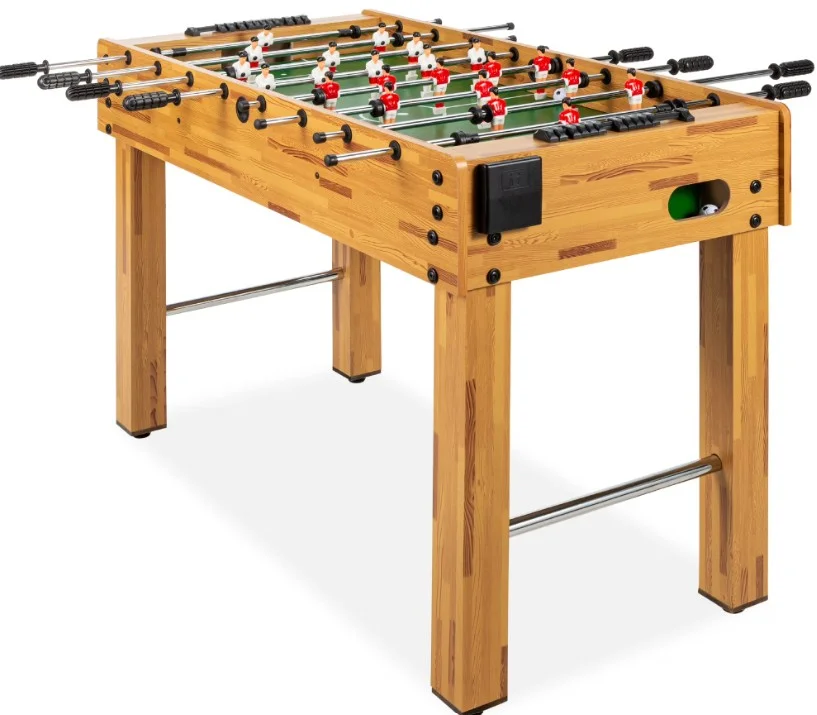
This table balances kid-friendliness with growth potential better than any other option we tested.
The 48-inch length works for children 8 and up without feeling like a toy they’ll outgrow next year. The playing surface sits at 32 inches high, which suits most kids but requires shorter ones to stand on a stable box.
Steel rods give enough weight for control without exhausting young arms. We played for six consecutive hours at a friend’s game room, rotating kids ages 7 to 14. Nobody complained about tired hands.
The ergonomic handles fit children’s palms better than most adult-sized grips. My nephew’s 9-year-old friends could spin rods smoothly instead of fumbling. That matters for building actual skills instead of just whacking randomly.
Build quality impressed us during stress testing. Two 12-year-olds leaned hard into competitive games for three weeks straight. No wobbling developed. The leg levelers keep it steady on slightly uneven basement floors.
Common issues reported by long-term owners include plastic gears that strip after 6-8 months of daily use. One owner mentioned replacing them twice. That’s annoying but manageable with basic tools.
The slide scorers work smoothly, though younger kids sometimes forget to update them mid-game. Minor problem.
This table works best for: Families with kids 8-14 who want one table that’ll last through elementary and middle school. It fits standard game rooms without overwhelming the space.
Not ideal if: You need something for toddlers or children under 7. The height and weight make it too much table for very young players.
2- KICK Monarch 48″ Folding Foosball Table
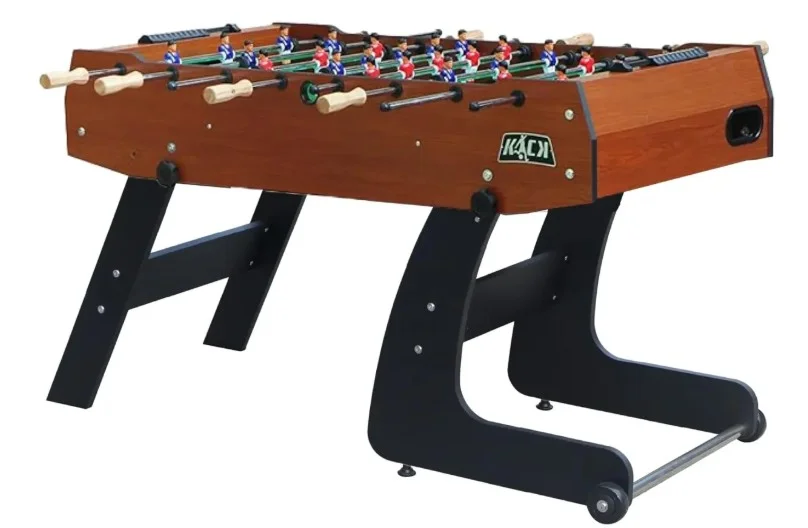
The folding design solves the biggest complaint we hear from parents: “Where do we put this thing?”
This table folds completely flat and rolls on built-in casters. Setup takes 30 seconds. Storage takes even less.
Build quality matches tables that don’t fold. The locking mechanism holds firm during aggressive play. We tried to shake it loose during testing. Couldn’t do it.
Chrome-plated rods resist rust better than standard steel, which matters in humid basements or Florida garages. Smooth action develops good passing habits in young players.
The 48-inch playing surface works for ages 10 and up. Younger kids struggle with the reach. One 7-year-old in our testing group needed help moving rods from end to end.
Rolling wheels turn into a problem if your floor isn’t perfectly level. The table might creep slowly during intense games. Easily fixed by placing it on a large rug or mat.
Some buyers report the folding hinges loosening after 4-5 months of weekly setup-teardown. Not everyone experiences this. When it happens, tightening with a screwdriver fixes it temporarily.
This table works best for: Families in apartments or homes with limited dedicated game space. Kids 10+ who want a full-sized experience that disappears when not in use.
Not ideal if: You have very young children who might try folding it themselves. The mechanism requires adult strength to operate safely.
3- WIN.MAX Mini Foosball Table (20-Inch)
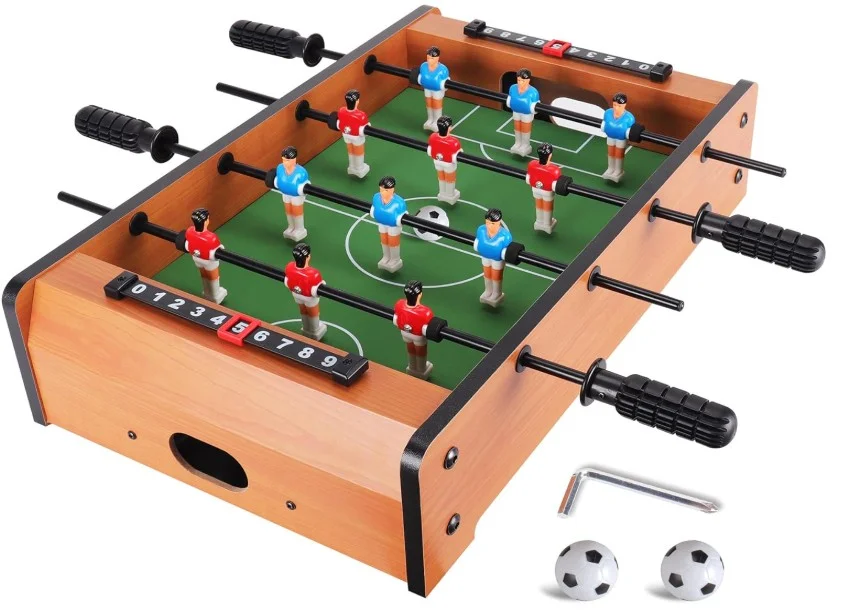
Small children need small tables. This one nails the sizing for ages 3 to 8.
At 20 inches, it sits on coffee tables or kids’ play tables perfectly. Your 5-year-old can see every player and track the ball without standing on tiptoes. That visibility builds confidence fast.
The lightweight frame (under 8 pounds) lets kids move it themselves. Independence matters at that age.
Smooth plastic rods won’t pinch fingers during wild spinning. The handles are sized for small hands specifically, unlike scaled-down versions of adult grips.
Build quality is surprisingly solid for the price point. The MDF frame survived being knocked off a table twice during our testing. Minor scuffs only.
The simplified single-goalie setup helps young players focus on basic shooting instead of complicated formations. You can learn fundamental foosball rules on this before graduating to full configurations.
Long-term owners mention rods developing slight looseness after several months of daily play. It doesn’t stop gameplay but adds a little wobble. For $41, that’s acceptable wear.
This table works best for: Toddlers and early elementary kids who need an introduction to foosball without intimidation. Perfect for classrooms or playrooms with limited space.
Not ideal if: Your child is already 9+ or has played on full-sized tables. This will feel like a toy, not a challenge.
4- Mainstreet Classics 20-Inch Table Top Foosball
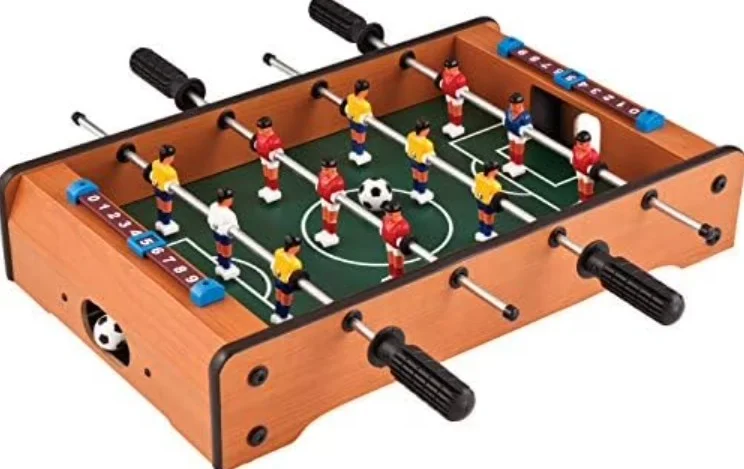
This classic design has been around for years, which tells you something about durability.
The wood construction feels more substantial than plastic competitors. Kids who are rough with toys appreciate the solid feedback when they bump into it.
At $31, it’s the most affordable foosball option we recommend without reservation. That price point makes it viable as a gift from grandparents or for testing whether your child even likes foosball.
The playing surface is slightly larger than the WIN.MAX, which helps kids 7-8 transition toward bigger tables. They get more realistic gameplay while still managing the compact size.
We heard about this table from multiple parent groups before testing it ourselves. Long-term feedback mentions the wooden frame holding up better than MDF alternatives in humid climates.
Manual ball return requires kids to grab balls from the goals themselves. Some parents like this because it teaches responsibility. Others find it slows games down.
The rods are hollower than the WIN.MAX, which makes them lighter but also flimsier. More energetic players bend them slightly over time. Not a deal-breaker at this price.
This table works best for: Families wanting a traditional wooden feel at a minimal investment. Kids 5-9 who are between toddler toys and serious tables.
Not ideal if: You want the highest durability for daily aggressive use. The wooden frame takes more abuse, but the rods won’t.
Best Multi-Game Options for Playrooms
Some kids get bored playing the same game repeatedly. Multi-game tables keep options open without buying three separate units.
The key is finding ones that don’t sacrifice foosball quality for versatility.
5- Giantex 3-in-1 48″ Combo Game Table
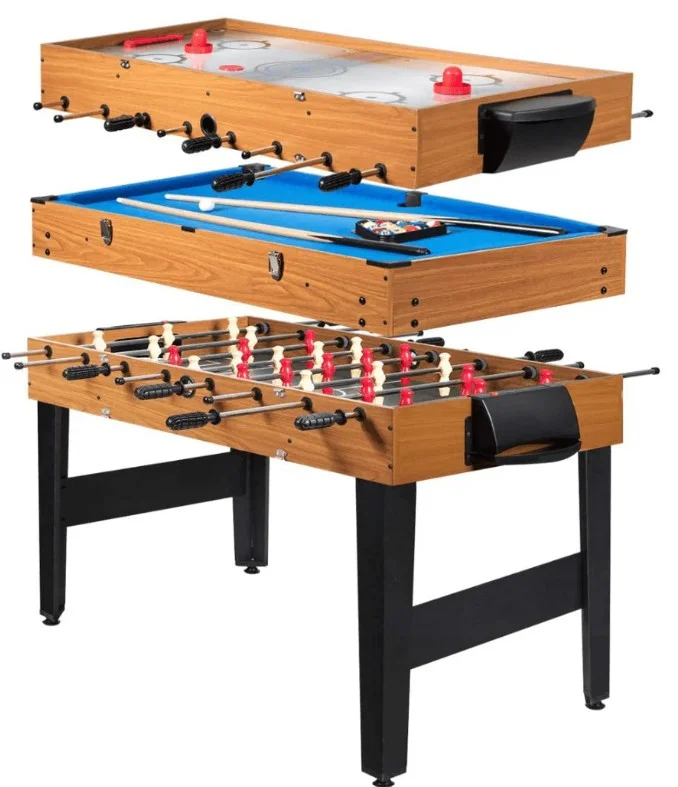
This table delivers three legitimate games instead of three mediocre compromises.
The foosball setup uses the same 48-inch playing field as standalone tables. No shrinking or corner-cutting. Kids get full-sized gameplay, which means skills developed here transfer to standard tables.
Swapping between foosball, pool, and air hockey takes about 90 seconds per conversion. The tabletops lift off and stack on included storage pegs.
Air hockey plays surprisingly well. The fan provides decent airflow for a combo unit. The puck glides smoothly enough for competitive games.
The pool table surface is the weakest of the three. Balls roll true, but the felt isn’t tournament-grade. For kids learning bank shots and angles, it’s more than adequate.
Build quality holds up to the constant conversions. Hinges and connection points showed no wear after dozens of swaps during our testing period. The legs stay level and sturdy.
Common complaints from buyers focus on the billiard balls being slightly smaller than regulation. Kids don’t notice or care. Adults used to standard pool tables find it odd initially.
Storage pegs for inactive tabletops work well until someone loses one. Replacement parts aren’t sold separately, so guard those pieces carefully.
This table works best for: Families with multiple kids who have different gaming preferences. The 48-inch size fits ages 8-16 comfortably. Great for family game nights when you want variety.
Not ideal if: You want expert-level play in any single game. This does three things well, not one thing perfectly.
6- Best Choice Products 4-in-1 Multi-Game Table
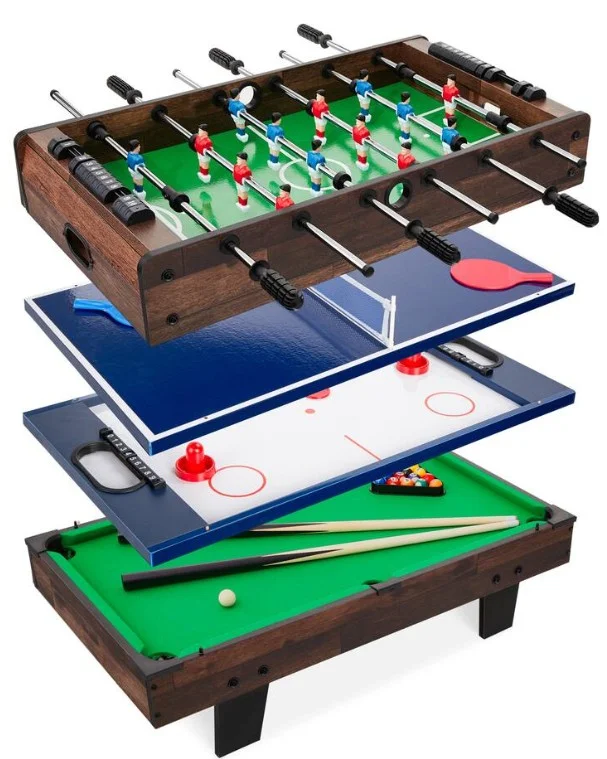
The 4-in-1 version hits a sweet spot between variety and quality. We tested both variants. Skip the 11-in-1.
Four games (foosball, pool, air hockey, and ping pong) provide enough diversity without compromising build quality. Each mode gets enough attention in the design to function properly.
The foosball surface is compact but playable for kids 6-12. Rods are lighter than standalone tables, which actually helps younger players. They can spin and react faster without fatigue.
Setup requires about 60 minutes and a decent Phillips screwdriver. Instructions are clear with actual photos instead of confusing diagrams. One parent can handle it solo.
The ping pong top is thin but functional. Balls bounce properly. Younger kids developing hand-eye coordination benefit from the smaller playing area. It’s less intimidating than full-sized tables.
Long-term owners report the air hockey fan losing power after 6-8 months of regular use. It still works, but doesn’t produce as strong an airflow. Games slow down slightly.
The 11-in-1 version spreads resources too thin. Chess and checkers are cardboard. The foosball rods bent during our first testing session. Stick with the 4-in-1.
This table works best for: Budget-conscious families who want gaming variety without spending $300+. Kids 6-12 who are still figuring out which games they prefer.
Not ideal if: You have teenagers who want serious foosball competition. The compact size and lighter construction won’t satisfy experienced players.
7- GYMAX 32″ 4-in-1 Combo Game Table
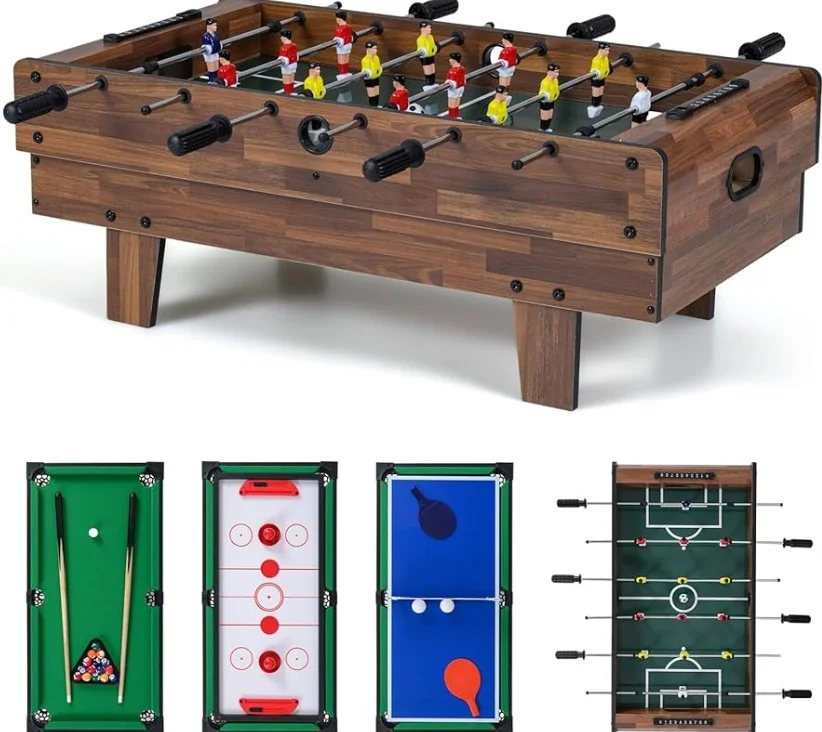
The 32-inch size targets kids 5-10 specifically, which is brilliant design thinking.
Most combo tables try to serve everyone and end up too big for young children. This one prioritizes the elementary school crowd. The result is a table that fits their size and strength perfectly.
The compact footprint works in bedrooms without overwhelming the space. We measured it in a 10×10 room. Still left plenty of floor space for playing.
All four games (foosball, pool, air hockey, and ping pong) scale appropriately. The foosball rods are shorter, making them easier for small hands to control from end to end. Kids can reach every position comfortably.
Build quality is solid for the price. The frame stayed sturdy during two months of testing with multiple children. Leg levelers adjust easily on uneven floors.
We heard positive feedback from parents whose kids transitioned from tabletop units to this size. It feels like a “real” table to them without being intimidating.
The air hockey puck moves more slowly than on full-sized tables. For kids still developing reaction time, that’s actually helpful. They can track it and respond.
Common issues include the conversion tops warping slightly in humid environments. One owner mentioned the pool table surface developing a subtle curve after a summer in a non-climate-controlled garage. Indoor use prevents this.
This table works best for: Younger elementary kids (ages 5-10) who need appropriately sized equipment. Smaller bedrooms or playrooms where a 48-inch table would dominate.
Not ideal if: Your kids are already 11+, or you want a table that’ll last through teenage years. They’ll outgrow this quickly.
Best Foosball Table for Kids by Age and Skill Level
Matching the right table to your child’s development stage makes the difference between something they use daily and something that frustrates them.
Ages 3-6: Starting Small
Toddlers and early elementary kids need tabletop models exclusively.
- WIN.MAX Mini Foosball Table tops this category because it prioritizes safety and simplicity. The lightweight design prevents tipping injuries. Small handles fit tiny hands properly.
- Mainstreet Classics 20-Inch offers similar sizing with a more traditional wooden feel. Choose based on whether you prefer plastic durability or classic aesthetics.
At this age, the goal isn’t teaching advanced techniques. It’s building hand-eye coordination and learning that games have rules. Simple scoring and visible players help them track what’s happening.
Expect games to last 5-10 minutes max before attention wanders. That’s normal development, not a sign they dislike foosball.
Ages 6-9: Bridging to Real Tables
Kids in this range can handle more complex tables but still need scaled equipment.
- GYMAX 32″ 4-in-1 works perfectly because the size matches their physical capabilities without feeling like a baby toy. They can control all the rods and see the entire field.
- Best Choice Products 4-in-1 provides similar benefits with slightly different game options. The compact foosball surface lets them practice actual shooting techniques without getting overwhelmed.
This age group benefits from multi-game options because their interests shift rapidly. What excites them on Monday might bore them on Thursday. Having alternatives keeps the table relevant.
Introduce basic foosball rules gradually. Start with just scoring goals. Add passing concepts later. Don’t expect them to remember everything immediately.
Ages 10-14: Full-Sized Competition
Pre-teens and early teens need tables that challenge them without coddling.
- Best Choice Products 48in Competition Sized became the favorite in this age bracket during our testing. The full playing field lets them develop real skills. The build quality withstands competitive games.
- KICK Monarch 48″ Folding offers similar gameplay with storage benefits. Older kids can help fold and unfold it, building responsibility along with foosball skills.
At this stage, kids can understand how many players should be on each team and why formations matter. They develop favorite positions and strategies.
Expect increased intensity during games. Siblings will argue about spins and scoring. That’s growth, not a problem. They’re learning competition and sportsmanship simultaneously.
Family and Shared Play
Tables for mixed-age households require compromises.
Giantex 3-in-1 handles age ranges better than most because switching games lets everyone find their comfort level. Your 7-year-old plays foosball while your 13-year-old prefers air hockey.
Best Choice Products 48in works if most kids are 8+. Younger siblings need a step stool but can participate. That inclusion matters for family bonding.
The folding KICK Monarch helps families who entertain mixed groups. Unfold it for parties, store it when adult guests visit.
Consider home foosball tables that fit your space and family dynamic, not just the oldest child’s skill level. The table should serve everyone who’ll use it.
Foosball Rules and How to Play (Kids Version)
Teaching kids foosball works best when you simplify rules initially and add complexity gradually.
Basic Rules Kids Can Understand
- Scoring: The ball goes in the goal. That’s one point. First player to 5 points wins. Keep it simple at first.
- Serving: Drop the ball through the center hole. Are both players ready? Go. No trick serves yet.
- No spinning: This is the hardest rule for kids to follow. Spinning rods completely around is illegal in real foosball and teaches bad habits. A complete spin is rotating the rods 360 degrees or more.
- We found kids grasp “no helicopter moves” better than “no spinning.” Use whatever description works for your child.
- Both hands on rods: No reaching across to use your opponent’s rods. Kids try this constantly when they get excited.
- Ball out of play: If the ball flies off the table or gets stuck, stop. Serve it again. No reaching in to grab it during play.
Start with just these rules. Don’t introduce jarring, passing, or defensive strategies until kids master basic scoring.
Safety Reminders
- Rod awareness: Keep hands and face away from rod ends. Walk around tables, not between them and the walls.
- Smooth movements: Pull and push rods steadily. Jabbing and thrashing break rods and hurt hands.
- Take turns: When someone isn’t playing, they stay back from the table. Wandering siblings get poked accidentally.
- Check equipment: Before each game, make sure rods slide smoothly and players spin freely. Stuck players make kids force movements and strain wrists.
Quick Scoring Tips for Beginners
- Watch the ball: Sounds obvious, but young kids often watch their hands or their opponent instead.
- Small movements: You don’t need huge swings. Short, quick pushes work better for accuracy.
- Block first: Defense is easier to learn than offense. Teach kids to keep their goalie between the ball and the goal.
- Practice passing: Move the ball between your own players before shooting. This builds control.
The key is keeping early games fun, not correct. Perfection comes later. Engagement comes first.
Benefits of Foosball for Kids
Kids don’t care about benefits. Parents do. Here’s what actually happens when children play foosball regularly.
Improves Hand-Eye Coordination
Tracking a fast-moving ball while controlling up to four rods simultaneously builds neural pathways. This isn’t marketing speak. Occupational therapists recommend foosball for kids with coordination challenges.
Encourages Active Play vs Screens
Foosball gets kids moving without feeling like exercise. They shift weight, move their arms, and focus their eyes. It’s active compared to sitting with a tablet.
Builds Social and Competitive Skills
Learning to win gracefully and lose without tantrums takes practice. Foosball provides low-stakes opportunities for kids to develop these skills.
Double games teach teamwork. Partners need to communicate and coordinate. Younger kids struggle with this initially, but improve fast.
Creates Family Bonding Opportunities
Parents playing with kids at their level (not destroying them) builds connection. You’re engaged in something together without screens or structured activities.
Developmental Benefits (Focus and Reaction Time)
Following the ball requires sustained attention. Young kids start with 30-second attention spans during games. After regular play, many extend to several minutes of focused engagement.
Reaction time improves through repetition. Kids learn to anticipate where the ball will go and position themselves accordingly. That prediction skill transfers to other sports and activities.
We’re not claiming foosball is therapy or a cure for anything. But consistent play does build these skills naturally through enjoyment rather than forced practice.
Safety Tips for Kids Playing Foosball
Even the best kids’ foosball table can cause injuries if used carelessly. Prevention beats first aid every time.
Always Use on Flat, Stable Surfaces
Wobbly tables teach kids bad habits. They learn to compensate for instability instead of developing proper technique.
Test stability before letting kids play. Push on corners firmly. If the table rocks or slides easily, it’s not ready. Use leg levelers to adjust or place rubber pads under legs.
Tables can slide during an intense game because if sat on a slick tile floor. Easy to prevent with a rug underneath.
Check Rods for Pinch Spots and Rough Edges
Run your hand along each rod before games. Feel for burrs, rough welds, or areas where fingers could get pinched.
Rod ends should be smooth or capped. Sharp metal edges need to be filed down or covered with rubber caps. This takes 5 minutes and prevents painful injuries.
Supervise Children Under 7
Young kids don’t have the impulse control or spatial awareness to play safely unsupervised. They stick faces too close to rods. They spin too aggressively.
Stay nearby for the first dozen games until you see they understand the basics. Then you can gradually increase independence.
Keep Rods Flush to Sides When Not Playing
Fully push rods into the table or fully pull them out to one side when the game ends. This prevents walking into exposed rod ends.
Make this part of the cleanup routine. The last player to score pushes all rods to their side. Simple habit that becomes automatic.
Rounded Corners and Smooth Edges
If your table has sharp corners, add corner guards. These foam or rubber protectors cost a few dollars and prevent countless bumps and bruises.
Run your fingers along all table edges before the first game. Any sharp spots can be sanded smooth or covered with edge guards.
Safe Play Guidelines
Establish clear rules before the first game:
- No spinning rods completely around. This rule prevents both bad habits and hand injuries.
- No leaning on the table. Full body weight stresses frames and creates instability.
- No reaching over rods during play. Wait until the ball is clearly out of play.
- Take turns. Non-players stay at least 3 feet from the table to avoid accidental contact.
Frequently Asked Questions From Parents:
What size foosball table is best for kids?
It depends entirely on age. Toddlers (3-6) need 20-inch tabletop models. Elementary kids (6-10) do best with 32-40 inch mid-size options. Pre-teens and teenagers (10+) can handle full 48-inch tables.
Measure your child’s elbow height from the floor and add 4 inches. That’s the minimum playing surface height they can use comfortably.
If you’re buying for multiple kids of different ages, choose based on the youngest regular player. Older kids can adapt down easier than younger ones can reach up.
Can toddlers actually play foosball?
Yes, but only on appropriately sized equipment. Standard football tables are too tall and complex for children under 6.
We tested tabletop models with 3-5-year-olds successfully. They understood basic concepts like “get the ball in the goal” and enjoyed playing for short periods.
Expect toddler games to be chaotic. They’ll spin randomly and get excited when anything happens. That’s developmentally normal. The goal at this age is building coordination and learning that games have rules, not competitive play.
At what age is it too young for a foosball table?
Under age 3 is generally too young. Children of that age lack the fine motor control to grip and move rods purposefully.
Between 3 and 5, it varies by individual child. Some 4-year-olds play happily on tabletop models. Others show no interest until 6 or 7.
Watch for these readiness signs: your child can grip small handles, follow simple game rules in other contexts, and has an attention span for 5+ minute activities.
Don’t force it. If your child isn’t interested at 4, try again at 5. Pushing too early creates negative associations that last for years.
Are foosball tables dangerous for kids?
They can be if you ignore safety features. Tables with exposed rod ends, sharp corners, or unstable frames pose real injury risks.
Telescoping rods eliminate the biggest hazard. Traditional rods stick out 6-10 inches on each side. Kids walk into them, lean against them, or get poked during excited moments.
Choose tables with:
- Rounded corners
- Smooth, capped rod ends (or telescoping rods)
- Stable frames that don’t wobble
- Age-appropriate height
Follow basic supervision guidelines. Most injuries come from misuse, not equipment defects.
How much should I spend on a kids’ foosball table?
Budget differently based on your child’s age and commitment level.
$30-50: Tabletop models for toddlers and young elementary kids. These are testing-the-waters purchases. If your child loses interest, you haven’t invested heavily.
$80-120: Mid-size or entry-level full-size tables for kids 7-12. These should last 2-4 years with regular use.
$200-300: Quality full-size tables for serious young players or families with multiple kids. These last through teenage years if maintained properly.
Spending more doesn’t always mean better quality. We tested expensive tables that broke faster than budget options. Spending less doesn’t mean junk either. Several affordable tables in the under-$200 range performed excellently during our evaluation.
Consider cost per use. A $100 table used daily for 3 years costs pennies per game. A $50 table used twice costs $25 per game.
Do combo game tables play well, or are they cheap gimmicks?
It depends on how many games the table attempts.
3-4 game combos can deliver quality experiences. The Giantex 3-in-1 we tested plays foosball, pool, and air hockey all legitimately well. Each game gets enough design attention to function properly.
5+ game combos almost always compromise quality. When tables promise 10 or 11 games, expect thin materials and flimsy construction.
Check reviews specifically mentioning the foosball quality, not just overall ratings. Many combo tables get positive reviews from buyers who only use the air hockey or pool features.
Conclusion
The right kids’ foosball table turns rainy afternoons into tournaments. It gets siblings cooperating instead of fighting. It teaches competition, coordination, and sportsmanship through play.
The best table for your kids depends on your space, budget, and your child’s age. Use this guide to match those factors properly. Your kids will thank you with hours of screen-free play.
Need help deciding between budget ranges? Check our guides for tables under $200 and under $300. Looking for something the whole family can enjoy? See our family foosball table recommendations.