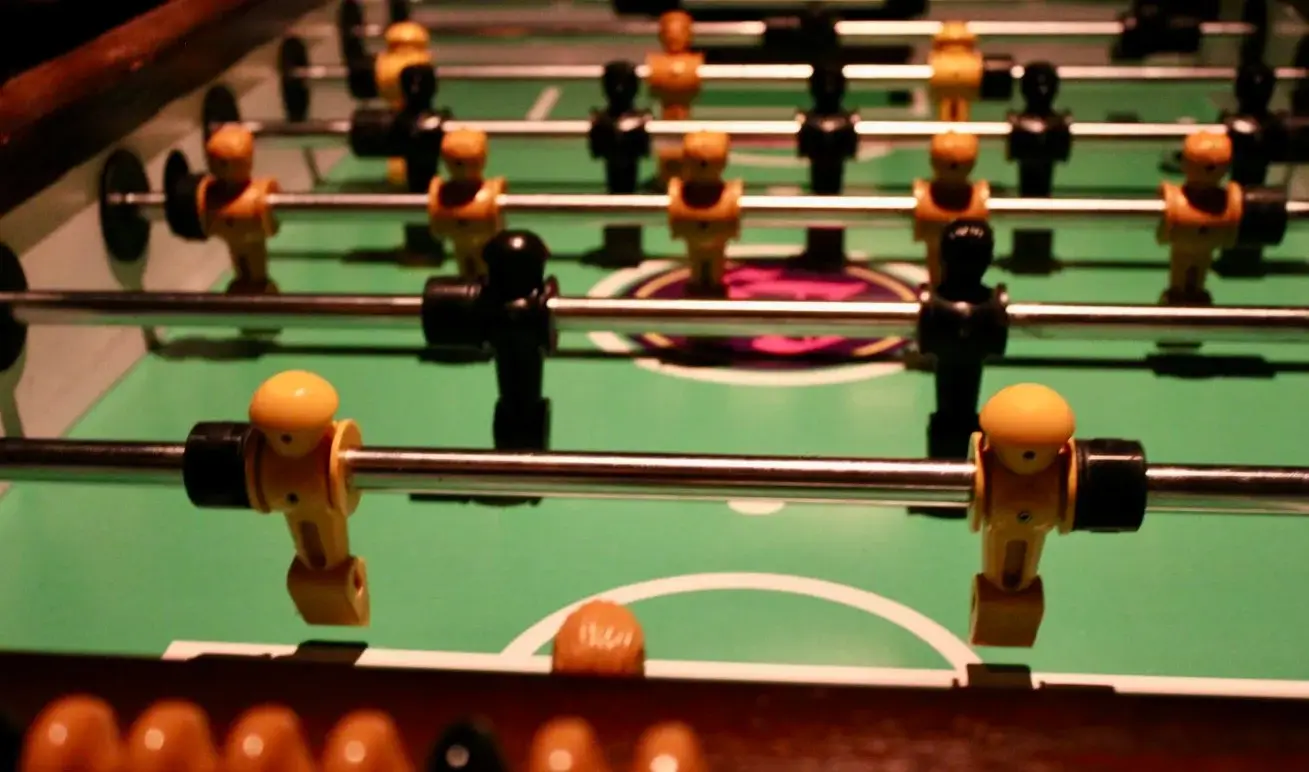
Most people unbox the table, bolt the legs on, shove the rods through, and call it done. Then they wonder why the ball drifts, the rods feel sticky, or the whole thing shakes mid-game.
That is not a setup. That is a guess.
Proper foosball table setup covers three things: correct assembly, accurate rod and player configuration, and surface leveling. Skip any one of these, and the table underperforms regardless of what you paid. This guide by Foosball Junkie walks you through every step, from pulling parts out of the box to your first clean, smooth ball roll.
Tools and Parts Checklist Before You Start
A lot of setup frustration starts before the first bolt is touched. People skip the parts inventory, dive straight into assembly, and then hunt for a missing washer twenty minutes in.
Start smart. Pull out the included hardware kit and cross-reference every item against the parts list in your manual. Most football tables come with bolts, nuts, washers, bumpers, rods, player figures, handles, and leg levelers. Missing or mismatched parts happen more often than brands admit, especially at the budget end.
What you will need:
- Allen key (hex wrench): usually included, but verify the size matches your bolts
- Socket wrench for leg bolt tightening
- A rubber mallet (helpful, not always required)
- A standard bubble level or a level app on your phone
- A second person for the frame flip step: some steps are genuinely impossible solo
Screw length matching is the most skipped step. Not all bolts in the bag are the same length. Using the wrong bolt in the wrong hole strips the pre-drilled holes. That damage is typically permanent. Sort screws by size before you start.
“A lot of people overtighten screws during assembly, thinking it makes things more secure. It actually damages the MDF and creates micro-warps in the cabinet.” – A common observation from experienced assemblers.
If anything is missing from the hardware kit, contact the manufacturer before substituting parts. Wrong hardware leads to bolt threading issues, loose joints, and structural problems that show up weeks later.
Step-by-Step Foosball Table Assembly (From Box to Frame)
Assembly manuals from most brands are written in the vaguest possible English. They show diagrams that look like modern art and label parts with numbers that do not match the bags. This section fills in what they leave out.
One important thing to understand upfront: most tables are assembled partially upside down. Cabinet orientation in the early steps matters. Getting it wrong means redoing work. Read the manual once before picking up a single bolt.
Cabinet and Frame Assembly
Lay the cabinet base on a soft, flat surface. The inside of the cardboard box works well and protects the playfield surface from scratches.
Attach the side panels to the end panels using the bolts specified for that step. Align the pre-drilled holes carefully before inserting any bolt. Forcing a bolt into a misaligned hole strips the threading immediately. Keep bolts finger-tight at this stage so joints hold while you do a frame squareness check.
To check squareness, measure diagonally from opposite corners. Both measurements should match. If they do not, loosen the joints slightly and adjust. A cabinet that is even slightly out of square causes the rods to bind later.
Once the frame is square, attach the playfield to the cabinet using flat screws along the inside edge. Always use pre-drilled holes and never create new ones. Tighten all cabinet bolts to the final torque in a cross pattern, corner to corner. This keeps the torque balance even across the whole frame.
Leg Installation and Stability Setup
Flip the cabinet upside down. This is where the second person becomes essential.
Place all four legs before tightening any of them. Each leg typically attaches with four bolts. Follow the leg bolt tightening sequence: finger-tighten all bolts first, then tighten fully in a diagonal pattern (front-left, back-right, front-right, back-left). This keeps one side from pulling tighter than the other.
On tables that include a lower crossbar or shelf, check crossbar stabilization on both sides. An asymmetric base causes the table to twist slightly, and that affects your playfield balance test later.
Once the legs are attached, lift the table upright carefully. Do not drag it. Lift cleanly, especially on hardwood or tile, where the leg levelers can leave marks.
Foosball Rod Setup (Correct Order and Installation)
Rod installation is where most DIY setups fall apart. The details here directly affect how the football table plays, not just how it looks. Rushing this section is what causes sticky rods, binding rotation, and lateral wobble during matches.
Before inserting any rods, take a moment to identify each one. Rods differ in length and in the number of player figures they carry. Most standard football tables have 8 rods total, four per side.
Rod Insertion Order (Most Critical Step)
The correct rod sequence matters more than most people realize. Work from one end of the table to the other: goalie, rod first, then defense, then midfield, then attack. If you insert rods randomly, you will need to remove everything and start over.
The goalie rod on most American-style tables holds either 1 man or 3 men, depending on the table design. European-style tables almost universally use a 1-man goalie. Tornado tables, which are ITSF-recognized, use a 3-man goalie configuration. Know which setup your table uses before inserting that rod.
Incorrect rod order is one of the most common mistakes the Foosball Junkie community reports. It feels obvious until you are rushing, and then it is surprisingly easy to mix up.
Rod Hardware Configuration
Once you know the insertion order, push each rod partially through one side panel before adding hardware. The sequence for every rod is the same:
- Insert the rod partially into the side panel hole
- Slide on the rubber bumper
- Slide the plastic rod washer
- Slide on the player figures (correct count per rod)
- Slide on another plastic rod washer
- Slide on another rubber bumper
- Push the rod fully through the opposite side panel
Bumper placement positioning is not decorative. Bumpers control how far the rod slides laterally. Too close to the cabinet wall, and the rod binds. Too far apart, and there is excessive sideways play. Washer spacing alignment on both sides of the players should be visually consistent before you secure anything.
After the rod is fully through both panels, install the handle grip on the correct end (the end with the threaded hole). Tighten it with the appropriate bolt from your hardware kit.
Rod resistance adjustment comes after all rods are installed. Each rod should slide and spin with light resistance. Not floppy, not stiff. You can tune this by how tightly you fasten the end caps and handles. A little silicone lubricant on the rod before threading it through makes a noticeable difference in long-term smoothness.
Foosball Player (Men) Setup and Formation
Getting the physical assembly right is half the job. Getting the player configuration right is what separates a functional table from a properly set-up one. A few small mistakes here quietly ruin the playing experience for months before anyone figures out why.
The number of players per rod follows a specific layout. If you want to understand exactly how each rod is supposed to be stacked, this breakdown on Foosball Junkie covers the exact counts by rod type.
Player Figure Orientation
Every player figure must face the opposing goal. This sounds obvious, but reversed player installation happens all the time, especially on the 5-man midfield rod, where people lose track mid-install.
The foot of the player should angle forward toward the opponent’s side. Counterbalanced player figures (common on tournament-grade tables) hang downward naturally when the rod is at rest. This is intentional. It keeps the foot below the playfield level so it does not interfere with ball movement. If your figures are not counterbalanced, orient them so the foot sits parallel to the playfield surface at rest.
A reversed figure on a 3-man rod gives your opponent a dead zone they can exploit. Fix it before the first game, not after six months of wondering why certain shots never connect.
Goalie Configuration Options
The two standard options are worth understanding before you install that first rod.
1-man goalie rod: More common on European tables and ITSF competition setups. The single figure has wider lateral movement. It requires more active defense but gives skilled players greater control over their blocking angles.
3-man goalie rod: Standard on Tornado tables and common on American recreational football tables. Covers more of the goal passively, which suits casual play well.
Neither is better in an absolute sense. It depends on your table design and the style of play you prefer. You cannot swap between configurations without changing the rod and figure count entirely.
Standard Foosball Formation Layout
The standard foosball formation follows a 1-2-5-3 layout from goalie to attack: 1 goalkeeper, 2 defenders, 5 midfielders, 3 forwards. This is the ITSF standard positioning used in competitive play worldwide.
The spacing between rods is fixed by the cabinet. But the player spacing along each rod can vary slightly. On the 5-man midfield rod, figures are spaced to allow movement across the full playfield width. On the 3-man attack rod, wider spacing supports pin shots and pull shots. Set this correctly from the start.
Leveling and Surface Optimization (Make It Play Smooth)
A perfectly assembled football table still plays badly if it is not level. Ball drift, uneven rod resistance, and unpredictable bounces all trace back to this step. It takes about five minutes and makes a bigger difference than most people expect.
Table Leveling Process
Most tables include adjustable leg levelers at the base of each leg. These are threaded plastic or rubber feet you screw in or out to raise or lower individual corners.
Place a bubble level on the playfield surface. Check front-to-back and side-to-side. Adjust one leg leveler at a time until the bubble centers in both directions. Do not adjust two legs at once. Overcorrection is easy and takes time to untangle.
Floor surface matters more than people think. Hardwood floors shift seasonally with humidity. Carpet compresses unevenly under steady leg pressure. Concrete is the most stable base for a foosball table. If you are on carpet, recheck the level after a week. The legs will have settled.
Gameplay Performance Checks
Once the table is level, run these three checks before calling the setup complete.
Ball roll consistency check: Place the ball on the center spot and release it. It should stay put or roll with no strong pull in any direction. If it drifts, the table still needs adjustment even if the bubble level says otherwise. Trust the ball over the tool.
Dead spot prevention: Slide your palm slowly across the playfield surface. Rough patches or low points are dead spots where ball behavior becomes unpredictable. Some tables arrive with slight playfield warping from shipping. A dead spot near the center rod is especially disruptive during play.
Table wobble elimination: Press firmly on each corner. If any corner flexes or gives, tighten the corresponding leg leveler or leg bolt. Wobble during play shifts rod alignment mid-game and ruins shot accuracy over time.
Official and Professional Foosball Table Setup
If you are setting up a table for competitive use, whether that is a home tournament, a league night, or serious practice, the tolerance for “close enough” drops significantly. Recreational setup and regulation setup are not the same thing.
Regulation Setup Guidelines
ITSF competition tables follow specific regulation playfield dimensions. According to Wikipedia’s table football entry, adult play tables measure approximately 150 cm long and 90 cm wide overall, though exact interior dimensions vary by manufacturer and sanctioned brand.
Goal box alignment must be centered and square to the playfield. Even a few millimeters of offset affects shot consistency at a competitive level. The goal opening width follows tournament specifications alignment that all five ITSF-sanctioned brands must comply with. Those brands are Bonzini, Roberto Sport, Garlando, Tornado, and Leonhart.
The spacing between rods follows a fixed layout on regulation tables. Using non-standard hardware or altering that spacing voids the competitive validity of the setup. For players who train seriously, this is not a minor detail.
Standard vs Mini Table Setup Differences
Standard foosball table setup assumes full-size legs, standard rod lengths, and a complete 8-rod configuration. If you are setting up a full-size table for home use, every step in this guide applies directly.
Mini foosball table setup skips leg installation entirely. Most mini tables have a fixed base or a tabletop design. The rod and player configuration follows the same logic, but the hardware is scaled down. Rod resistance tends to run tighter on smaller tables due to shorter rod length. Adjust the handle tension accordingly and check the rod slide before finishing.
Mini tables do not meet the regulation playfield dimensions. They work well for casual play but are not suited for training toward competitive standards.
If you have not chosen your table yet, Foosball Junkie’s roundup of the best foosball tables covers options across different budgets and play levels, with picks for both casual and tournament-level players.
Foosball Table Setup Diagram (Visual Reference Section)
Most people reference a diagram only when they are confused. The smarter approach is to look at one before you start and identify every part by name. It takes two minutes and prevents the most common assembly mistakes.
A useful exploded view diagram separates each component of the rod assembly in order: bumper, washer, figure, washer, bumper. Most manuals show this diagram unclearly, which leads directly to incorrect bumper placement during installation.
A labeled rod layout showing all 8 rods from above, with player counts per rod (1-2-5-3 from goal to goal), helps enormously when you are mid-assembly and second-guessing yourself. Print this out if your manual includes it.
A parts reference chart that matches bolt numbers to specific steps is also worth finding. Many manufacturer manuals use part numbers that do not match the physical labels on the hardware bags. That mismatch causes unnecessary delays and sometimes wrong bolt placement.
Tip: If your table did not come with a clear setup blueprint, most manufacturers post assembly PDFs on their website. Search “[your brand] foosball table assembly instructions PDF,” and you will usually find it in the first two results.
Brand-Specific Foosball Table Assembly Notes
The core steps apply across all brands. But each one has quirks that are worth knowing before you start, especially if the manual is unclear or the hardware kit is disorganized.
Tornado foosball table assembly is more involved than most. Tornado tables are heavy (some exceed 300 lbs) and have tighter rod tolerances than recreational models. The 3-man goalie configuration is standard. Assemble it in the final location because moving it afterward is a serious undertaking.
Harvard foosball table assembly tends to be beginner-friendly. The hardware kit is usually organized clearly, and the pre-drilled holes align well. One user-reported note: the handle grip on Harvard models requires firm, steady pressure during installation. It is not seated until you feel or hear a click.
Kick foosball table assembly instructions are detailed, but users report that some bolt lengths in the kit are mislabeled. Cross-reference each bolt against the hole depth before threading it in.
Barrington foosball table assembly and MD Sports foosball table assembly both follow a similar budget-tier process. The leg bolt tightening sequence is especially critical on these models. MDF panels can crack if one side is overtightened before the others are set. Take the diagonal sequence seriously here.
Atomic foosball table assembly instructions are available on the Atomic support page and are more thorough than most at this price point.
For full-size table options across these brands, check out the Foosball Junkie full-size table guide. If budget is the main factor, the affordable picks list has solid options with clear assembly notes.
Common Foosball Setup Mistakes to Avoid
These are not rare edge cases. They come up in almost every first-time setup and are responsible for most of the “why does my table play so badly” questions Foosball Junkie receives.
Incorrect rod order: Installing the midfield rod before the defense rod seems harmless until the bearing holes do not align correctly. Remove it and start from the goalie side. There is no shortcut here.
Reversed player installation: Players facing the wrong goal quietly reduce your effective shooting range. Check every rod before tightening any hardware.
Uneven player spacing on the rod: Rushing through player installation leads to figures bunched to one side. This creates rod imbalance and slows rotation speed during play.
Over-tightened bolts: The most common hardware mistake. MDF strips quickly when bolts are forced past snug. Tight enough to hold, not tight enough to crush, is the right standard for every bolt in this build.
Loose rod bearings after assembly: If bearings feel loose, the rod wobbles laterally during play. Check each bearing individually before moving to the next rod. Catching it early takes thirty seconds. Fixing it after full assembly takes much longer.
Misaligned rods: A rod that does not sit perfectly horizontal will bind on one end during rotation. If you notice uneven resistance on one side versus the other, the bearing hole may be slightly off. Loosen the nearest cabinet bolt and re-seat the rod before retightening.
Skipping the level check: Setting up on a slanted floor without adjusting the leg levelers guarantees ball drift from the first game. The check takes two minutes.
Final Checklist for Proper Foosball Setup
Before the first ball drops, run through this list. Every item here corresponds to a mistake covered in this guide.
- All cabinet bolts tightened in the correct cross-pattern sequence
- Frame squareness verified by measuring diagonally
- Legs stable, no wobble at any corner
- All rods inserted in correct order (goalie, defense, midfield, attack)
- Bumpers and washers are correctly positioned on every rod
- All player figures are facing the correct goal
- Handles tightened with a secure grip
- Table level confirmed front-to-back and side-to-side
- Ball roll test completed with no noticeable drift
- No dead spots identified on the playfield surface
- Rod resistance feels consistent across all rods
Check every box, and you have a properly set-up football table. Not a rushed one, not a guessed one.
Quick Foosball Table Setup Summary
How to set up a foosball table in 7 steps:
- Verify all parts against the hardware kit checklist before starting
- Assemble the cabinet frame with side and end panels, and confirm squareness
- Attach legs while the table is upside down, and tighten in a diagonal sequence
- Insert rods in order: goalie, defense, midfield, attack. Add bumpers, washers, and figures per rod
- Orient all player figures toward the opposing goal
- Adjust leg levelers until the table is level on all axes
- Run a ball roll test and check for wobble, then adjust until both pass
Wrapping Up
A foosball table setup is not a one-step process, and it is not something you should rush through. The difference between a properly set-up table and a sloppy one shows up every single time you play. Ball drift, sticky rods, wobbly legs, reversed players, every one of those problems traces back to a step in this guide.
Take your time with the frame, be precise with the rods, level the surface, and run the final checklist. After that, the table plays the way it was designed to.
As the foosball community likes to say, the table does not make the player, but a badly set-up table can certainly ruin one.