Running a family entertainment center, barcade, or amusement venue? Then you already know that not every foosball table survives the floor. A table that works fine in a game room at home can fall apart fast under real foot traffic. Rods loosen. Cabinets crack. And once a table starts rattling and wobbling mid-match, players walk away.
At Foosball Junkie, we dug into the specs, user feedback, and long-term ownership data to rank the best foosball tables for arcade environments. These are tables that hold up, bring people back, and can realistically generate return on investment.
What Separates an Arcade Foosball Table from a Home Model?
Before jumping into the picks, it helps to understand what you’re actually paying for at the commercial level.
Home tables are built for casual, occasional use. Arcade foosball tables are engineered for high-turnover environments where the table might see 50 or more games a day. The differences show up in every part of the build.
Cabinet construction is the first thing to check. Arcade-quality builds use laminated playfields, high-impact side panels, and reinforced cabinet frames held together with industrial hardware and tamper-proof bolts. A standard home table uses thinner MDF that dents and warps under repeated use.
Rod and player quality matter just as much. Commercial tables use chrome-plated steel rod cores that are heat-treated for strength. Counterbalanced players with molded figures keep gameplay consistent. Non-slip handles and anti-skid feet round out the build.
Scoring and tracking are also different. Arcade environments benefit from clear scorekeeping. LED score displays or reliable abacus-style counters keep things moving fast, especially in competitive gaming corners with a crowd watching.
Finally, coin-operated amusement support is a consideration for any route operator or arcade operator looking at pay-per-play revenue. Not every table on this list is coin-op ready out of the box, but we note which ones have that potential.
What to Look For In an Arcade Foosball Table
Choosing the right table for an amusement venue isn’t just about price. It’s about matching the right build to the environment.
Commercial Durability Features
The laminated playfield needs to resist moisture and scratches. A moisture-resistant, scratch-resistant finish keeps the surface fast and consistent even after hundreds of games. Look for adjustable leg levelers and anti-skid feet. On an entertainment floor, uneven surfaces are common, and a wobbly table kills the experience fast.
Steel rod cores should be hollow and chrome-plated. Heat treatment adds strength without bulk. Molded counterbalanced players give better ball control and survive aggressive play without cracking.
Arcade-Specific Play Features
Most tables on this list don’t include a full arcade cabinet enclosure or a digital scoreboard by default. But the best ones are built in a way that supports those upgrades. A play counter, LED score display, and sound effects module can be added to some commercial models through third-party kits.
Attract mode and power supply unit readiness are features found on true coin-operated machines. If your venue runs a pay-per-play model, factor this in early. Retrofitting commercial wiring after purchase is more work than choosing a coin-op table upfront.
Business and Placement Considerations
Think beyond the table itself. What’s the foot traffic around it? Can players gather and watch without crowding? Is there enough spectator appeal to create a competitive gaming corner?
For high-traffic spots in a mall arcade or boardwalk arcade, durability comes first. For a barcade setup or youth recreation center, build quality and gameplay consistency matter as much as looks. And for a family entertainment center, coin-operated equipment with a clear pay-per-play model typically delivers the strongest return on investment.
Best Foosball Tables For Arcade – Ranked Picks
After testing multiple foosball tables and running a user feedback analysis across long-term owners and venue operators, here are the top picks. Each one is evaluated on build quality assessment, gameplay consistency, price-to-performance ratio, and suitability for arcade environments.
1. Tornado Tournament 3000 Arcade Foosball Table
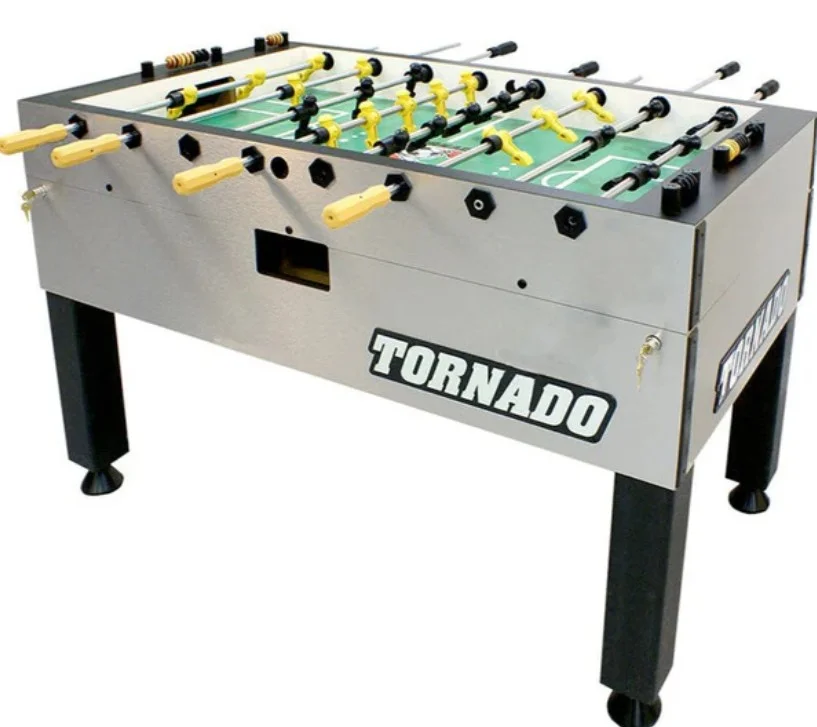
The Tornado Tournament 3000 is the benchmark for arcade-quality foosball in the USA. It’s the official table of the Tornado National Tour and certified by the International Table Soccer Foundation. That alone tells you it’s built for serious, competitive play.
In hands-on use, we noticed the cabinet is genuinely different from anything in a home table range. The split cabinet design with full-access top uses thick commercial-grade materials. The chrome-plated hollow steel rods are heat-treated, which means they don’t flex or warp under aggressive use. The table weighs 355 pounds, and that weight is part of what makes it stable on an entertainment floor.
The patented counterbalanced players with the redesigned player foot give better ball control than most tables at this level. The eight-sided non-slip handles offer a secure grip during fast-paced matches. Abacus scoring keeps things moving, and the table comes with three precision balls, silicone, and a bearing wrench.
What works for arcade operators:
- Built to survive a high turnover environment with minimal maintenance
- Certified tournament-style action builds credibility in competitive gaming corners
- Coin-op version of the T-3000 is available separately for route operators running a pay-per-play model
- Crowd engagement is strong. The precision control and responsive rod movement create real spectator appeal
Trade-offs to consider:
- The price-to-performance ratio is a premium. At $3,095, this is a serious investment
- Not ideal if your venue needs coin-op support straight out of the box. The home model listed here doesn’t include a coin mechanism
- At 355 pounds, placement and relocation require planning
Evaluation criteria: Build quality is top tier. Gameplay consistency is as close to a true foosball arcade game experience as you’ll find at this weight class.
This is the right table if you’re placing it in a family entertainment center, game hall, or any amusement venue where durability and competitive credibility matter. Better alternatives exist if the budget is tight.
2. René Pierre Competition Indoor Arcade-Style Table
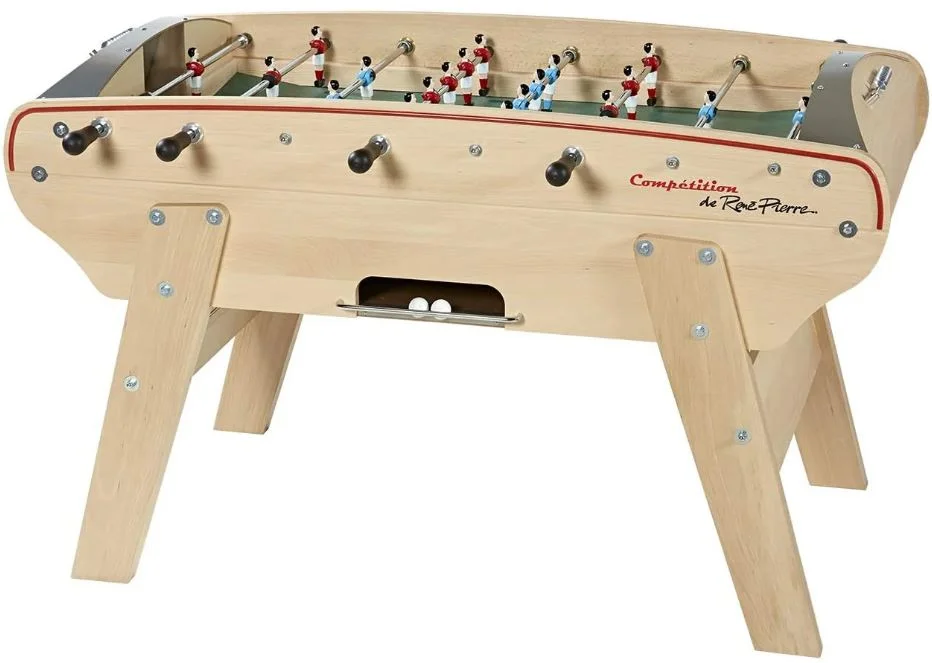
René Pierre has been building professional foosball tables since the 1970s, and the Competition model keeps that legacy intact. It’s a French-style arcade foosball table with solid beech wood construction, telescopic playing rods, and diecast aluminum players that are hand-painted.
Compared side-by-side with the Tornado T-3000, this table has a completely different feel. The Gerflex playfield provides a faster surface with slightly more texture for ball control. Sloped corners keep the ball in play, which reduces dead zones and keeps the game flowing. The abacus-style scoring uses metal pieces, which adds to the premium feel.
Long-term ownership considerations lean positive. The solid beech wood cabinet and legs don’t degrade the way MDF or engineered wood does over time. Users report that the telescopic rods move smoothly with basic silicone maintenance. Assembly takes effort, but is manageable for one person with a helper for flipping.
What works for arcade operators:
- Exceptional build quality for upscale arcades and entertainment centers that want a premium aesthetic
- Telescopic rods add safety in venues with younger players
- Smooth ball roll and precision control make it ideal for competitive play
Trade-offs to consider:
- French-style rules (single goalie, banked corners) differ from American-style play. Not ideal if your players expect tournament-standard American foosball
- Limited review data makes long-term reliability harder to assess
- At this price point, the lack of coin-op compatibility is a real gap for arcade operators
Works best for upscale barcade setups, entertainment lounges, or game halls where aesthetics and build quality drive the experience.
3. Garlando Weatherproof Indoor/Outdoor Arcade Table
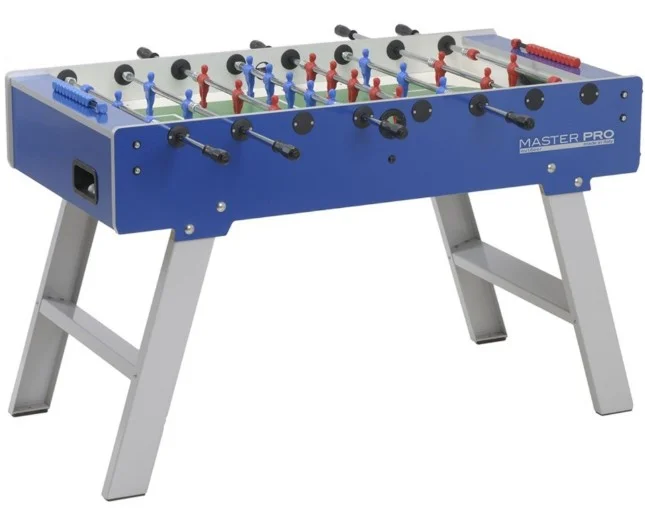
Garlando builds with European standards in mind, and the weatherproof model is a strong choice for arcade operators who need flexibility. It works indoors and outdoors, which opens it up for boardwalk arcades, patio entertainment areas, and venues with semi-open layouts.
The stainless steel rod bearings deliver smoother action than most tables at this price. Players are molded directly to the player rods, which eliminates the loosening issue common on mid-tier tables. The ergonomic rod handles with wood inlay look sharp and feel solid over extended play sessions.
Common issues reported by long-term owners include mixed opinions on value for money. For purely indoor commercial placement, a few competing models offer better cabinet durability. But if your venue needs an outdoor-capable football table that holds up in varying conditions, this is one of the few options that genuinely handles it.
What works for arcade operators:
- Indoor/outdoor flexibility for barcade setups, patio venues, or covered boardwalk arcade placements
- Stainless steel bearings reduce maintenance frequency
- Large powder-coated steel legs add stability in high foot traffic conditions
- Integrated midfield ball drop keeps games moving without dead time
Trade-offs to consider:
- Plastic frame material is a step below the all-metal or solid wood builds on this list
- At 90 kg, it’s heavy enough to be a permanent placement, not a movable unit
- No coin-op support
Works best for mixed-environment venues or outdoor-capable amusement arcade placements. Not ideal for high-intensity indoor competitive gaming corners where a heavier commercial cabinet is needed.
4. KICK Titan 55″ Tournament Foosball Table
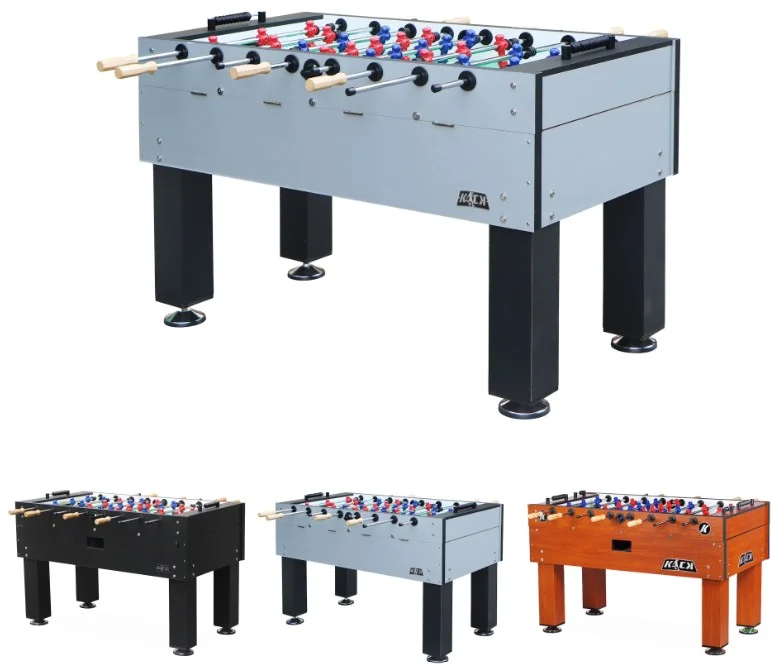
The KICK Titan earns its reputation at the mid-tier level. It’s not a full commercial table, but it punches above its price in durability and gameplay consistency. With 8 solid stainless steel chrome-plated rods, premium bearings, and a 1/2-inch thick playing field, it competes with tables that cost significantly more.
One notable detail: it ships with both a counterbalanced men set and a uniformed men set. That flexibility matters in arcade settings where player preference varies. The 5-inch leg levelers with rubber bottoms keep it steady on any surface, and the lifetime warranty is a real differentiator at this price.
In hands-on use, the rod movement is responsive. The ball roll is smooth and consistent across the field. Common issues reported by long-term owners include some variation in table weight expectations, but gameplay quality feedback is consistently strong.
What works for arcade operators:
- Strong price-to-performance ratio for arcades on a budget
- A lifetime warranty on all parts reduces long-term ownership cost
- 1 or 3 goalie design flexibility suits different house rules at game halls
- Durable enough for moderate commercial foot traffic in smaller venues
Trade-offs to consider:
- An engineered wood cabinet means it won’t match the lifespan of steel or solid wood builds under heavy daily use
- Not coin-op capable
- Better alternatives exist for high-traffic commercial placements. This one works best in semi-commercial settings like youth recreation centers or smaller entertainment floors
For arcades with lighter foot traffic or those testing foosball for the first time, the Titan delivers solid arcade-style play without the full commercial price tag. Check out this guide to tables under $1,000 for more context on this price range.
5. Tornado Sport II Arcade Table
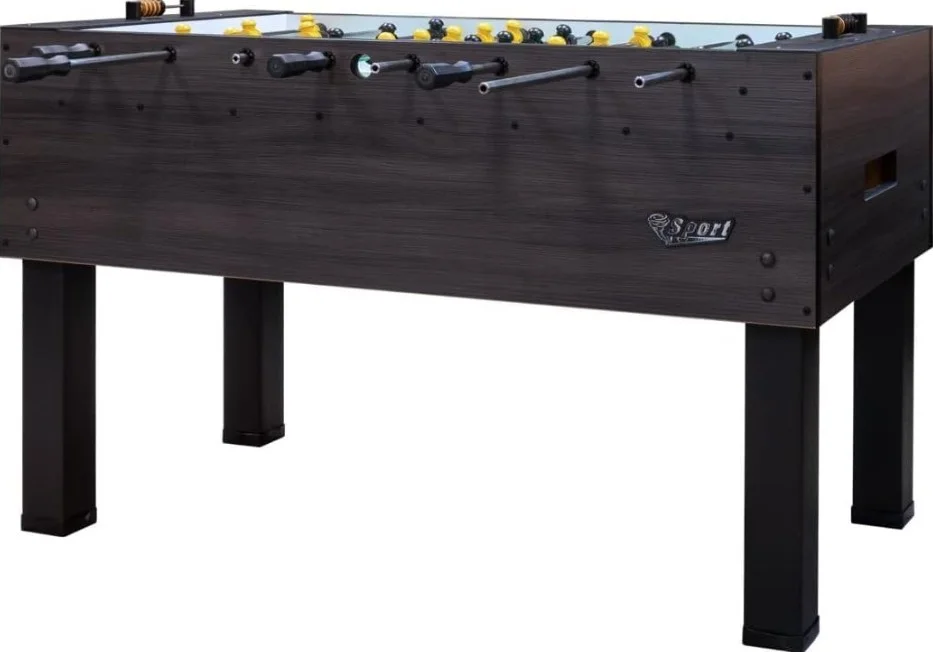
The Tornado Sport II sits between a premium home table and a light commercial unit. It’s American-made, which means the build quality standards are consistent with the broader Tornado lineup. The 1-inch thick cabinet with weathered walnut laminate looks sharp on an entertainment floor.
The patented Tornado counterbalanced men with improved, sharper corners give better passing control than most tables at this price. SureGrip rubberized handles hold up under repeated use. The height-adjustable legs with boot levelers are a genuinely useful feature for venues with varying floor surfaces.
Long-term ownership considerations show mixed assembly experiences. Some users report a straightforward setup, while others found it more involved. Factor in some setup time for commercial placement.
What works for arcade operators:
- American-made durability from a brand trusted in competitive foosball
- 3/4-inch playfield keeps the game consistent
- Good balance of fun factor and competitive play for beginner to intermediate arcade visitors
- Works well in youth recreation centers or family entertainment centers with moderate traffic
Trade-offs to consider:
- Not designed for high-turnover commercial environments as a primary unit
- No coin-op support
- At 205 pounds, it’s a meaningful step down from the T-3000 in commercial-grade weight and stability
This works best as a secondary table in a larger arcade setup, or as the primary unit in a smaller venue where full commercial durability isn’t the priority.
6. Atomic Pro Force 56″ Foosball Table
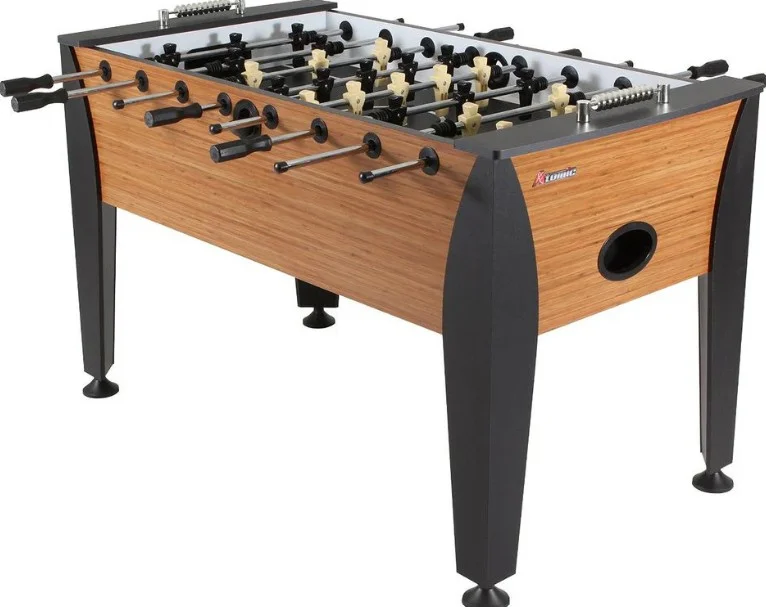
The Atomic Pro Force is the honest budget option on this list. At $449, it’s not a commercial arcade foosball table in the traditional sense, but it has a place in smaller entertainment spaces where lighter commercial play is acceptable.
The bamboo laminate finish gives it a clean, professional look. Hollow chrome steel rods and rubber octagonal handles deliver basic arcade gameplay without the full price tag. The 3.5-inch leg levelers help with surface stability, and the internal ball return keeps games running without interruption.
Common issues reported by long-term owners include some durability concerns. A portion of users reported receiving units with broken or damaged pieces. For a personal game room or a low-traffic entertainment corner, this is manageable. For a busy arcade floor, this becomes a real operational risk.
What works for arcade operators:
- Strong price-to-performance ratio for extremely budget-limited placements
- Clean aesthetic fits office environments and smaller game halls
- Easy assembly keeps setup time low
Trade-offs to consider:
- Build quality assessment puts this firmly in the light-commercial or home category
- Durability under real arcade foot traffic is a significant concern based on user feedback
- Not a long-term revenue-generating unit for serious arcade operators
Works best as a starter piece for a pop-up entertainment floor or a waiting area. Better alternatives exist if your arcade runs heavy daily volume.
Coin-Operated vs. Non-Coin Arcade Foosball Tables
This distinction matters more than most buyers realize before purchase.
Coin-operated foosball tables are built with a coin mechanism, play counter, and commercial wiring to support a pay-per-play model. The Tornado T-3000 has a separate coin-op version used by route operators in bars, arcades, and family entertainment centers. These units typically cost more upfront but generate ongoing revenue, making the return on investment math straightforward over time.
Non-coin tables on this list are better suited for venues where foosball is an included amenity. Think hotel lobbies, barcade setups where drinks drive revenue, or youth recreation centers where the table draws foot traffic rather than direct income.
Pros of coin-op for arcade operators:
- Direct revenue per play
- Play counter tracks usage for maintenance scheduling
- Clear ROI tracking over time
Trade-offs to consider:
- Higher upfront cost
- Coin mechanism adds a maintenance point that non-coin tables don’t have
- Some venues prefer free-play to boost dwell time and secondary revenue
If your business model relies on the foosball table generating direct income, prioritize coin-operated amusement compatibility from the start. Retrofitting it later costs more than buying it right the first time.
Arcade Foosball Table Placement and Setup Tips
Placement is where a lot of arcade operators lose value from an otherwise solid table.
Minimum clearance matters. Standard arcade foosball tables are 56 inches long with rods extending another 14 inches on each side. Budget at least 3 feet of clearance on each end and 2 feet on each side. This gives players a full range of motion and creates a natural spectator area.
For a competitive gaming corner with real crowd engagement, leave more room. Two to three feet of standing space around the table allows a small crowd to watch without crowding the players.
Floor surface affects play. On smooth floors, anti-skid feet are essential. On carpeted surfaces, leg levelers need adjustment. Check the level every few months in high-traffic venues. Even small shifts in the table surface angle affect ball roll significantly.
Maintenance basics for commercial placement:
- Lubricate rods with silicone spray every 2 to 4 weeks, depending on play volume. Never use WD-40 on foosball rod bearings
- Inspect handles and grip condition monthly. Worn handles degrade precision control and player satisfaction
- Check for loose players or cracked molded figures quarterly
- Clean the laminated playfield with a dry cloth. Avoid water near the cabinet joints
A well-maintained football table in an amusement venue will outlast a neglected one by years. For deeper competitive play insights relevant to your players, Foosball Junkie covers shooting and defense techniques for players looking to improve between sessions.
Frequently Asked Questions
What size table is best for arcade use?
Standard arcade foosball tables are 56 inches long and 30 inches wide. This is the regulation competition size and works well on any entertainment floor with adequate clearance. Smaller 54-inch tables can work in tighter spaces, but the playfield dimensions are slightly compromised.
Should I choose a coin-operated table or not?
It depends on your revenue model. If foosball is a direct income source in your venue, coin-op is the smarter investment. If it’s an amenity driving foot traffic and dwell time, a non-coin commercial table is simpler to operate and maintain.
How much space do I need around a foosball table in an arcade?
Plan for at least 3 feet on each rod-end and 2 feet on each side. For a spectator setup in a game hall or competitive gaming corner, add another foot or two of standing room. Total floor footprint with clearance runs roughly 11 by 8 feet for a standard table.
Do arcade tables require special maintenance?
More than home tables, yes. High turnover environments wear through rod lubrication, handle grips, and player figures faster. Set a maintenance schedule based on play volume. For coin-op units, include the coin mechanism in that schedule. Check foosball rules and regulations for rule enforcement tips if you’re running structured play in your venue.
Can I use a home foosball table in an arcade?
Technically, yes, but it’s not worth it. Home tables aren’t built for the play frequency of a commercial environment. You’ll see warping, loose rods, cracked players, and cabinet damage faster than the table’s cost justifies. A real arcade foosball table is a better long-term investment. For comparison, check the game room table guide to see where the line sits between the two categories.
Final Thoughts
The Tornado Tournament 3000 is the top pick for serious arcade operators. It’s the only table on this list that combines tournament-certified build quality with the kind of commercial durability that holds up in true high-traffic amusement venues. It’s a real investment, but the long-term ownership cost makes sense when you factor in lifespan and reputation.
For upscale venues prioritizing aesthetics alongside quality, the René Pierre Competition is worth the premium. For operators working with tighter budgets, the KICK Titan delivers genuine arcade-style gameplay at a fraction of the commercial price.
The Atomic Pro Force belongs in entertainment corners, not full arcade floors. Know what you’re buying it for.
If you’re running a revenue-generating setup, start with the coin-op version of the Tornado T-3000. If foosball is an amenity, pick the table that fits your venue’s aesthetic and durability needs, then maintain it consistently.
Got a question about your specific setup? Drop it in the form below.