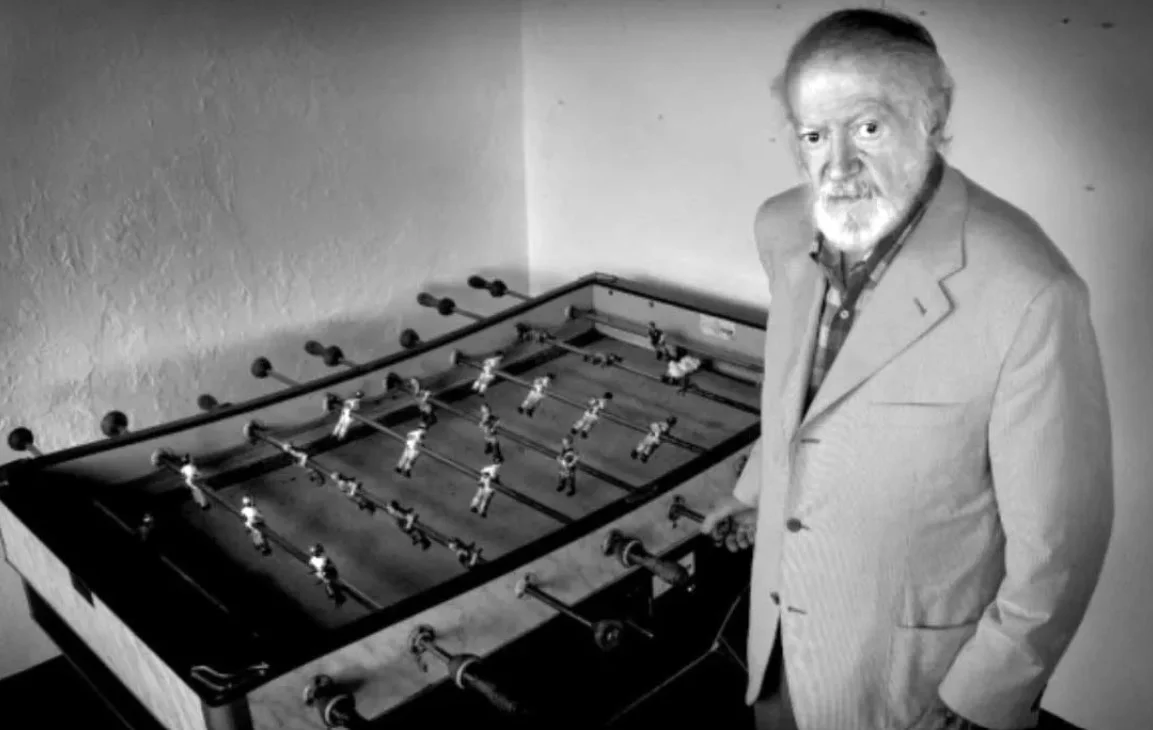
The invention of foosball remains one of the most debated topics among table soccer enthusiasts. Harold Searles Thornton from the United Kingdom officially patented the first foosball table in 1921. His breakthrough design transformed how people experienced soccer indoors, creating a game that would eventually spread across continents and become a global phenomenon.
But the story doesn’t end there. Multiple inventors across Europe developed similar concepts during the same era, each contributing unique elements to what we now recognize as modern table football.
When Was Foosball Invented?
The timeline of foosball’s creation spans several decades, with conflicting claims from different countries. Understanding when this beloved game emerged requires looking at both patent records and historical accounts from multiple sources.
Early Patent & First Foosball Table
Harold Searles Thornton filed his patent on November 1, 1921, in the United Kingdom. The patent number 205,991 officially documented what many consider the first true foosball table design.
Thornton’s inspiration struck while watching his favorite team, Tottenham Hotspur F.C., play. He wanted to recreate the excitement of football in a format people could enjoy at home. His initial prototype came from an unlikely source: a box of matches.
The first table featured eight rotating rods with players mounted on them. Thornton included curved corners to prevent the ball from getting stuck. His design incorporated basic elements that still exist in today’s tables.
The table used simple materials available in early 1920s England. Pine wood formed the cabinet, while the player figures were carved from wood.
When Did Foosball Come Out Commercially?
Commercial production didn’t begin immediately after Thornton’s patent. His uncle, Louis P. Thornton, brought the game to America and patented it there in 1927. Unfortunately, soccer wasn’t popular in the United States at that time, so the game failed to gain traction.
The real commercial breakthrough came decades later. After World War II, American servicemen stationed in Germany discovered the game and brought it back home. This sparked genuine interest in table soccer.
Larry Patterson from Cincinnati, Ohio, became the founding father of coin-operated table soccer in America. In 1962, he secured rights from a German factory to sell tables in the United States. Patterson coined the term “foosball” after naming his first table “Foosball Match.”
Between 1962 and 1965, Patterson sold 4,000 tables. He franchised the business in 1967, shipping another 10,000 tables by 1973. The game finally found its audience.
Where Was Foosball Invented?
Geographic origins of foosball spark passionate debates. Patents and historical records point to multiple locations, each with legitimate claims to the game’s development.
Country of Origin
The United Kingdom holds the first documented patent. Harold Thornton’s patent makes England the official birthplace of patented table football.
However, similar games existed across Europe before Thornton’s patent. Germany and France had tabletop football games dating back to the 1890s. These early versions lacked the sophistication of Thornton’s design but showed that inventors across Europe were thinking along similar lines.
Thornton’s design stood out because it included all the core features we associate with modern foosball. His patent drawings show a complete game system rather than a simple toy.
Foosball in Europe
Spain entered the picture through Alejandro Finisterre, a Galician poet and inventor. During the Spanish Civil War in 1936, Finisterre was injured in a bombing raid and hospitalized in Barcelona. While recovering, he noticed injured children who couldn’t play outdoor soccer.
Finisterre created a tabletop version to give these children a way to experience football. He worked with carpenter Francisco Javier Altuna to build the first table from pine wood with a cork ball. This design offered excellent ball control.
He patented his “futbolín” in Madrid in 1937. Unfortunately, when he fled to France during the Catalonia Offensive in 1939, heavy rain destroyed his patent papers. Despite losing his documentation, Finisterre’s version closely resembles modern table football used today.
France also claims foosball heritage through Lucien Rosengart. This automobile engineer at Citroen created a table in the 1930s to entertain his grandchildren during brutal French winters. A 1979 article in Belgian magazine Le Soir illustré credited him as the inventor.
Rosengart held patents for railway parts, bicycle components, seat belts, and artillery shells. Creating a foosball table was well within his capabilities. His early tables featured red and blue players representing the French flag.
Germany developed “kicker” tables that became immensely popular. The Swiss company Kicker, located in Geneva, became one of the oldest foosball manufacturers. The term “kicker” became as generic in Europe as “foosball” became in America.
The game spread throughout Europe after World War II. American servicemen stationed in Germany encountered the game during the Berlin Crisis in 1960. They brought their enthusiasm back to the United States, reigniting interest in table soccer.
Who Invented the Foosball Table?
Understanding the distinction between the game concept and the table patent clarifies the invention story. Multiple people contributed to foosball’s development, but patent holders deserve special recognition.
Harold Searles Thornton holds the first patent for a table with all modern foosball features. His design included eight swiveling rods mounted in bearings, rubber bumper stops, and a playfield that prevented corner jams. These elements remain virtually unchanged after 100 years.
Thornton’s innovation wasn’t just creating a miniature soccer game. He engineered a mechanical system that translated hand movements into player actions smoothly. His design allowed players to develop genuine skill and strategy.
Alejandro Finisterre’s contribution focused on the humanitarian aspect. His table brought joy to children facing permanent disabilities. While his patent documentation disappeared, his impact on foosball history remains undeniable.
Lucien Rosengart approached it from an inventor’s perspective. His engineering background helped him create a robust, playable table that families could enjoy together.
Each inventor added unique elements that shaped modern table football. Thornton gave us the patent, Finisterre gave us the heart, and Rosengart gave us the engineering precision.
The Origin of Foosball (Full History Overview)
The origin story of foosball weaves together innovation, war, and the universal love of soccer. This game emerged from different needs across Europe during turbulent times.
Foosball Origin Story
Why was foosball invented? The reasons varied by inventor. Thornton wanted to bring football excitement indoors during England’s rainy weather. His love for Tottenham Hotspur drove him to create something fans could enjoy at home.
Finisterre’s motivation came from compassion. Seeing injured children unable to play their favorite sport moved him to action. His table gave disabled youth a way to experience football’s joy despite their physical limitations.
Rosengart simply wanted to entertain his bored grandchildren during the winter. His engineering mind turned a family need into a lasting innovation.
The inspiration came from soccer’s growing popularity in early 20th-century Europe. Football was becoming the people’s game, and inventors wanted to make it accessible to everyone regardless of weather, space, or physical ability.
The game’s cultural background reflects Europe’s post-industrial era. New manufacturing capabilities allowed craftsmen to build complex mechanical toys and games. People had more leisure time and sought indoor entertainment.
Evolution of Foosball
Foosball tables changed significantly from those early designs. The original tables were simple wooden boxes with hand-carved players. Modern tables use advanced materials and engineering.
Table design improvements came steadily over the decades. Manufacturers experimented with different rod configurations, player shapes, and ball materials. Some tables featured three goalkeepers, while others used just one.
Ball technology evolved from cork to composition materials designed for optimal play. Modern balls are engineered for specific table types and playing styles.
Rule standardization took longer. Each country developed its own playing style and regulations. American “hard court” style emphasized power and speed. European styles often focused on ball control and passing.
The International Table Soccer Federation (ITSF) was formed in France in 2002. This organization finally created unified rules and organized international competition. They established five official table brands: Bonzini, Roberto Sport, Garlando, Tornado, and Leonhart.
Professional competition transformed foosball from a casual bar game into a legitimate sport. The 1970s saw foosball’s peak American popularity. The Quarter-Million Dollar Professional Foosball Tour attracted serious athletes competing for substantial prize money.
Sports Illustrated and “60 Minutes” covered major tournaments. Players traveled across America following the circuit. Some tournaments offered cars like Porsches and Corvettes as prizes.
The game’s professionalization brought technical innovation. Players developed signature shots that became known techniques. The sport required genuine athletic ability, with professional players hitting balls up to 50 miles per hour.
Foosball History Timeline
Here’s a clear chronological breakdown of major foosball milestones:
1890s: Various European inventors experimented with tabletop soccer games in Germany and France.
1921: Harold Searles Thornton patents the first official foosball table in the United Kingdom (Patent No. 205,991).
1923: Thornton’s patent becomes fully recognized in Britain.
1927: Louis P. Thornton patents the game in the United States but finds little success.
1936-1937: Alejandro Finisterre creates his futbolín version in Spain during the Spanish Civil War. He patents it in Madrid but loses the papers while fleeing to France in 1939.
1930s: Lucien Rosengart develops his version in France to entertain his grandchildren.
1950s-1960s: American servicemen discover foosball in Germany after World War II and during the Berlin Crisis.
1962: Larry Patterson brings foosball back to America from Germany and begins selling tables.
1965: Patterson sells 4,000 tables and incorporates his business.
1967 Patterson franchises his foosball business, expanding distribution.
1968 First organized foosball tournaments held in the United States. Patterson publishes FOOSNEWS magazine.
1970: Bob Hayes and Bob Furr design the Tornado table, the first all-American-made foosball table.
1970s: Foosball reaches peak popularity in America. Professional tours offer significant prize money. Tables become fixtures in bars and pool halls nationwide.
1979: The Quarter-Million Dollar World Championships welcome the largest European delegation with 36 players from six countries.
Early 1980s: Arcade video games like Pac-Man cause foosball’s popularity to crash. Table sales drop from 1,000 per month to 100.
2002: The International Table Soccer Federation (ITSF) was established in France to regulate international competition.
2003: The United States joins the ITSF. The organization hosts annual Multi-Table World Championships in Nantes, France.
Present Day: Foosball remains popular worldwide, with 1.9 million people playing weekly in the United States alone. The game continues evolving with electronic scoring systems and LED lighting options.
How the Original Foosball Table Looked
Understanding the first foosball table design helps appreciate how far the game has progressed. Original tables were remarkably simple yet functionally brilliant.
Materials used included basic pine wood for the cabinet structure. Player figures were hand-carved from wood, giving each one a unique character. The playing surface was smooth wood without modern coatings.
The rod system featured eight metal rods mounted in simple bearings. These rods passed through the cabinet sides, allowing players to rotate them. Rubber or basic bumpers stopped the rods from sliding out completely.
Player figures were basic representations of footballers. Early designs showed limited detail compared to modern figures. They were painted in solid colors to distinguish teams.
The ball was often made from cork in early Spanish designs. British versions might use small wooden balls or other readily available materials. Cork provided excellent control but wore down quickly.
Thornton’s design included several innovations that remain relevant. The curved inner edges prevented the ball from getting stuck in corners. This seemingly small detail dramatically improved gameplay.
The goal boxes were simple openings at each end. No fancy mechanisms existed for ball return. Players simply retrieved the ball manually and restarted play.
Differences from modern classic foosball tables are significant. Today’s tables feature:
- Counterbalanced players that stay horizontal
- Hollow steel rods for faster play
- Precisely molded plastic figures
- Specially engineered balls for optimal performance
- Ball return systems
- Electronic scoring
- Adjustable leg levelers
- Tournament-grade bearings
Original tables required constant maintenance. Wood warped, players broke, and bearings wore out quickly. Modern tables use durable materials designed to withstand years of intensive play.
The playing experience on original tables was slower and less precise. Players couldn’t execute the speed shots and advanced techniques common in modern competitive play. But the basic joy of the game remained the same.
Common Misconceptions About Who Invented Foosball
Several myths surround foosball’s invention. Clearing up these misconceptions helps establish accurate history.
Misconception 1: Foosball was invented to rehabilitate war veterans. While foosball has been successfully used in rehabilitation programs, this wasn’t its original purpose. Thornton created it for entertainment. Finisterre made it for injured children, not specifically veterans.
Misconception 2: One person clearly invented foosball. The truth is messier. Multiple inventors across Europe developed similar concepts independently. Patent records prove Thornton came first with documentation, but others created comparable designs around the same time.
Misconception 3: The patent dispute is settled. Finisterre’s lost patent papers mean we’ll never know if he filed before Thornton. His supporters claim his 1937 patent predates the recognition of modern table football. However, Thornton’s 1921 patent came earlier chronologically.
Misconception 4: Germany invented foosball. Germany popularized the game and created the term “Fußball” which became “foosball.” However, the first documented patent came from Britain. Germany’s contribution was refinement and distribution.
Misconception 5: Table soccer and foosball are different games. These terms refer to the same game. “Table soccer” is British terminology. “Foosball” comes from the German “Fußball.” Different regions use different names: baby-foot in France, futbolín in Spain, calcio balilla in Italy, and kicker in Germany.
Misconception 6: Foosball was invented in America. Larry Patterson brought foosball to commercial success in America, but he didn’t invent it. He imported German tables and coined the American term “foosball” for marketing purposes.
Misconception 7: The inventor became wealthy. Neither Thornton, Finisterre, nor Rosengart became rich from foosball. Thornton’s uncle failed to commercialize it in America. Finisterre lost his patent. Later, manufacturers and distributors made the real money.
Misconception 8: Foosball was an immediate success. The game took decades to gain widespread popularity. Thornton’s invention didn’t catch on initially. Only after World War II, when American servicemen discovered it in Germany, did foosball finally find its audience.
Final Answer Summary
Who invented foosball? Harold Searles Thornton holds the first documented patent from 1921 in the United Kingdom. However, Alejandro Finisterre and Lucien Rosengart also developed versions in the 1930s. Each inventor contributed to the game’s evolution.
When was foosball invented? The first patent was filed in 1921, though similar games existed in the 1890s. Commercial success came much later, primarily in the 1960s and 1970s.
Where was foosball invented? The United Kingdom produced the first patent. Spain and France also claim invention rights through Finisterre and Rosengart. Germany refined and popularized the game across Europe.
How did it evolve? From simple wooden boxes with hand-carved players, foosball evolved into sophisticated tables with advanced materials. The game transformed from a parlor novelty into a professional sport with international competition. Modern foosball tables feature electronic scoring, LED lighting, and precision engineering.
The story of foosball reminds us that great ideas often emerge simultaneously in different places. Rather than one inventor, foosball resulted from multiple creative minds addressing similar needs. Their combined legacy gave the world a game that continues bringing joy to millions of players today.
At Foosball Junkie, we celebrate this rich history every time we step up to a table. Whether you’re playing on a vintage wooden table or a modern tournament-grade model, you’re participating in a tradition that spans over a century. The spirit of innovation that drove Thornton, Finisterre, and Rosengart lives on in every game.